
P024
Silk Quality and Document Scope Discussions for B2B Buyers
We help procurement, product, and quality teams ask a precise document question about a defined silk article. Start with the current configuration, the material or component at issue, the document type, the named holder, the intended market or customer need, and the decision that depends on the answer. We do not turn a preview, a reference image, or a general statement into a product-wide conclusion. A focused inquiry helps your team decide what should be checked next and who should make that decision.
Published by China EverBen Silks Reviewed by Mark Liu
Ask for the document question without inferring unavailable evidence
Identify the product, market, document type, review purpose, and unresolved scope question.
Start With the Exact Silk Article, Not a Broad Material Claim
When a buyer asks whether a document is relevant, the first useful question is not ‘do you have a certificate?’ It is ‘which finished article are we discussing?’ A silk pillowcase, fitted sheet, bonnet, sleep mask, scrunchie, or accessory set can share a broad material description while using different colours, prints, closures, linings, elastic, labels, inserts, and selling-unit presentations. We begin with the exact item your team intends to buy or develop. That gives procurement, product, and quality colleagues a common reference and helps prevent a document image from being casually connected to a category it may not describe. The goal is a specific buyer question that can be handled in a written project discussion, not a public conclusion about any product family.
Name the sellable silk article and current configuration
Product identity should include the article and the features that matter
A clear description distinguishes a pillowcase concept from a sheet, bonnet, or accessory variation
Begin by identifying the saleable article in the terms your buying team will use: for example, two silk pillowcases with an envelope closure, a printed silk pillowcase with a current front-panel layout, a fitted-sheet set with a proposed corner form, or a tie bonnet with a defined panel and tie arrangement. Add the current colour direction, print stage, closure idea, lining relationship, pack form, or other feature that makes this version different from a nearby style. Include the pack count and the distinguishing feature that separates this variation from an adjacent SKU. This does not turn a concept into a confirmed specification. It gives the discussion enough shape for everyone to see which article the question concerns. When a product is described only as ‘silk bedding’ or ‘silk accessories,’ it is too easy for a later answer to be treated as broader than the buyer intended.
Explain why the document question matters to this product decision
The intended business use determines which details need attention
A retailer request, private-label launch, and internal material review can require different questions
We also ask why the buyer is raising the question now. A purchasing lead may need a clear list of information before comparing a new silk range. A product developer may be checking whether a document mentions the material or component currently being considered. A quality colleague may be preparing an internal review for a customer requirement. A brand team may need to know which statements must remain draft while a product is still developing. These are different purposes, and each calls for a different level of detail. By stating the business decision up front, the buyer avoids a generic request for ‘all documents’ and can focus on the item, wording, and timeline that actually affect the next responsible decision.
Keep similar silk styles from being treated as interchangeable
Close variants can differ in the components that matter to a buyer
A shared product family name does not settle colour, closure, pack, or component scope
A range may contain several styles that look related but should not be merged in a document discussion. One pillowcase may use a different opening concept from another. One print may be reviewed with a different colour ground. One bonnet may have a tie while another uses a different adjustment concept. A scrunchie set may group colours or include a different selling-unit arrangement. We recommend giving each style a current internal name and attaching the correct visual or written description. This lets the buyer ask a narrow, answerable question and stops a well-meaning response about one item from being stretched across an entire range. It also gives the internal decision owner a much clearer basis for deciding whether another follow-up is needed.
Map the Silk Material, Colour, Finish, and Component Scope
A document-related question should make clear what part of the product the buyer is asking about. ‘Silk’ may refer to the visible face fabric in a pillowcase, a material direction in a bedding concept, a gathered outer layer on an accessory, or a product story that also includes closures, elastic, labels, packaging, and other components. We help teams separate these items before they request a written response tied to their own article. This improves the quality of the question without assuming that a broad material term settles composition, construction, finish, component relationship, or product coverage. It also gives product teams an orderly way to compare a reference with the article they are actually planning to offer.
Describe the visible silk material in the context of the finished article
The buyer should state what the silk surface is expected to do in the product concept
Lustre, drape, print appearance, and smoothness are design observations rather than automatic technical conclusions
We ask what the buyer wants the silk surface to contribute to the customer experience. A pillowcase may be intended to look smooth and light-catching in product photography. A bedding set may need a fluid appearance across a made bed. A bonnet or scrunchie may be evaluated for a soft, gathered visual effect. Those are useful product observations, especially when a buyer is comparing references or preparing a range review. They do not alone establish material grade, composition, weave, weight, finish, or performance. By tying the surface discussion to the exact article and use moment, the buyer can ask a more grounded question about what information should be reviewed next rather than relying on an attractive image or a broad label.
List supporting components that may change the scope of the question
Closures, elastic, ties, linings, labels, and packs should not disappear behind the word silk
A component can be relevant even when the buyer's first interest is the face fabric
Silk is often the visual focal point, yet the finished item may include a closure, a label, internal elastic, a tie, a lining, a printed area, an insert, or a packaging component. We ask buyers to identify which of these parts are included in their question and which are outside it. For a pillowcase, an envelope overlap and a zipper concept raise different product considerations. For a bonnet, panel arrangement, tie route, and lining relationship may be important. For a scrunchie, the gathered outer fabric and internal elastic serve different roles. This scope discipline helps a buyer avoid asking a document image to answer a question about a component it may not address. It also lets future reviewers see exactly where the product discussion must remain open.
Clarify whether colour and print are part of the buyer's question
A colour family or artwork reference may matter to the commercial article without being covered by a general material discussion
Panel placement, print scale, and ground colour should be named when they affect the intended version
A printed silk product needs more than a material description. A buyer may be considering a particular motif scale, a pale ground, a darker border, a placement away from an opening, or a colour grouping in a scrunchie set. Those choices can change the article under review even when the basic product category is unchanged. We ask teams to note whether colour and artwork are part of the document question, part of the product identity, or simply a visual reference. That distinction keeps the discussion honest. It prevents a broad material statement from being treated as an answer about every printed or coloured version and gives the commercial, creative, and sourcing teams a shared view of the active configuration.
For a bulk silk collection, add the artwork reference, intended panel position, colourway label, and whether the visual is a live option or an early design direction. This lets a buyer request clarification about one version without implying that an answer reaches unmentioned colourways, repeat prints, or later seasonal revisions.
Choose the Document Type That Matches the Buyer's Unanswered Question
Different document types are used for different purposes. A buyer may have a certificate preview, a test-report reference, a declaration, a material statement, a customer questionnaire, a care-content draft, or another project document. We help teams name the type they are looking at and the question they want it to help answer. The goal is not to offer legal interpretation or to imply an outcome. It is to stop a general request from obscuring the actual decision. A document type, the article, the holder, the revision, and the intended use should appear together in the buyer's inquiry so a response can address the right topic rather than a broad and potentially misleading label.
State what kind of document the buyer has or needs
Certificate, report, declaration, statement, and questionnaire are not interchangeable labels
The document label should describe the item without predicting what it proves
We encourage buyers to use the name visible on the material they have, or to state that they need guidance on which type of item is relevant to their question. An issuer preview, laboratory reference, buyer declaration, and customer questionnaire can each serve a different procurement purpose. Saying which one is under discussion helps the team avoid importing assumptions from a familiar label. If the buyer has only an image, identify it as an image and raise an original-material request in the relevant written project exchange. This language is more useful than calling every attachment ‘proof.’ It describes what the team holds today and gives the next decision maker a practical route for deciding what further information, if any, is needed.
Connect the document type to one buyer decision
A document question is stronger when it names the decision it is meant to inform
Product selection, customer onboarding, wording review, and commercial comparison are different buyer tasks
Ask the buying team to identify the business decision behind the request. Are they deciding whether to keep a material direction in a developing product? Are they preparing to answer a customer's onboarding question? Are they determining which packaging statement must remain draft? Are they aligning product and procurement before a commercial inquiry? Each purpose changes what information should be requested and who should review it. A document cannot usefully be evaluated in a vacuum. By naming the buyer decision, the inquiry can be routed to the right internal colleagues and can avoid language that overstates what an early attachment means. The purchasing organization keeps control of its reliance decision, while a focused discussion makes that responsibility easier to manage.
Avoid broad requests that create incomparable responses
Ask for the specific document question rather than every possible attachment
A targeted request keeps product, quality, and procurement aligned on the same objective
A request for ‘all compliance documents’ is often too broad to help a silk buyer move forward. It can mix material questions with packaging copy, customer requirements, market considerations, and commercial steps that are not yet ready. We recommend asking a focused question instead: identify the named article, the component, the document type, the holder if known, the intended destination or customer need, and the point the buyer cannot resolve. That gives the response a useful boundary. It also keeps the project team from treating a large bundle of attachments as a substitute for product definition. A precise question is not weaker; it is better procurement practice because it makes the next action and decision owner visible.
Where the project includes bedding, sleep accessories, or hair accessories, separate questions by article instead of combining them under one material heading. A short numbered request gives each participating team a distinct point to answer and lets the buyer compare replies without assuming that one attachment settles every line in the range.
Check the Named Holder and Issuer Details Before Drawing a Connection
A document image often includes names, numbers, dates, logos, and other details that look reassuring at a glance. We ask buyers to slow down and identify the named holder and issuer information before linking the item to a silk article or supplier relationship. A holder name is not a substitute for a verified project connection, and an issuer name is not a product conclusion. We can help frame the buyer's specific question, but we do not infer relationships that are not shown. This protects procurement from a common error: treating a document associated with one organization or one product context as if it automatically applies to another company, article, or current buying decision.
Copy the holder name exactly as it appears
Small differences in legal or trading names can matter to the buyer's review
Do not replace the visible name with an assumed supplier relationship
We recommend that buyers write the legal or trading holder wording verbatim from the item under discussion. Then compare it with the organization involved in the project without assuming that a similar name establishes a connection. A purchaser may be dealing with a brand, a buying office, a seller, a mill, a converter, or another entity in the chain, and those roles should not be merged casually. We do not make public statements that a document belongs to, covers, or is held by China EverBen Silks unless a project-specific written review supports that conclusion. This disciplined approach gives the buyer a clean starting point for requesting clarification while avoiding an inference that could affect commercial or customer decisions.
Identify the issuer details the buyer needs to review
Issuer information can guide the next question without becoming a public endorsement
Visible identifiers, dates, and verification routes should be considered in their stated context
If the document shows an issuer, reference number, date, or verification route, the buyer can include those details in the inquiry. The useful question is what the buyer needs to check next, not whether a visible logo should settle the matter. A quality colleague may need the original version; a customer may require a particular holder relationship; a product manager may need clarity on whether a document even refers to the active article. We encourage teams to preserve the visible wording and avoid paraphrasing it into a broader claim. This makes it easier for the buyer's own qualified advisers or customer contacts to assess the item in the context that matters to them. It also avoids creating a website statement that may outlive the underlying project discussion.
Keep corporate identity questions separate from product questions
The organization named on a document and the product configuration are two different checks
Both should be clear before a buyer relies on a document in a commercial decision
A document conversation often has two parallel questions: who is named on the item, and what product or component does it describe? We keep them separate because resolving one does not resolve the other. A buyer may identify a holder correctly and still need to determine whether the relevant silk article, colour, component, or selling unit falls within the scope they are considering. Conversely, an article may look similar to a described product while the holder relationship remains unclear. By writing these as separate buyer questions, the team can request targeted clarification and assign the right internal owner to each point. This approach is particularly useful where purchasing, quality, and customer onboarding teams are working from the same small set of documents but have different reasons for reviewing them.
Ask for names and relationships to be written exactly as they appear in the material under review. That simple discipline helps a purchasing team avoid attaching an otherwise familiar corporate name to a silk article, trading relationship, or issuing organization that has not been explained for the current inquiry.
Use Date, Revision, and Original Access to Avoid Outdated Assumptions
Dates and revisions matter because a document is read at a point in time, while a silk product may be developing across several versions. We help buyers identify the visible date, revision, or reference number and decide whether an original-material discussion is needed for the current project. An image, extract, or preview may help identify what to ask next, yet it is not a full, current, or complete item by default. The purpose is not to create unnecessary delay. It is to keep a buyer from making a product, customer, or commercial decision on a partial view of something that may have a different scope, date, holder, or context.
Capture the visible date and version beside the current product version
Both the document and the silk article can change over time
A date alone does not tell the buyer whether the current configuration is addressed
We ask buyers to note the visible date or revision alongside the product version currently under discussion. If the article has changed from a plain pillowcase to a printed style, from one closure concept to another, or from a single item to a paired selling unit, an older attachment may not answer the same question. The date is therefore a starting point, not a conclusion. It helps the buyer determine what should be clarified and whether the same reference still makes sense for the current article. By keeping document timing and product timing visible together, the team can avoid a situation where a well-intentioned colleague assumes that a familiar attachment follows every later revision automatically.
Request the original when the buyer needs to assess actual wording
A preview can identify a follow-up question but cannot replace the original material
The buyer should use an appropriate written route for any project-specific request
When the exact wording, holder, date, scope, or terms of a document matter to a buyer decision, we invite the buyer to ask for the original material in the relevant project exchange. A screen capture, cropped preview, or secondary image may be enough to identify the issuer or raise an initial question, but it is not a safe substitute for the original item. This is particularly important when a customer has supplied a requirement that must be matched carefully. We do not present public document previews as standing proof for products or markets. Instead, we invite buyers to state what they need to review, why it matters to the current silk article, and which responsible buyer contact will assess the reply once the original material has been considered.
Retire earlier attachments when a buyer changes direction
Superseded files should be marked rather than left to compete with the active version
A short change note helps every reviewer recognize which material still guides the discussion
A buyer may change a colour direction, component, print layout, packaging form, or article configuration after an earlier document conversation. When that happens, we encourage a brief note explaining whether the earlier attachment remains relevant, is limited to one feature, or is no longer part of the active discussion. This is not internal bureaucracy; it gives procurement, product, and quality teams a shared starting point. A clear change note also reduces the risk that a customer-facing or commercial colleague will refer to an older image or wording when the range has moved on. The buyer can then ask one coherent follow-up about the active article instead of reopening several disconnected threads.
State the date of the product description used for the inquiry and identify later changes to the dyeing direction, print, closure, or pack. A buyer can then ask whether the question still belongs to the current article instead of relying on an attachment prepared for a version that is no longer being considered.
Relate the Question to the Intended Market or Customer Requirement
A document question has business context. A buyer may be preparing a silk item for a particular customer, sales channel, destination, or internal policy. We help teams describe that context in a practical way without giving legal advice or implying that one market statement applies everywhere. The buying organization should state what it is trying to decide: whether to continue a product conversation, whether to request a particular original, whether to hold a packaging statement, or whether to involve its own adviser. That context turns a vague request into a useful B2B discussion while leaving regulatory interpretation, customer approval, and market acceptance to the buyer and its selected advisers.
State the destination or customer need without overstating the result
Market context explains the buyer's question; it does not establish an outcome
Name the commercial setting and the unresolved point in the same brief
We ask buyers to say where the product is intended to be offered or which customer requirement is prompting the question, if that information is relevant. A U.S. retailer programme, a European brand launch, a Canadian ecommerce range, or another customer context may influence what the buyer wants to review. The useful part is the decision: perhaps the buyer needs to know what original material to request, whether a draft statement must stay off the pack, or which internal team should assess the issue. We do not present a destination as proof of legal suitability or customer approval. By framing it as buyer context, the inquiry remains accurate and gives the next responder enough information to understand why the article and document question matter.
Separate customer wording from the product and document discussion
A customer requirement may need its own buyer-side interpretation and approval
Draft claims, icons, care content, and market statements should remain controlled by the buyer
Customer questionnaires and packaging briefs can contain words, icons, care statements, or material claims that a buyer wants to use with a silk product. We encourage teams to distinguish these buyer-owned statements from the narrower question about a document. A document image may prompt a request for more information, but it does not automatically authorize a label claim, a customer response, or a market statement. The brand, legal, quality, and commercial owners on the buyer side should decide what wording can be used and where. This separation helps product development continue without an early visual or document reference being copied into a pack, listing, or sales presentation before the buyer has completed its own approval path.
Assign the buyer-side decision owner
Procurement, product, quality, legal, and customer teams can have different responsibilities
A named decision owner keeps the inquiry from becoming an indefinite request
A focused question needs a buyer-side owner. Purchasing may coordinate the inquiry, product can define the active article, quality can set the internal review method, legal or an adviser can address interpretation, and a customer team can manage the relationship requirement. We ask the buying organization to identify which internal function will act after a project-specific written reply arrives. This reduces the risk that an attachment circulates without a clear purpose or that a supplier response is mistaken for legal or market advice. It also helps us communicate with the right level of detail: enough to address the buyer's product question, without taking responsibility for decisions that belong to the buying organization and its chosen advisers.
A wholesale buyer can also note whether the question comes from a customer brief, an internal launch review, a retailer onboarding requirement, or a planned ecommerce assortment. That context helps us understand why the point matters while leaving commercial, legal, and market decisions under the buyer's own control.
Separate Product Quality Review From Document Scope Review
A buyer may be examining a silk surface, stitching detail, print placement, closure, pack presentation, or another quality-related feature while also asking a document question. These are connected but different workstreams. We help teams keep the visual and construction review attached to the product, while keeping the document question attached to its holder, date, scope, and intended use. This avoids two common mistakes: treating an attractive sample as a substitute for document review, or treating a document image as proof of the current product's finished qualities. Each conversation becomes more useful when the buyer says which decision belongs to which workstream and who is responsible for bringing the pieces together later.
Use product review to describe the silk feature being evaluated
Surface, construction, colour, and pack observations should point to visible product details
A quality discussion can be specific without claiming a test result or product outcome
We encourage product teams to describe what they can actually see or compare in the current article. A pillowcase review may concern the look of an opening, a printed panel, an edge treatment, or the relationship between the front and the package. A bonnet review may concern panel arrangement, tie placement, or visual volume. A bedding review may concern the intended silhouette across a made bed. These observations are useful because they are attached to a visible feature and a buyer decision. They should not be rewritten as claims about durability, safety, performance, or market suitability unless the buyer has separately completed the appropriate work. Keeping the review at the right level helps the team make practical product choices without giving a preliminary visual more authority than it has.
Use the document discussion to identify a separate unanswered point
Holder, date, scope, and intended use require their own clear question
The inquiry should not borrow authority from a sample image
The document side of the conversation should explain what the buyer cannot yet determine. It may be whether the named holder, visible date, article description, material, component, or customer context warrants a request for the original. It may be whether a draft package statement needs to remain open. These are separate questions from whether the silk article has the desired appearance. We help buyers write them separately so an internal reviewer can see what needs further clarification. This is good procurement practice because it keeps product judgement and document review from being blended into a single vague approval. The buyer can then decide which question to advance first and which colleagues need to participate.
Bring the two workstreams together only at the buyer's decision point
The final commercial decision needs a stable article and a responsible internal review
A written summary should not be treated as a shortcut around either workstream
At some point, the buyer may need to combine the product direction and the document discussion in a commercial decision. That is best done after the team can identify the active article, current configuration, relevant buyer requirement, and unresolved questions. We do not assume that either a product review or a document image is enough on its own. Instead, we can help the buyer organize a concise written summary: what product feature is being carried forward, what document question remains, who owns the buyer decision, and what business context is ready to share. This structure supports a professional conversation without representing that a final specification, regulatory outcome, market approval, or commercial agreement already exists.
The summary can identify the fabric, colour treatment, components, and selling-unit details that still require buyer review. By keeping product development and document questions visible side by side, the team can decide what to clarify next without turning either discussion into an implied approval or contractual commitment.

Handle Supplier Statements and Buyer Claims With Deliberate Boundaries
A B2B silk website should help buyers ask better questions, not give them phrases to copy into a customer claim. We therefore distinguish between what a buyer can ask us to clarify about a specific project and what only the buyer, its customer, or its qualified advisers can decide for a market-facing statement. A document can inform one defined inquiry, yet it cannot automatically validate every statement about material, product quality, testing, certification, safety, origin, or suitability. We help purchasing and product teams identify the exact wording or claim category that is creating uncertainty, then keep that issue visible for the owner who has the authority to review it.
Keep supplier conversation language factual and project-specific
Ask about the article and document question instead of requesting a broad public assurance
Precise language protects the buyer from turning an early exchange into a claim
A useful inquiry might say that the buyer is developing a named silk pillowcase and needs to understand what original material can be requested for a particular holder, date, and component question. It should not ask us to declare that the final product is universally approved, compliant, certified, tested, or suitable for every market. This is not evasive language; it is accurate scope. We can engage in a project-specific written discussion where the buyer provides the active product configuration and intended purpose. The buyer then has a clearer basis for deciding which internal, customer, or adviser review is needed. Keeping the wording factual makes the conversation more useful to procurement and safer for brand teams that are planning customer-facing communication.
Treat customer-facing copy as a buyer-owned approval task
Packaging, listings, and sales material need their own decision route
A product image or document preview should not be converted into a retail statement by default
A silk range may eventually need packaging copy, ecommerce content, care wording, images, and sales descriptions. Those materials can be commercially important, but they should remain buyer-controlled until the responsible brand, legal, quality, and customer stakeholders have approved them. Ask the buyer to show any phrase under consideration and explain whether it is a draft, a customer request, or an internal question. That allows the project conversation to focus on the relevant article and information request without using the website as a channel for unverified claims. It also gives a purchasing manager a practical way to coordinate product development with the people who own market-facing language.
Escalate interpretation questions to the buyer's chosen qualified reviewer
Legal, regulatory, customer, and market conclusions do not belong in a general product discussion
The written question should name the issue, product context, and responsible reviewer
Where a buyer needs legal, regulatory, customer-contract, or market interpretation, we recommend that the buyer involve its chosen qualified reviewer. Our role in a B2B silk conversation is to understand the current article, the requested document question, and the business context the buyer is prepared to share. We cannot offer legal counsel or publish a determination about a market result. A clear written question for the buyer's reviewer should identify the article, material or component, document type, visible holder and date where available, and the exact decision that needs interpretation. This preserves a useful supplier dialogue while keeping professional responsibility where it belongs.
If the buyer has a customer-specific requirement, share the exact question rather than asking us to predict a legal, regulatory, or market result. We can keep the silk article and requested materials organized for the commercial discussion while the buyer obtains guidance from the professional it has selected. This gives customer, legal, and product colleagues a clear point to review without placing an interpretation burden on a general supplier exchange.
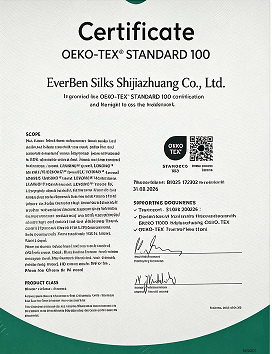
Use an OEKO-TEX Preview to Frame One Defined Follow-Up Question
An OEKO-TEX preview image available in our materials can help a buyer formulate a question, but it is not a public product claim. We treat it narrowly: it is a document image that may be relevant to a project-specific scope discussion if the buyer identifies the exact silk article, material or component, intended use, visible holder, date or reference, and the decision they need to make. The original must be requested when the buyer needs to assess the document itself. We do not say that the preview establishes current validity, product coverage, holder relationship, certificate scope, testing, certification, compliance, or market approval. This protects the buyer from relying on an image beyond what it can responsibly show.
Describe the preview as an image, not a standing product statement
The image can guide a buyer question without becoming a certificate claim
Its visible details should be reviewed in the context of the buyer's specific article
If a buyer has seen the OEKO-TEX preview, we encourage them to identify it as a preview image and explain the question it raises. They might ask for an original-material discussion about a defined pillowcase configuration, a bedding component, a bonnet, or another named article. They should not assume that the image covers every silk product, colour, component, pack, customer requirement, or current project. The image has a limited role: it provides a visible reference for the next project discussion. By keeping that role narrow, the buyer can avoid copying a logo, phrase, or assumption into customer material before the original and the relevant scope have been considered through the appropriate buyer-owned process.
Request the original when the buyer must evaluate document details
Holder, date, scope, and wording cannot be safely inferred from a general preview
The buyer should state the article and decision that make the original necessary
When the buyer's internal review depends on the document itself, the buyer should ask for it in a written project exchange and state why it is needed. The request should name the current silk article, the material or component in question, the visible preview reference, the intended destination or customer need if relevant, and the buyer decision that depends on the review. This is more effective than a broad request for a ‘certificate,’ because it lets the conversation focus on the actual product configuration. We do not state that an original will be available, current, applicable, or sufficient for the buyer's purpose. Those are matters for project-specific confirmation and the buyer's own review after the relevant material is obtained.
Keep every conclusion provisional until the buyer completes its own review
A preview cannot settle validity, coverage, scope, or market acceptance
The buyer determines the appropriate use of original material after review
A document preview should not close a procurement, quality, customer, or market decision. Even where a buyer receives an original through a project discussion, the buyer must still decide how its visible holder, date, article relationship, material scope, and wording fit the current requirement. We help make that decision pathway visible so that product, procurement, and brand teams do not treat an early image as a finished answer. This is especially important when an ecommerce listing, retail pack, or customer submission is being planned. The useful next step is to identify the precise unanswered point and the buyer-side owner, not to make a broader statement than the available information supports.
For a silk pillowcase, sheet, bonnet, or accessory, attach the preview to a named request with the article, visible feature, and buyer question. That discipline prevents a small image from being reused as a general product statement when the purchasing team needs a narrower written review.
Prepare a Focused Written Question for Product, Quality, and Procurement
The strongest follow-up is short enough to be understood and detailed enough to be acted upon. We help buyers organize a question around the exact silk article, its current configuration, the material or component in scope, the document type, the visible holder or reference, the intended market or customer context, and the decision that remains open. This avoids long attachment chains with no explanation of what the buying team needs. It also allows product, quality, procurement, and brand colleagues to see whether they are reviewing the same version. The aim is a professional B2B conversation, not a promise about documents, products, commercial terms, or outcomes that are not yet confirmed.
Lead with the article and current version
The opening line should let every reviewer recognize the active silk configuration
Include only the features that make the current product distinct
We suggest an opening that names the article and the active features that matter to the question. For example, the buyer might identify a printed silk pillowcase pair with a current panel layout and envelope-opening concept, or a tie silk bonnet with a defined outer material direction and pack idea. Add the component or colour relationship only if it changes the question. This gives a supplier and the buyer's internal team a shared starting point. It also prevents an inquiry about one current variation from being read as a request about all silk bedding or accessories. A clear opening lets the rest of the message focus on the document issue rather than re-explaining a broad product category.
State the exact document question and buyer need
A practical question identifies what the team cannot yet determine
The buyer should explain why the answer matters to the next decision
After naming the article, state what document type or preview is being discussed, which holder or visible reference is involved, and what the buyer needs to decide. The question might concern whether the original should be requested, whether a component needs separate consideration, whether a statement must remain draft, or which buyer reviewer should assess the information. The inquiry does not need to predict the answer. In fact, it is more credible when it does not. Procurement can then compare the response with the known product configuration, while product and quality teams can decide whether any extra visual or component information is needed. This turns a vague compliance request into a real buyer decision with a bounded next step.
Name the buyer-side contact and next action
A responsible owner makes the discussion easier to close
The next action can be a clarification, an original-request discussion, or a buyer review
End the question by naming the buyer-side contact or team who will evaluate the reply and the next action the team expects to take. It may be an internal product review, a customer conversation, a request for the original material, an update to a draft package, or preparation for a commercial inquiry. This gives the response a purpose. It also prevents the supplier discussion from being interpreted as legal advice or a finished release. When the buyer clearly owns the decision and the next action, the conversation can remain focused on the silk article and the information required for the buyer's own process. That is a more efficient basis for procurement than a generic request that nobody is accountable for resolving.
For example, a product manager may check the current silk article while procurement manages the commercial inquiry and a quality colleague reviews the buyer requirement. Naming that sequence lets us respond to the relevant question without guessing who can accept, revise, or defer the next decision.
Keep Open Issues Visible Until the Buyer Can Close Them
A disciplined B2B buyer does not hide uncertainty; the team names it, assigns it, and decides what information is needed before the next step. In a silk document discussion, open issues may include the current article configuration, a component relationship, a colour or print variation, a holder question, an original request, a customer requirement, or a draft market statement. We help separate those issues from the points that are already clear enough to carry forward. This is particularly useful when product, procurement, quality, brand, and customer teams are moving at different speeds. The buying organization can keep development active without pretending that an unanswered document question has disappeared.
Write each open issue as a decision question
A clear question is easier to own than a vague note
State what is unknown, why it matters, and what information would help
We recommend phrasing unresolved points as direct questions. Instead of ‘check certification,’ a buyer might ask whether the original should be requested for a named pillowcase configuration and visible holder reference. Instead of ‘confirm pack claim,’ the team might ask which draft statement must remain open until its own buyer-side approval occurs. This style makes the issue understandable to a product developer, procurement manager, quality colleague, or customer contact. It also discourages broad assumptions. Each question should name the article, component, document context, and decision purpose. That small amount of structure can turn a confusing attachment chain into a manageable set of next actions without turning the website into a legal or regulatory advice channel.
Assign the issue to the buyer role that can act on it
Ownership should follow the decision, not the inbox that received the attachment
Procurement can coordinate while product, quality, brand, or advisers address their own questions
An open product configuration belongs with the product owner; a commercial comparison belongs with procurement; a customer-language question may belong with brand and legal; an interpretation question may need the buyer's chosen adviser. We help buyers make those distinctions visible because unassigned uncertainty tends to become an accidental assumption. Procurement may coordinate the conversation, but it should not be expected to make technical, legal, customer, or brand decisions without the relevant input. A named owner gives the team a practical next action and allows the supplier discussion to remain appropriately limited to the product question and information request. This is how a buyer can continue moving a silk project forward while respecting each colleague's role.
Return to the active article after each clarification
Every new answer should be checked against the current configuration
Changes in colour, component, print, or pack can change the next buyer question
When a buyer receives clarification, the team should return to the active silk article before deciding what it means. If the current version has changed in colour direction, closure, component set, print layout, or selling unit, an earlier question may need to be reframed. This is not delay; it prevents an answer about an earlier concept from being carried into a different final product. We encourage a short summary after each significant change: what article is active, what point is now clear, what remains open, and who owns the next decision. This gives purchasing and product colleagues a stable view of the project and reduces the likelihood that a document discussion will outpace the product it was meant to inform.
In practice, keep a short live list of the current silk variation, the unanswered point, and the colleague responsible for it. The list gives a range buyer a way to distinguish a resolved material question from a separate issue created by a new print, component, or pack.
Move From Scope Discussion to a Quote-Ready Silk Inquiry
Once the buyer has a stable product direction and knows what document question remains, the next conversation can become more useful to procurement. We help teams combine the active silk article, its material and component scope, the relevant visual references, the document question, and the business context they are ready to share. The buyer remains in control of the commercial decision, its customer relationships, and its internal approval path. We do not publish retail pricing or assume availability, minimums, timing, shipment, or release terms. Instead, we give the buyer a practical structure for asking a project-specific B2B question that avoids repeating earlier uncertainty and makes the next responsible decision easier to identify.
Summarize the product and document question in one opening brief
The closing brief should connect the active article to the specific unanswered point
A concise summary is more useful than a folder of unannotated attachments
We suggest a short opening that names the current silk article, the selling unit, the material or component at issue, the active design or packaging references, and the document question the buyer needs to advance. It can say which visible holder or preview reference prompted the question and whether the buyer needs to discuss requesting the original. That is enough to put product, procurement, and quality colleagues on the same page without claiming an answer before one exists. The buyer should mark any element that remains illustrative or open. A concise brief respects the time of everyone involved and gives a project-specific written response a much clearer basis than a generic request for documentation.
Introduce commercial context once the buyer can discuss it
Destination, quantity context, channel, and range timing can help a B2B conversation
These are buyer-provided inputs, not public price or availability statements
When the product definition is mature enough, the buyer can add the commercial context that helps the next discussion: intended destination, quantity context, sales channel, range timing, packaging expectation, and the procurement contact responsible for evaluation. These inputs should come from the buyer rather than be inferred from the product category. They do not create a price, minimum, timing, shipment, or commercial commitment. They simply help distinguish an early document question from a project conversation that also needs commercial consideration. Pairing the active article with buyer-provided commercial details supports a more focused response and reduces the number of assumptions that must be corrected later.
Retain buyer control over final reliance and release decisions
A supplier conversation supports a buyer decision but does not replace it
Formal commitments and market-facing conclusions belong in the buyer's approved process
The final inquiry should say who on the buyer side will decide what happens after the next written response. That may be procurement, a product manager, a quality leader, a customer team, or the buyer's chosen adviser. We can then address the stated silk article and scope question without being asked to make decisions that belong to the buyer. A focused supplier conversation can be very useful: it keeps the active configuration, document question, and commercial context together. It does not itself create a final specification, legal outcome, certification statement, market approval, purchase authorization, production release, or delivery commitment. Keeping that boundary clear makes the B2B relationship more credible and retains the buyer's authority over the final decision.
Before asking for a quote, a buyer can state the article, variant count, intended channel, quantity context, and document point still requiring review. That creates a focused B2B discussion while leaving pricing, availability, timing, approvals, and contractual terms to a later written agreement if both parties choose to proceed.
Questions Buyers Ask About Silk Product Documents
Can a document image be treated as proof for my silk product?
No. Start by matching the named holder, document type, visible date or revision, exact silk article, material, colour, components, intended use, and buyer requirement. Ask for the original through an appropriate project discussion before your team decides how, or whether, it can be used.
What should I include in a document-scope inquiry?
Send the current article name, selling unit, active drawing or product description, material and component scope, document reference, holder named on it, market or customer context, and the unanswered buyer question. This is more useful than sending a document image with no product context.
Does an OEKO-TEX preview establish current product coverage?
No. A preview can prompt a project-specific scope question only. Ask for the original and review its visible holder, date, scope, article relationship, and buyer requirement through the appropriate written process. Do not treat the preview as a statement of current validity, product coverage, certificate scope, or market approval.