
P036
Buyer QC Checklist for Bulk Silk Goods
At China EverBen Silks, we organize a bulk silk QC question around the actual article, customer unit, visible surface, construction feature, comparison purpose, and buyer-side decision. Use this checklist to discuss a defined product concern without treating it as an inspection result, product release, or commercial commitment.
Published by China EverBen Silks Reviewed by Mark Liu
Choose inspection questions that belong to the finished product
State the article, condition to observe, evidence type, sample basis, and acceptance decision.
Name the Exact Silk Article Before Discussing QC
We start with the finished item your customer receives, not a broad phrase such as silk bedding. A pillowcase pair, fitted sheet, duvet cover, mask, bonnet and scrunchie require different questions about components, construction and presentation. State the consumer unit, colour or print variation, size convention, closure or adjustment feature, and whether it is sold alone, in a pair, or in a set. A queen pillowcase pair differs from a single travel pillowcase even if both use silk; a fitted sheet needs mattress context; a duvet cover needs opening and insert context; a mask needs face and strap context; a bonnet needs crown and fastening context; a scrunchie pack needs a visible count. If a buyer sends an image, swatch, drawing, or earlier item, identify the particular feature it illustrates rather than treating it as a complete definition. This keeps questions about shade, finish, seams, labels, and presentation attached to the correct object. We do not treat an article name as proof of availability, approval, a technical result, or a commercial commitment. It gives all parties a common product picture before a buying decision is discussed. For a quality review, record the retail name exactly as it appears in your range, the intended selling unit, and the version of the image or drawing in circulation. This lets a product manager, quality colleague, and buyer compare the same article even when a collection contains several sizes or coordinating pieces. It also prevents a question about one finished silk item from being carried across to a similar-looking item with a different closure, format, or presentation.
Separate one SKU from a collection name
A collection title does not define a finished unit
Name the customer-facing item
Tell us whether the buyer is considering one pillowcase, a pair, a fitted sheet, a duvet cover, a mask, a bonnet or an accessory set. The same fabric direction can lead to different finished articles. A pair raises matching and closure questions; a fitted sheet brings mattress dimensions, corner geometry and elastic placement into view; a bonnet introduces crown and tie decisions. A category label can send a comparison to the wrong item. We use the proposed selling unit so that material, sewing, label and pack questions remain attached to the object a customer will open, use or wear.
State the variant under review
Colour, print, size and pack change the question
A photograph is not a complete variant
Specify whether the concern is a solid pillowcase with an envelope closure, a printed pillowcase with a concealed closure, a deep-pocket sheet, a reversible mask, a tie bonnet or a counted scrunchie set. Pattern scale affects seam appearance; a darker shade can make construction details more prominent; a different pack changes what a customer sees. We do not let one attractive image silently define all of those decisions. The enquiry should travel with the colour, size, construction and selling-unit variation it genuinely concerns.
Give the article a stable working identity
Buying and product teams need the same point of reference
Use your own style name or SKU
Use your SKU, working style name, drawing reference or clear temporary description, plus its current version where possible. This helps procurement ask about the actual item rather than reopening an older discussion after dimensions, artwork or packing has changed. Say whether it is a concept, a sample-stage proposal, a reorder comparison or a collection extension. We do not infer availability or approval from a style name. The identifier simply keeps each question tied to the intended article.
Define the Silk Material and Layer Scope
A silk statement only helps when the buyer says which part of the article it describes. Bedding and accessories may include a face, reverse side, internal layer, elastic, thread, closure, tie, label, card or pouch. For a pillowcase, say whether the enquiry concerns both exterior faces, one sleeping surface, the closure panel, or the label. For a fitted sheet, distinguish the bed-facing field, perimeter finish and elastic channel. For a mask, identify face fabric, skin-facing fabric, inner layer, binding and strap. For a bonnet, separate crown, lining, opening treatment, tie and label. These distinctions matter when a team compares visual gloss on one surface while asking a functional question about another. Include the characteristic under review—smoothness, luster, opacity, print ground, or drape—and say whether it is a preference, current description, or an open option. This lets the material conversation remain accurate without attaching a blanket phrase to trims and secondary parts that it does not cover. When your team uses a material phrase in an RFQ, pair it with the named panel or component rather than placing it beside the whole product title. That helps merchandising avoid a product page that leaves buyers guessing whether the claim refers to the sleeping surface, a reverse panel, or an attached trim. It is especially useful when one retail unit brings together a silk-facing textile and purpose-specific construction parts.
Identify the customer-facing surface
Face and reverse sides may differ
Give material language a component boundary
For a pillowcase, identify whether the question applies to both exterior faces or the sleeping surface only. For a mask, distinguish face, skin-facing side, fill, elastic and binding. For a bonnet, separate crown, lining and tie. This prevents one silk phrase from being repeated as though it describes every assembled component. We can discuss the customer-facing textile and attached components without overstating what applies to the entire finished product.
Describe finish in recognisable buyer language
Luster, drape and opacity are different decisions
Use comparison terms your team can see
Instead of asking for premium or best quality, describe the intended visual character: fluid drape, smooth face, restrained sheen, more reflective surface, print ground or visible weave character. Connect that language to a swatch, approved item or photograph when possible, and explain what the item is meant to show. A screen image may guide colour mood but cannot settle handfeel. We use the description as a preference to discuss, not as a measured result or performance promise.
Keep non-silk components visible
A finished product includes more than face fabric
List the role of each attached part
Name the zipper, envelope flap, elastic, seam thread, piping, label, backing or tie that matters to the proposed article. An elastic inside a fitted sheet has a different role from a mask strap or scrunchie core. A closure affects a pillowcase edge and product image. Please state the component and intended role, not to assume composition, durability or acceptance. That boundary gives the buying team a cleaner way to compare assembled-product options.
For each non-silk part, record its place within the sale unit and the visual or handling question it raises. Review a concealed closure against the customer-facing side of the item; assess a tie or neck feature against the wearer interaction under consideration; and treat a card, pouch, or insert as part of the presentation unit rather than as fabric. Mark any unchosen component as proposed. This concise record prevents a surface discussion from silently becoming a conclusion about every attached part.
Turn Handfeel and Surface Expectations into Clear Questions
Silk is selected for smoothness, drape and light response, yet those words are easy to use vaguely. We work with your team to connect a visual or tactile expectation to the finished article without calling a subjective preference a confirmed outcome. Explain whether a pillowcase should present a calm, even face under bedroom lighting, whether a sheet should fold fluidly across a made bed, whether a mask needs a smooth contact surface, or whether a scrunchie should show an even gathered appearance on its retail card. Describe what the consumer sees or handles, where that moment occurs, and which comparator gives your team the closest direction. Say whether that comparator is useful for sheen, colour, drape, print, or construction only. If the request also includes care, skin, wear, colour-retention, testing, or regulatory questions, list those as separate written-review topics. Product, brand, quality, and legal roles can then address their own decisions without a broad word such as premium becoming a substitute for a defined article. Ask the commercial team to identify the moment a shopper will notice the surface: a close product image, a made-bed photograph, a gift-opening view, or ordinary use. The answer guides a focused comparison without turning a visual preference into a promise about every customer, every lighting condition, or every future order. That distinction keeps the brief useful for a silk buying programme.
Describe feel in the intended use context
Bed-facing, skin-facing and hair-facing surfaces differ
Link the preference to use
A pillowcase is encountered by face and hair during sleep; a sheet is seen across a bed and handled during making; a mask sits against the face; a bonnet moves with the wearer; a scrunchie is gathered around hair and displayed at retail. Say whether smoothness, fluidity, body, sheen or folding behaviour matters most. A request for soft is not enough. We keep the resulting statement as a buyer preference, not a guarantee that a feeling has been tested or achieved.
Use comparison items with a stated purpose
One item may illustrate only one feature
Explain what it does and does not guide
A retained sample might be useful for surface gloss but not for colour or closure; a swatch might show drape but not a sewn edge. Identify the exact feature your comparator should demonstrate. If no physical item exists, describe the consumer-facing visual effect and product context rather than claiming an exact remembered match. This prevents a photo or earlier article from becoming an unintended specification for every component.
Separate appearance from performance assumptions
A visible preference is not a test claim
Keep different approvals in their own lane
If the question is whether a pillowcase face should look smooth under ordinary room lighting, state that directly. If the buyer also requires care, market, health, testing or regulatory decisions, list them separately for written review. Product may own appearance while legal, compliance or brand teams own another statement. This separation keeps an aesthetic discussion useful without manufacturing assurances that the available information does not establish.
Write the observation in the language a customer would use, then identify the physical feature that the team is comparing. ‘The fold makes the face look interrupted’ points to a display or construction question. ‘The gathered accessory appears uneven on its card’ points to a shape and presentation question. Neither sentence is a durability, comfort, or performance result. A useful inquiry names the article, current reference, viewing condition, and decision owner so the next response stays attached to a specific commercial item rather than a broad idea of luxury.
Set a Colour, Shade and Print Comparison Basis
A colour name, screen image and textile swatch can suggest different results. Printed silk also raises repeat scale, placement, direction and seam questions. The buyer should identify which visual reference guides the discussion and where it applies on the finished article. Give the reference a role: a textile swatch may guide shade direction; a print file may guide motif scale; a finished pillowcase may show a border at the closure; a product image may show retail mood but not an exact colour. Identify the component under discussion and the light or presentation context that prompted it. In bedding, distinguish matching within a pillowcase pair from coordination across sheets, duvet covers, labels, ribbons, and cartons. In accessories, clarify whether the relationship concerns crown, lining, tie, elastic, card, or pouch. A directional stripe, border, monogram, or floral repeat needs a sewn-product view, not a flat-artwork assumption. The buyer's exact visual comparison is a better starting point than a general promise of consistency. If a print is directional, note whether the visual concern lies at the opening, edge, corner, centre panel, or folded retail face. A design can look balanced in artwork yet present differently once panels are joined, turned, or folded. Giving the merchandising team that specific view helps it decide whether the issue belongs to artwork, construction, product photography, or an open colour discussion.
Name the colour reference
A verbal shade is rarely enough
Say whether the team uses a swatch, file or sample
For ivory, navy, rose, black or a branded seasonal shade, say what represents the desired direction. A paper chip, swatch, artwork and photograph have different limitations. We do not treat a screen capture as a final colour standard. A finished item may show luster and placement as well as shade, but can include features you do not want repeated. Identify the reference and the feature it is intended to guide.
Map print placement across sewn parts
Flat artwork is not a finished article view
Discuss borders, repeats and orientation
For printed pillowcases, sheets, masks, bonnets or accessories, identify where a motif begins, which edge matters and whether a directional pattern needs an orientation. A seam, closure or curved mask shape can interrupt a border. A bonnet crown and tie will not present a repeat identically. We use the finished-article view to clarify buyer intent, while leaving approval of placement for the appropriate written decision.
Consider matching at the right level
Components may be intentionally different
Avoid one impossible blanket instruction
A bedding set can include several textile surfaces, labels, ribbon and carton elements; an accessory assortment can mix printed fabric, lining, elastic, cards and pouches. State whether the concern is matching within a pair, coordination across a set, contrast or one visible component. This produces a practical colour question instead of an unsupported demand for uniformity across unlike materials and conditions.
Give the reviewer one comparison relationship at a time. A pillowcase pair may need the two visible faces considered together, while a branded insert only needs to support the selected colour story. A patterned sleep mask may need the motif assessed across the front panel, while its strap is a separate component. A product team can then decide whether an observed difference is intentional contrast, an open artwork question, or a problem with the defined customer view. This is clearer than asking every material and pack layer to appear identical.
Identify Sewing, Closure, Elastic and Tie Details
Silk products are assembled articles, not fabric alone. Panel joins, turned edges, closures, elastic and ties affect appearance and use. Buyers should identify the construction feature that affects their customer instead of relying on a general request for good sewing. Explain where the feature sits on the completed article and why it matters in consumer use, a retail view, or product photography. A pillowcase request may concern an envelope opening, concealed closure, border line, or folded edge. A fitted-sheet question can concern corner shaping, elastic channel, hem, or label orientation. A mask may need a face-edge, binding, or strap-attachment discussion. A bonnet may involve crown joins, lining boundary, opening, tie route, or attachment point. A scrunchie may involve gathered shell, seam location, and its relationship to internal elastic. This lets the buyer state a physical concern without turning a design request into an unverified durability, fit, safety, or performance assurance. In a buyer brief, draw attention to the point where two panels meet or a component changes direction, then say whether the concern is visibility, product handling, display, or the interaction with another part. This is more informative than asking for a general upgrade. It also lets design and purchasing discuss a construction option without presenting it as a completed engineering, safety, or wear conclusion.
Describe seam locations through customer use
The contact edge and visible edge may differ
Mark the part that prompted the concern
A pillowcase buyer may care about a closure edge or inside seam; a sheet buyer may focus on hem or corner shaping; a mask buyer may ask about face-edge construction; a bonnet buyer may focus on crown joins or tie routing. A short note and marked image are more useful than make it neat. They show which part affects product use and presentation, without claiming that construction has already been accepted.
Treat closures as product identity
Envelope flaps and concealed closures differ
Describe the intended user interaction
An envelope flap changes how an insert is covered and how a pillowcase reads in photography. A concealed closure changes the edge profile and adds a component; an open end produces another consumer-use question. Name the intended closure and why it matters: access, styling or brand direction. We do not assume it will meet every customer or market expectation. Early clarity keeps construction, print placement and pack photography aligned.
Specify elastic and ties by article
Each adjustable component has a different purpose
Do not use one vague fit instruction
A sheet elastic follows mattress corners; a mask strap sits at the head; a bonnet may combine a crown with a tie; a scrunchie gathers fabric around an internal elastic. State the intended configuration and where it joins the textile shell. Avoid universal fit claims unless your team has defined and can support them. We can discuss physical layout and user scenario while size grading, endurance and customer claims remain separate decisions.
Make the requested observation practical. For a bonnet, say whether the question is the path of the tie, its visible placement, the way the crown is presented, or the relation between those elements. For a scrunchie, say whether the concern is the gathered profile, the exposed seam position, the pack count, or the customer-facing size impression. For a bedding item, identify the edge or corner under discussion. The buyer can then seek a targeted response without turning a visual review into a claim that an adjustable feature will suit every person or situation.
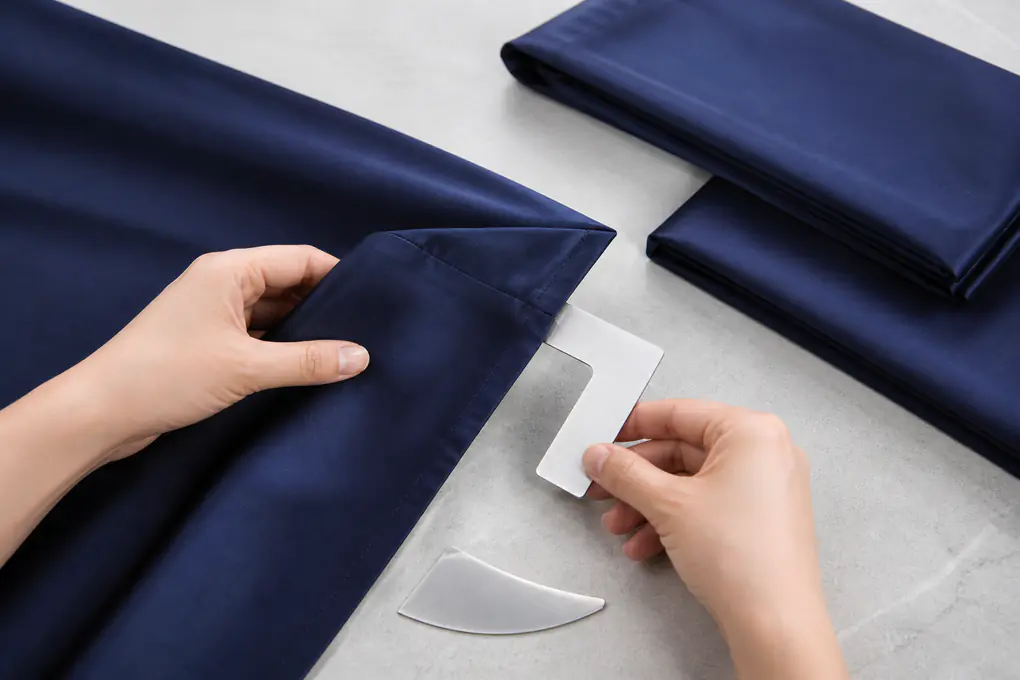
Choose Measurement Points Before Assuming Tolerances
A dimension is meaningful only when the buyer identifies the points, finished condition and article. Flat dimensions, pocket depth, openings, crown size, accessory diameter and packed dimensions cannot responsibly share one generic number. Tell us whether the item is viewed flat, folded, filled, placed on a mattress, worn, gathered, or packed when the measure matters. A fitted-sheet discussion should link to mattress dimensions and depth; a pillowcase should say whether it concerns outer size, opening, closure position, or insert relationship; a mask or bonnet needs its own location language; and a scrunchie can need a distinction between relaxed, gathered, and displayed appearance. A set creates a separate question about retail-pack dimensions and count. Marked drawings, annotated images, or a short start-and-end description make the issue understandable. We do not invent a tolerance, sampling method, measurement result, or acceptance range. The immediate aim is a concrete product question which the buyer's responsible technical owner can take forward. A practical measurement note identifies the two endpoints, the item state, and the display condition in the same sentence. For example, a bedding buyer may separate a flat panel review from a mattress-fit discussion, while an accessory buyer may separate an unstretched visual diameter from a gathered appearance. That clarity helps teams avoid comparing unlike conditions when they review a proposed silk item.
Mark the finished measurement point
A dimension needs start, end and condition
Flat, filled, folded and packed are different states
For bedding, identify finished length, width, pocket depth, hem depth or opening width. For a mask, say whether the concern is coverage, strap length or adjustment location. For a bonnet, distinguish crown diameter, opening circumference and tie length. A marked drawing or plain description of tape start and end gives all teams the same discussion basis. We do not add a tolerance, method or pass-fail result that has not been separately agreed.
Connect dimensions to intended use
The product context explains why the number matters
State mattress, insert, wearer or pack scenario
A fitted-sheet question should identify mattress context; a pillowcase question may note insert size or opening direction; a gift set may need packed dimensions for shelf presentation. Explain whether the concern is geometry, visual proportion, consumer handling or receiving. That connection stops a number from becoming detached from purpose and helps the buyer see which stakeholder should make the decision.
Leave acceptance ranges to the responsible owner
A measurement point is not an agreed threshold
Ask who sets the next technical decision
State the person or team that owns the acceptance range rather than relying on an old category assumption. If testing, sampling, inspection level or regulatory criteria are relevant, keep them separate from the first geometry discussion. We can help organise the product question, but we do not announce a universal tolerance, AQL or release standard. This protects exploratory work from being mistaken for a final technical agreement.
Before comparison, identify the exact points that the buyer intends to measure or observe: the finished pillowcase edge, the fitted-sheet corner depth, the length of a tie route, the visible mask face, or the packed dimensions of a selected selling unit. Note the current product version and the tool or drawing reference the buyer intends to use. If a threshold is not yet approved, call it open rather than borrowing one from another style. That discipline stops a preliminary measurement note from being mistaken for a universal release rule.
Review Labels, Care Language and On-Product Information
A sewn label, hangtag, card, pouch insert and carton panel serve different customer moments. Buyers should identify which component carries which message and who owns the wording before a label question becomes an unsupported market or compliance claim. State whether the buyer is reviewing a sewn label on the textile article, a tag visible at retail, a card used for an accessory set, a pouch insert, a sleeve, or an outer carton panel. Describe the intended location and orientation: a label that is discreet on a pillowcase may be noticeable on a mask or bonnet, while a card can define the entire presentation of a scrunchie set. Separate collection language, colour names, product descriptions, care wording, fibre statements, and other customer-facing copy. A drawing can indicate placement but does not establish the suitability of all proposed wording. By identifying the physical touchpoint and the owner of each content type, the buyer can keep visual, product, legal, market, and pack decisions from being confused with one another. For each customer-facing element, tell us what the shopper sees first and whether the text is meant to identify the article, explain its presentation, or support a separate buyer-approved statement. A simple hierarchy avoids a pillowcase tag, package card, and online image carrying inconsistent naming for the same sellable unit. It also keeps unapproved wording from being treated as final simply because it appears in an early layout.
Map messages to physical touchpoints
Labels and cartons have different roles
Identify placement before discussing text
A pillowcase can have a discreet sewn label, while a gift set may use a sleeve or box panel. A mask can use a seam label, pouch or tag; a scrunchie can use a backing card. Name the component before sending copy. This clarifies whether placement, artwork, legibility or attachment is the actual issue. We do not infer fibre claims, country wording, care instructions or legal suitability from a sketch.
Separate brand copy from product statements
Marketing language should not replace scope
Route each type of wording correctly
A brand story, shade name and care message are not the same decision. Identify brand-owned text, proposed product description and content needing separate legal, market or regulatory review. Silk copy often contains attractive claims about feel or care; it should not silently become a guarantee, certification statement or health assertion. Separating categories lets a buyer route questions to the proper owner while maintaining a clear finished-product discussion.
Check placement against the finished presentation
Location affects comfort and retail view
Use an annotated product view
A label may be felt during sleep, seen through a clear package or visible in a folded display. Say whether discretion, brand visibility, customer guidance or presentation matters. Include orientation and product view when placement is important. We can discuss location as part of the article without presuming it is accepted, remains legible through use or is suitable for every destination.
Use one annotated product view when words could be misread. Show the face or reverse, fold direction, opening, interior, card face, or package window relevant to the question. A buyer can then identify whether the concern is the product’s use, the view revealed on opening, or the link between a label and one variation. The responsible buyer team retains ownership of wording and market review; our discussion stays with the proposed physical placement on the chosen silk article.
Define the Selling Unit, Pack-Out and Arrival Question
A silk item may be reviewed as a folded retail unit, a gift presentation, a carton quantity, or a received bulk pack. We can discuss item count, folding, presentation, and observable receiving details without representing shipping arrangements, transit protection, or delivery results. Begin with what one customer or retailer receives: perhaps a pillowcase pair, a sheet set, a duvet-cover unit, an eye mask with a pouch, a hair bonnet, or a counted accessory grouping. Say whether the pieces are matched, coordinated, mixed, or individually presented. Then identify the visible elements—such as a fold, tissue, pouch, belly band, tag, card, insert, sleeve, or box—that affect a retail view, gift opening, shelf presentation, or warehouse check. A buyer should separate a presentation preference from a logistics requirement and name the item-count or pack observation to be discussed. This retains a useful inquiry without implying carrier compliance, carton strength, customs treatment, or a confirmed delivery arrangement. Buyers serving different B2B markets can explain whether the concern is a made-bed scene, an e-commerce image, an in-store display, a gifting moment, or ordinary customer use. That practical viewpoint links a visible concern to a particular consumer-facing item. Add a short note describing the moment the buyer will use for review, so product presentation and receiving observations are not blended into the same request.
Describe one customer purchase
Singles, pairs and sets require different language
Put sellable unit before outer packaging
State what one customer or retailer receives: one pillowcase, a pair, a sheet set, a mask with pouch, a bonnet or a counted accessory assortment. Say whether pieces are identical, coordinated or mixed. This affects artwork, labels, photography and receiving checks. We never infer a pack count or retail format from a broad product category; the buyer must name the intended unit.
Identify folds and presentation pieces
Aesthetic and protective components differ
Say when the buyer sees each component
A folded pillowcase may show a chosen textile face; a pouch or tissue layer may be part of presentation; a band, tag, card or insert can carry retail identity. Identify the component and relevant moment: shelf, gift opening, photography or warehouse receipt. We can discuss product presentation, but do not claim that a method prevents damage, meets a carrier rule or is ready for a named retailer.
Frame receipt around observable details
Give the receiving team a concrete check
Keep logistics assumptions separate
If the concern arises at receipt, state the count, style identification, fold order, visible label, colour assortment or insert your team will compare. Name the buyer-side owner and comparison point. This is more useful than saying arrival must be perfect. We do not make claims about dates, transit, customs, carton strength or delivery performance. The physical product and pack discussion stays separate from unconfirmed logistics.
A useful receiving question names what can actually be observed at the selected pack level. For example, a buyer may need to confirm that the stated pillowcase pair is linked to the right variant term, that a bundled accessory count is visible on its card, or that a product image and insert refer to the same customer unit. State the proposed check and the current buyer reference. Do not use an outer carton or a generic delivery photo to assume how every route will perform. That keeps operational review clear without turning it into an unverified transport assurance.
Plan Sample and Lot Comparisons Around Actual Changes
A sample or earlier item can be helpful only when its purpose is stated. A reference may show the desired handfeel but not current artwork, or a revised closure but not final packing. We work with buyers to identify that boundary. Say whether the comparator is being used for colour direction, surface look, drape, closure appearance, sheet geometry, print placement, bonnet tie route, accessory presentation, or pack count. Then describe the change in the current proposal: perhaps the closure moved, a print changed, a sheet depth changed, a reverse side was introduced, a tie layout was revised, or the number of accessories in a selling unit changed. This gives the buying team a genuine delta to discuss. A physical item should not become a blanket approval merely because it is available in the room. Naming its purpose and limits helps buyers decide which role—product, brand, procurement, or receiving—must interpret a difference. Put the comparison purpose in a short line beside every retained sample or image: what it illustrates, which variation it represents, and which current decision remains outside its scope. This keeps a buyer from relying on a previous silk article for a new print, package, or closure discussion. It also gives the next reviewer a useful route through a mixed folder of swatches, photographs, and product references.
State what the comparator should show
One item can guide a limited feature
Acknowledge its boundaries
A retained pillowcase may guide closure appearance but not a new print; a swatch may guide colour direction but not a completed sheet; a bonnet prototype may show tie routing but leave labels and packing undecided. Name the exact feature the item illustrates and the features that remain open. We do not call a reference a blanket approval. Its value is the focused question it helps the buying team ask.
List changes between versions
A comparison needs a clear delta
Separate material, artwork and pack changes
Say whether the current proposal changes closure, sheet depth, mask reverse side, bonnet tie layout or accessory count. If several decisions changed, identify each instead of calling the product updated. That helps the buyer decide whether a visible difference follows from a design change or needs another discussion. We do not conclude that a current item matches a past item; we clarify the terms of comparison.
Name the buyer-side comparison owner
Different teams notice different issues
Choose who can interpret the result
Product may own construction, brand may own visual direction, procurement may coordinate the conversation and receiving may see the pack first. Name the role that can decide what a difference means for the proposed article. We can discuss the item and input supplied, but do not certify a comparison, release a lot or determine your internal acceptance position. Clear ownership turns circulating images into a usable brief.
Describe the comparison in one sentence before it is circulated: which silk article, which current version, which feature, which reference, and what the team needs to decide. A difference in a printed pillowcase panel is not automatically the same issue as a difference in a scrunchie assortment or package card. The owner should be able to say whether the point calls for a visual revision, a product clarification, a buyer-controlled wording review, or an unanswered commercial question. This keeps comments useful to purchasing without asking a supplier to make an internal release decision.
Describe Defect Concerns by Location and Customer Impact
Words such as flaw or unacceptable mean different things on a sheet, pillowcase face, mask, bonnet crown or gathered accessory. Buyers should identify location, visible condition and customer impact instead of assuming a universal defect standard. Point to the actual area: centre pillowcase face, hem, closure line, sheet corner, duvet opening, mask front, bonnet crown, tie, gathered accessory surface, or a presentation component. Explain what a consumer, retailer, or receiver would notice and why the feature matters to your particular brand. A change may be visual, related to product use, connected to a count, or relevant to presentation. Terms such as critical, major, minor, AQL, pass, and fail require a buyer-owned definition before they have operational meaning. A clear description of location, article version, concern, and customer impact is more helpful than a generic category. We do not declare an inspection classification, threshold, sampling plan, or corrective-action outcome. Keep the selected article, visible feature, component, reference, and buyer owner together so a review of one silk quality question does not quietly alter a different configuration in the range. Where the concern can be photographed, mark the exact panel or edge and state the viewing distance or retail moment that makes it relevant. That record helps a product team distinguish a customer-facing presentation question from a buyer-owned acceptance decision. It also makes later comments easier to compare without creating a universal defect threshold for different silk categories.
Point to the finished-article area
Location changes the concern
Customer-facing panels differ from hidden areas
Start with one named location on the selected article: a centre panel, opening edge, finished corner, gathered area, attachment point, or customer-facing package part. A marked view can help when tied to the correct variant. The same visual feature can matter differently depending on where it appears and how the customer uses the item. We discuss that product context rather than claiming a formal classification has been applied.
Explain what the customer would notice
Visibility, use and presentation are distinct
Describe impact without guaranteeing an outcome
A customer might notice a surface variation under room lighting, a print interruption at a prominent panel, uneven trim, a closure silhouette, a distracting label or a pack count that conflicts with the selling concept. Say which impact matters to your brand. We do not assume a visible difference automatically causes a performance failure, complaint or regulatory issue. The customer-facing explanation gives the buyer a clearer point to discuss.
Use severity labels only with your own rule
Generic grades are not self-explanatory
Ask what must be agreed first
Use any severity term only when your own team has defined how it applies to the named article. If no definition exists, describe the concrete concern rather than borrowing a category. We do not establish sample size, threshold or corrective-action process. A specific question is safer and more useful than a label with no underlying rule.
Start with the visible article area and the customer consequence. A concern might involve a closure interrupting the intended pillowcase face, a print falling across a bonnet tie path, a label appearing on the wrong side of a folded unit, or a mixed accessory count that no longer matches the planned selling unit. The buyer can then decide what its own rule calls that condition. This protects the inquiry from vague labels that mean different things to different teams and keeps the next question tied to a concrete product observation.
Assign Buyer Acceptance and Escalation Ownership
Even a detailed article question stalls when nobody is authorised to decide. We suggest naming the buyer-side owner for appearance, construction, labels, packing, commercial terms and market questions separately where those decisions belong to different people. State whether the visible surface, artwork arrangement, fold, or customer presentation belongs with brand, product, retail, or another defined team. Construction and pack questions may have a different owner; purchase context, planned quantity, market wording, contracts, and regulations may require separate internal review. Naming roles at the beginning prevents a conversation about a silk pillowcase closure or bonnet tie from being mistaken for agreement on commercial or legal questions. It also gives unresolved items a destination: the next input might be a marked image, current artwork, a swatch, mattress dimensions, a packaging layout, or an internal wording decision. We can discuss the named product input while the buyer retains its own final authority. At the end of a review, give each unresolved point one next owner and one requested input, such as a corrected artwork file, a marked product image, a pack layout, or a buyer decision on wording. This avoids a long comment trail where a product issue, a commercial question, and a legal review are all assumed to have the same approver. A clear handoff protects the pace of a purchase discussion without transferring the buyer's decision authority.
Identify the appearance decision owner
Brand and product may use different benchmarks
Choose the authority before feedback circulates
For colour, print, sheen, folding and retail presentation, state whether the decision sits with a brand owner, product manager, buyer, retailer contact or another role. A role is enough; personal details are not necessary. We cannot decide which stakeholder holds your customer promise. Naming the owner keeps visual feedback consistent across bedding and accessory items and prevents an image from circulating without a decision-maker.
Separate product questions from other approvals
One person does not own every approval
Route commercial and legal matters separately
Construction and pack discussions may belong to product or quality teams, while buying context, launch planning, customer wording, contracts and regulations may require other owners. Mark that difference at the start. A closure choice should not be mistaken for agreement on price or legal suitability; a gift-set concept can be ready for visual discussion while barcoding remains open. We do not treat a product conversation as proof of availability, compliance or delivery.
Set the next owner for unanswered points
Open questions need a next input
Avoid unowned consumer-facing decisions
When the current description cannot settle a point, state what is needed next: a marked image, swatch, artwork, pack layout, mattress dimension, customer-use scenario or internal claim decision. Name the owner and next discussion rather than filling the gap with assurance. We can support a product-specific inquiry while your organisation retains the decision route and final disposition.
Keep each outstanding point tied to the article and the version that created it. If the artwork changes, identify whether the earlier colour or placement discussion still applies. If the selling-unit count changes, identify whether the card, insert, and receiving reference must be reviewed again. If a label field is absent, name the buyer role supplying it rather than inserting a placeholder. A concise open-item list gives procurement a usable current picture and prevents unrelated decisions from being quietly assumed closed. It also shows whether the next question concerns the silk article itself, the customer presentation, or a buyer-controlled business input.
Send a QC Inquiry That Gives Everyone the Same Product Picture
Gather the article, material and finish scope, reference, construction, measurement, labels, pack-out, comparison purpose, concern location and buyer acceptance owner into one concise inquiry. That is more useful than a generic checklist because it separates fixed details from preferences and open decisions. Lead with the consumer-facing item and the specific question: a pillowcase pair and closure concept, fitted sheet and mattress context, printed mask and motif location, tie bonnet configuration, or counted accessory pack. Attach the marked image, swatch, drawing, artwork, earlier item, or packaging view that your team is using, and say what it should illustrate. Then name what it does not settle, so an old item does not quietly define a new programme. End with the buyer role that can make the next decision and any separate questions about commercial terms, market requirements, testing, certificates, or delivery planning. A concise, product-bound inquiry gives everyone the same starting point without inventing certainty. Before sending, read the request as though a colleague has never seen the product. They should be able to identify the exact silk unit, the feature being compared, the reference that matters, and the buyer decision requested without searching through unrelated files. If those points are not clear, tighten the inquiry rather than adding a vague assurance. A shorter, well-scoped message gives a B2B team a stronger starting point for the next conversation.
Lead with the customer-facing decision
Start with what must be clarified
A precise opening beats a catalogue of demands
Open with a pillowcase pair and closure concept, a fitted sheet and mattress context, a printed mask and placement question, a tie bonnet configuration or a counted accessory-pack concern. Then ask the first question you need answered. We need a realistic product picture, not inflated urgency or a claim that every detail is settled. That focus makes a B2B response easier to evaluate.
Attach the right comparator and its boundary
Useful reference material is specific
Do not let an old item define a new programme
Include the drawing, marked image, swatch, artwork, earlier item or packaging view your team uses when available. Say whether it guides shade, print placement, closure, edge treatment, label position or pack count, and what it does not settle. If no comparator exists, describe intended use and customer-facing result. We use supplied material as discussion input, not proof of an approval, test, certificate or operating outcome.
End with the decision owner and next question
A brief needs a person and boundary
Keep the enquiry ready for real B2B discussion
Name the role that can make the buyer-side decision and the question to address first. You may ask about construction, a visual reference, a measurement point, label location, pack configuration or a comparison between two defined articles. Keep commercial terms, market requirements, testing, certificates and delivery planning as separate questions. We will not manufacture certainty where your team has not chosen a direction; a focused inquiry keeps the conversation aligned with the silk item under evaluation.
A complete quality inquiry can remain concise: identify the sellable silk article, current version, customer-facing feature, reference used for comparison, pack context if relevant, buyer-side owner, and the one point that needs a response. Attach only material that helps answer that stated question. This avoids a broad collection of images being mistaken for a settled specification. It also helps a procurement team compare a product-specific discussion with its own internal priorities while retaining control of acceptance, legal, market, and commercial decisions.
Buyer QC Checklist for Bulk Silk Goods questions
What makes a QC check usable?
A defined SKU, revision, stage, critical attribute, controlling reference, observation and authorized disposition owner.
Can generic tolerances be copied into the checklist?
No. Tolerances, methods and acceptance rules need an agreed product-specific basis.