
P040
Custom Silk Bedding RFQ Guide for B2B Buyers
China EverBen Silks uses this guide to organise a silk bedding RFQ article by article. Begin with the bedroom sale unit, then identify the sheet, duvet cover, pillowcase, sham, or other piece under consideration. Describe the visible surface, fold, colour, label, presentation, and unresolved point in ordinary business language. We do not infer materials, construction, performance, availability, prices, minimums, capacity, timing, shipment, certificates, or commercial terms from a general bedding category or an image.
Published by China EverBen Silks Reviewed by Mark Liu
Make every bedding component comparable before requesting a quote
State the component list, dimensions, construction, quantity, pack, destination, and approval question.
Start With the Bedroom Customer Unit You Intend to Offer
We begin a silk bedding RFQ with the customer unit rather than a broad phrase such as a silk bed set. Your business may be considering one pillowcase, a pair, a duvet cover, a sheet component or a coordinated bedroom grouping. State what the customer will receive, how the pieces relate to each other and why the unit belongs in your retail, hospitality, gift or other B2B programme. This gives every later bedding question a practical customer context.
Name the Customer Unit Before You Name the Collection
A single item, pair or grouping has a different customer conversation
The unit tells your team what the package and product copy must introduce
We ask buyers to name the customer unit before they describe a silk bedding collection. A single pillowcase, a pair of pillowcases, one duvet cover, a sheet component or a coordinated grouping can each play a different role in a range. A retailer may be adding a core sleep item, while a hospitality buyer may be considering a bedroom presentation and a gift team may be planning a more limited textile unit. Explain which articles belong together for your customer and which remain separate. This does not create a commercial commitment. It gives product, brand and procurement colleagues a shared way to picture the item being discussed. It also prevents a styled bed image from being treated as though every visible piece belongs in the same customer unit. We can then focus on the article, fold, colour, packaging or label question that affects the unit your business is actually considering.
Describe the Customer Setting That Gives the Bedding Unit Its Purpose
Retail, hospitality and gifting can create different bedroom questions
Use the setting to explain why your team is comparing a particular article
A bedding article is easier to brief when the buyer describes the customer setting. A retail bedding range may need a coherent bedroom story across its assortment. A hospitality team may be thinking about how a guest encounters one textile item in a room. A corporate-gift or residential programme may require a unit suited to a particular occasion. Explain what the customer or recipient is intended to see and which bedding point needs review. No performance or commercial claim is needed to describe that setting. A clear note about the customer moment gives the RFQ direction, helps a product manager separate a pillowcase issue from a duvet-cover issue, and gives a brand colleague a basis for discussing colour, presentation, or messaging. We use that context to understand the buyer point rather than assume a universal role for silk bedding.
Keep the Bedroom Story Separate From the Individual Product Questions
A coordinated look does not make every bedding piece identical
List the article that needs attention before you discuss the broader range
A bedroom collection may have a colour family, a visual mood or a customer category that links the pieces together. We welcome that context, but we ask buyers to keep the broad story separate from the individual product questions. A duvet cover may be the visual centre of a bed image, while a pillowcase can be the product a customer chooses first. A sheet may be part of a set presentation while also needing its own description. By naming the article and component that require discussion, you keep a general collection idea from obscuring the decision. This also helps when different colleagues own different parts of a range. A product team can focus on the article, a brand team can consider the bedroom story and procurement can frame a specific B2B inquiry. We do not assume that one collection phrase provides every product detail. We discuss the customer unit and component your business identifies.
List Flat Sheets, Fitted Pieces, Duvet Covers and Pillowcases as Separate Articles
A silk bedding unit can contain several pieces, but each piece has its own visible surfaces, use context and customer-facing questions. We encourage buyers to list the articles before they compare colour, fold, packaging or wording. This gives a product team a clearer way to discuss a flat sheet, fitted piece, duvet cover, pillowcase or sham without allowing a broad set name to define details that belong to only one component.
Give Each Bedding Piece Its Own Product Line
A component list turns a broad bedding idea into readable buyer input
Name the article before you attach colour, packaging or artwork notes
A component list starts with the individual bedding articles your team is considering. Write down the flat sheet, fitted piece, duvet cover, pillowcase, sham or another named item, then identify whether it is offered alone or with another piece. This simple list keeps the B2B conversation grounded in physical products. It helps a buyer see which article carries the main visual role and which may be a supporting part of the customer unit. It also makes it easier to decide where a colour reference, artwork question, label phrase or packaging layer belongs. We do not assume that every item in a styled bedroom image is part of a set or that every component should use identical language. By listing each article, your product, brand and procurement colleagues can compare the right questions and keep a duvet cover conversation from being mixed with a pillowcase or sheet question.
Describe What Makes One Piece Different From Its Neighbour
Visible role, customer use and presentation can vary across a set
A related collection can still need distinct product decisions
Bedding articles may be related, but they are not interchangeable. A duvet cover may be the largest visible panel in a bedroom scene. A flat sheet can create a different fold and surface relationship. A fitted piece has its own customer-use and fit questions. A pillowcase or sham may be the item a customer sees most closely or chooses as an entry point to a collection. We ask buyers to describe the difference that matters to their team. It may be a customer role, a visible surface, an edge detail, a fold or a package relationship. This gives each piece a reason to be in the RFQ. It also prevents a product description written for one article from being copied across a set without considering the actual item. We do not infer construction, material or other unprovided details. We discuss the customer-facing difference your business has identified for the named bedding piece.
Use the Article List to Organise a Mixed Bedding Inquiry
Several questions can be clear when each one has a product home
Keep sets readable for product, brand and procurement colleagues
A buyer may be considering more than one silk bedding direction at the same time. You may have a duvet-cover idea, a pillowcase pair concept and a sheet question within a wider collection. We encourage you to group the articles that share a real customer-unit or visual decision and keep unrelated questions in their own lines. This prevents one long request from becoming difficult for colleagues to interpret. It also gives procurement a clear way to describe the B2B context. A component list is not a complete specification; it is a practical map of the articles your team wants to discuss. By keeping each question attached to an item, you can compare alternatives without losing sight of the customer unit, visible surface or presentation layer that makes each bedding piece distinct.
Frame Bed Size and Fit Questions Around the Specific Bedding Piece
A buyer may need to discuss a bed-size or fit point, but it becomes useful only when linked to a named silk bedding article. A top sheet, bottom sheet, duvet cover, pillowcase, and sham each relate to the bed differently. State the article, customer setting, and the buyer action that is still open instead of relying on a broad size label that leaves the component unclear. Identify the nominated bed reference, whether the issue concerns a fitted or finished dimension, and whether paired pieces must stay visually aligned. This gives a range manager a usable comparison point without guessing at customer expectations. Add the planned end use when it helps distinguish a guest-room requirement from a retail or gifting presentation. Note the relevant finished article in every size-related message so that later reviews can trace the question back to the correct bedding piece.
Name the Bedding Piece Before You Use a Bed-Size Term
One size phrase can mean different things for different articles
The product line should show whether the question concerns a sheet, cover or case
A bed-size term can be useful buying context, but it does not identify the silk article under review. Name the top sheet, bottom sheet, duvet cover, pillowcase, sham, or other component first, then explain what fit or sale-unit issue the size reference raises. A retailer may be comparing the place of one item within a bedding assortment. A hospitality buyer may be identifying the room setting that makes the item relevant. A product team may need to separate a pillowcase point from a cover point. This method avoids letting a broad size label stand in for a full product definition. We do not derive dimensions, fit results, or other unstated details from a named bed size; we discuss the article and buyer point supplied.
Describe the Customer Situation Behind the Fit Conversation
A bedroom setting gives a size question practical meaning
State why your team needs to distinguish the article in its intended context
The customer situation can help a buyer explain why a bedding fit point matters. Your business may be preparing a retail line for a bedroom category, a hospitality-room presentation, a gift-ready item, or another defined setting. State that context in plain language and identify the component affected. This lets the receiving group compare the relevant product point without making performance or product claims. A duvet-cover discussion can involve a different customer moment from a pillowcase pair, and a sheet component may sit in a larger collection while still needing separate review. A bedroom image or generic size term does not resolve every issue. A stated customer situation keeps the exchange tied to the silk article, sale unit, and unresolved buyer action.
Keep Fit Questions Separate From Colour and Package Questions
Different buyer choices need different lines in the bedding brief
A size discussion should not hide the visual or customer-presentation decision
A bedding RFQ can include a fit question, a colour question, a textile-surface question and a package question at the same time. We encourage buyers to keep these subjects in separate lines. One line can name the article and customer context for the fit conversation. Another can explain the visible colour or artwork direction. A separate line can identify the customer-unit presentation. This makes the brief easier for product, brand and procurement colleagues to use. It also prevents a general size term from being treated as though it resolved a visual or packaging choice. We do not infer dimensions, construction or commercial terms from an early bedding conversation. We focus on the specific item and decision your team describes, keeping each buyer question proportionate to the information you have provided.
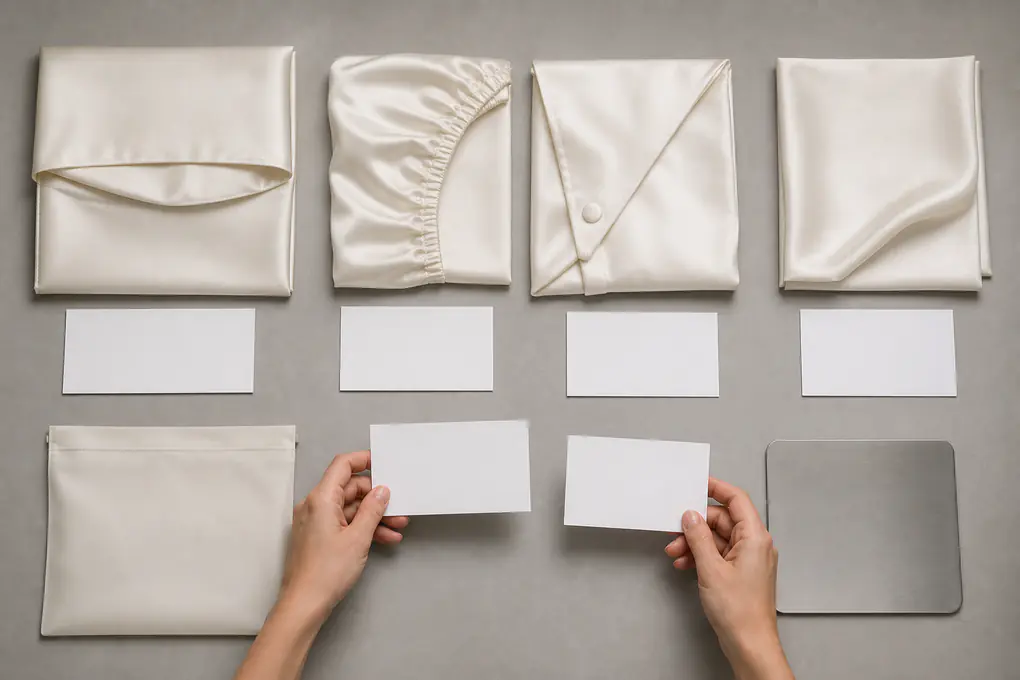
Treat Duvet Covers as Visible Bedroom Articles With Their Own Questions
A duvet cover can be the central visual piece in a silk bedding concept. It has a broad customer-facing surface, an opening or closure relationship, edges, a fold, and a distinct role in the sale unit. Describe the duvet-cover issue directly rather than letting a set-level phrase or bedroom image decide every detail. This gives the team a clearer basis for considering colour, artwork, presentation, and the article’s customer role. Include the intended front view, reverse view, and folded retail view when those perspectives influence the choice. The buyer can then separate an artwork-placement discussion from a closure or pack-presentation point without losing the duvet cover’s individual identity. This article-level approach also helps a buyer keep a closure question separate from a print or colour question.
Start With the Duvet Cover Surface the Customer Sees
The main visible field should anchor the visual conversation
Name the article panel before you discuss colour or artwork
A duvet cover can contribute a broad visible field to a bedroom image or retail presentation. Identify whether the main panel is the component to which a colour, motif, or product-direction point applies, then state how the article sits within the sale unit. Is it a coordinated bedding piece, a stand-alone focal article, or part of a gifting or hospitality concept? This background helps product and brand colleagues decide what should lead the customer experience. It also stops a broad silk-bedding image from being used as if it defined the reverse, opening, edge, or every supporting part. We do not infer a final material, print, or construction detail from a visual concept; we discuss the named duvet-cover surface and buyer point.
Separate Opening and Edge Details From the Main Visual Direction
Supporting construction areas deserve their own product question
A visible border or opening should not be hidden inside a general set description
A duvet cover can include a main surface, edges, an opening, and supporting components that require separate attention. Name the detail your team is considering and state its relevance to the customer experience or product presentation. An edge may remain visible in a folded retail display, while an opening may influence how an article is described or introduced in its sale unit. Neither question is the same as deciding the main colour or motif direction. By separating those points, a bedding team can examine the relevant cover feature without carrying an assumption to another component. We do not derive a construction outcome or finished feature from an image or a broad request; we keep the exchange on the named duvet-cover area and specific buyer issue.
Map the Duvet Cover to the Bedding Pieces Around It
A hero article can guide a collection without defining every other component
State what the cover shares with pillowcases or sheets and what it does not
A duvet cover may lead the visual story of a bedding collection, but it should not silently define the product language for pillowcases, shams, sheets or other pieces. We ask buyers to state which visual ideas are shared and which remain article-specific. A cover may carry the main motif while pillowcases use a quieter related detail. A collection may share a colour family while individual components have different package or customer-unit roles. This mapping helps a brand team create a coherent bedroom direction without asking product colleagues to treat every item as identical. It also gives procurement a more focused RFQ structure. We do not assume that one styled bed image answers the article-level questions across a collection. We discuss the relationship your business identifies between the duvet cover and the named pieces around it.
Define Pillowcase and Sham Decisions at the Customer-Unit Level
Pillowcases and shams may appear alongside sheets and duvet covers, yet they are often the bedding pieces a customer sees most closely or buys as a distinct unit. We ask buyers to name the article, count, visible face, reverse, edge and package relationship their team is considering. This turns a broad bedding question into a customer-facing conversation about the specific silk item rather than a vague reference to a complete set. A clear unit note helps prevent a companion sham from being confused with the pillowcase pair under review.
Identify Whether the Buyer Is Discussing a Pillowcase, Sham or Pair
The product count and article type should be clear before packaging or copy is discussed
A pair and a single item can create different customer expectations
A pillowcase or sham may be sold as a single article, a pair, a coordinated piece within a bedding unit or another defined customer grouping. We ask buyers to state which unit their team is considering. This gives the product and packaging discussion a clear starting point. A single pillowcase may be an entry article in a beauty-led retail range, while a pair may be presented as a complete bedding purchase. A sham may have a different decorative or visual role from a pillowcase. By naming the article and count, your team can decide how the item should be folded, labelled, described and placed within a customer unit. We do not infer a final commercial quantity or product configuration from the early brief. We discuss the buyer’s stated article and customer context, keeping the conversation specific to the finished item rather than a broad bedding category.
Separate the Main Face From Reverse, Edge and Opening Questions
A pillowcase has several visible and supporting areas that may need attention
Name the component your colour, artwork or presentation question affects
A pillowcase or sham may have a main face, reverse, edge, opening and sewn label, each with a different relationship to the customer experience. A buyer may be considering how the main face looks when placed on a bed, how an edge appears in a folded retail unit or how an opening relates to the product presentation. We encourage you to name the component before you describe the question. This prevents a phrase written for the face from being applied to every part of the article without a reason. It also makes it easier for product and brand colleagues to compare options. We do not infer construction, material or other product details from a styled photograph. We discuss the visible area and buyer decision your business has identified, keeping the article map clear as the bedding brief develops.
Connect Pillowcase Presentation to the Customer’s First View
A fold, sleeve or card can introduce the unit without replacing the textile article
State what a shopper or recipient should notice first
A pillowcase pair can be presented in different ways according to the customer setting. A retail buyer may review a folded pair in a sleeve, whereas a gift programme might add a card or box around the article. Describe the customer’s first view and the product point it raises. Should the silk surface lead the experience, should a colour relationship remain visible through the pack, or should a message sit on a separate card? These are presentation choices associated with the named unit. They do not define the entire bedding set or create a product claim. Connecting the fold and pack layer to the pillowcase or sham unit lets the team make clearer decisions about artwork, copy, and customer messaging. We discuss the presentation role your business identifies without assuming one packaging direction fits all bedding pieces.
Map Silk Bedding Colour and Artwork to the Panel That Carries It
Colour, motif, logo, and written product language each need a named location in a bedding article or its presentation. Identify whether the visual input belongs on a duvet-cover panel, pillowcase face, sheet element, label, card, sleeve, or box. This stops a colour board or artwork file from being treated as a complete bedding instruction and keeps the buyer question linked to the correct sale unit. A placement note should state which panel carries the artwork, how it faces when displayed, and whether it repeats across coordinated pieces. That clarity gives designers a practical hand-off and lets procurement see the exact feature under discussion. It also gives the buyer a simple way to flag whether a visual input belongs to the textile or to the customer-facing presentation.
Give Every Artwork Asset a Bedding Article and Surface
A logo, motif or colour reference needs a physical destination
State whether the input concerns textile, label, card or outer presentation
When your business shares a logo, motif, illustration, colour reference, or product phrase, name the bedding article and surface it is intended to affect. A duvet cover may have a main panel, a pillowcase may have a face and edge, and a package may include a sleeve or card layer. The component changes the customer role of the visual input. A motif on a duvet cover can lead a bedroom story, while a card may introduce a gift or collection message separately. State what the asset should clarify and what remains open. That creates a useful placement map for the team and gives procurement a specific B2B point to raise. A supplied file does not settle ownership, final layout, colour outcome, or customer claim; those questions require the buyer’s own review for the named article.
Separate Collection Colour From Piece-Specific Colour Questions
A shared palette can support a range without making every panel the same
State which article leads the colour relationship and which supports it
A bedding collection may have a shared palette connecting duvet covers, sheets, and pillowcases, yet individual pieces can perform different visual roles. Identify which article should lead the colour story and how related components should support it. A duvet cover may act as the visual centre, while pillowcases offer quieter coordination. A sheet can belong to the unit without carrying the same motif or contrast. This approach develops a collection direction without treating every bedding panel as identical. Product and brand colleagues can then look at the sale unit with the relevant distinctions in view. A digital palette or styled image does not determine every textile and pack layer; the conversation stays on the colour relationship and named components under review.
Keep Textile Artwork Separate From Labels, Cards and Package Graphics
A customer message can have its own printed layer rather than crowding the bedding surface
Choose where the customer should encounter each buyer-controlled element
A buyer may want the silk bedding textile to carry a quiet colour or motif while a sleeve, card, or box introduces the collection name, brand message, or gifting context. Decide which layer should hold each visual or written element. A duvet-cover design need not communicate the same information as a pillowcase sleeve. A card can offer a separate customer moment without becoming part of the textile article. This separation gives the bedding unit an understandable hierarchy and stops general copy from migrating across unrelated components. We do not supply unstated product claims, market wording, or legal conclusions. The discussion concerns the placement and customer role your team identifies for buyer-controlled artwork and copy on the selected bedding unit.
Separate Customer-Facing Bedding Presentation From Outer Handling Questions
A folded silk bedding unit, sleeve, card, pouch, or box can be part of the customer experience. Outer grouping, receiving, or destination questions belong to the buyer’s operational context. Keep these layers distinct. This allows a brand or product colleague to describe how the bedding article is introduced to a customer while procurement or operations colleagues raise separate handling topics without confusing one with the other. Begin with the textile article closest to the recipient, then list each presentation layer in the order a customer encounters it. That sequence is useful when a buyer needs to review fold direction, visible colour, product count, or card placement without making unsupported claims about protection or transit. Record the intended sequence in the brief so that a folded textile, a sleeve, and an outer box are considered as separate customer-facing moments.
Plan the Fold Around the Bedding Article Your Customer Receives
The first visible textile detail can guide the presentation discussion
State whether the fold introduces a single item, pair or set
A folded silk bedding article can create the first customer impression of a pillowcase pair, sheet component, duvet cover, or coordinated unit. Describe the article and count before describing the outer package. Which textile surface should appear first? Is the unit a single item, a pair, or part of a set? Should the fold reveal a colour relationship, an edge, or a collection cue? These questions help a team develop customer presentation without losing sight of the actual bedding item. One fold or package cannot be presumed suitable for every article; a duvet cover may require a different presentation approach from a pillowcase pair. Naming the unit and first visual detail keeps labels, cards, and outer layers in their proper supporting roles.
Give Sleeves, Cards and Boxes a Clear Customer Role
Each presentation layer should support the textile article rather than obscure it
State what the layer is meant to introduce or explain
A sleeve, card, pouch or box can help a customer understand a silk bedding unit, but the layer should have a stated role. A sleeve may identify a folded pillowcase pair. A card may introduce a gift or collection message. A box may frame a more defined presentation around a selected article. We ask buyers to name the bedding unit and explain what the outer layer is intended to do. This prevents a packaging idea from becoming a generic add-on without connection to the customer experience. It also lets your brand team decide where buyer-controlled copy and visual elements belong. We do not assume a final format, wording or package structure. We discuss the article and presentation layer your business is considering, keeping the textile product at the centre of the unit.
Raise Carton and Receiving Inputs in Their Own Buyer Discussion
Business movement questions should not be written as customer-facing bedding claims
Identify the product unit before you describe the operations question
A buyer may need to consider outer grouping, receiving or destination inputs alongside a silk bedding programme. We encourage you to raise those topics separately from the customer-facing fold, sleeve or box. Begin by naming the bedding article and customer unit, then explain the business question your procurement or operations team needs to explore. We do not infer carton dimensions, shipping method, transit results, destination conditions, capacity or timing from a bedding image or an early packaging note. A separate line keeps the operational question visible without allowing it to overwrite the customer story. This helps every stakeholder: product and brand teams can focus on the bedding presentation, while procurement can keep the B2B inquiry connected to the relevant article and outer-handling input.
Place Bedding Labels and Product Information on the Right Customer Layer
A silk bedding programme can include sewn labels, hangtags, product names, cards, inserts, sleeves and other buyer-controlled information. We ask buyers to map each phrase or asset to the bedding article or presentation layer where it belongs. This keeps product identity, collection messaging and customer information from becoming one broad statement that no longer describes the unit a shopper or recipient receives. Use a simple item list that identifies the exact component, its visible location, and the buyer team responsible for wording or artwork. That approach makes it easier to keep a material phrase, care draft, brand message, and outer-pack text from being applied beyond their intended context. It also improves later listing checks. A short recipient-view note can also help distinguish a retail opening moment from a room-ready bedding presentation. Keep the recipient-view description beside the relevant bedding article so it remains usable when packaging colleagues review a later version.
Connect a Sewn Label to the Bedding Article It Identifies
A label belongs to a named piece rather than an abstract collection
State the item and placement question your team is considering
A sewn label can be part of a pillowcase, duvet cover, sheet component or another finished bedding article. We ask buyers to name the piece and explain the placement question. Is the label meant to be a quiet supporting detail, a visible identifier or an interior element? The answer helps product and brand teams decide how it relates to the article and customer experience. It also prevents one label idea from being copied across different bedding pieces without considering the actual item. We do not assume label wording, market instructions or a final placement from a general reference. We discuss the buyer-controlled label question and named article your team supplies, keeping the conversation product-specific and clear for procurement colleagues preparing the RFQ.
Use Cards and Inserts for Messages That Need Their Own Space
A printed piece can support the bedding unit without redefining the textile article
Choose whether the message appears before, with or after the folded item
A printed insert can give a bedding sale unit a place for a collection note, gift message, or other buyer-controlled information. Decide when the customer should encounter that message: with an outer sleeve, beside a folded pillowcase pair, or after a box is opened. This sequence affects the presentation hierarchy. Do not use one printed insert as if it describes every component in a larger bedding collection, and do not expect a textile motif to carry every written instruction. Separating the printed layer from the product article makes the customer experience easier to understand. We do not create unstated claims, legal interpretations, or market wording; we consider the component, timing, and visual role the buyer identifies for the insert.
Keep Product Names, Collection Language and Package Copy Distinct
Each customer-facing phrase should have a defined job in the bedding unit
A short product identifier should not be asked to carry the full brand story
A product name can identify a pillowcase pair, duvet cover or other bedding article. Collection language can describe a wider visual direction. Package copy may introduce the customer unit before opening. We encourage buyers to keep these phrases in separate lines of the brief and map them to the appropriate layer. This helps a shopper understand what item is being considered and helps internal teams avoid carrying a broad collection phrase into a product-specific label. It also gives your brand team control over its own customer messaging. We do not assume a final wording, customer claim or commercial position from an early package concept. We discuss the named article, customer unit and buyer-controlled copy question, giving product and procurement teams a clearer way to coordinate their input.
Compare Silk Bedding Options Against One Customer Decision at a Time
Bedding buyers may be weighing colour directions, article combinations, presentation layers or visual roles. We encourage you to compare two defined options around one customer decision rather than ask for a broad impression of a whole collection. Name the silk bedding piece, customer unit and criterion that makes the difference important. This gives product, brand and procurement teams a more useful basis for discussion and keeps early choices from becoming unspoken assumptions. If two ideas differ in more than one way, split them into separate comparisons. A team can then decide whether it is choosing a pillowcase edge, a duvet-cover motif, a pack layout, or a range colour rather than approving an unclear bundle of changes.
Write the Two Bedding Directions Your Team Is Comparing
A direct comparison makes the product question visible
Name the article and presentation difference rather than a generic preference
A buyer may be comparing a pillowcase pair with a sleeve against a box-led gift unit, a duvet cover with a more visible motif against a quieter colour direction, or two ways to group bedding pieces for a customer. We ask you to write the alternatives in ordinary business language. State the article, customer unit and visible difference. This keeps product and brand colleagues focused on the same question. It also prevents a photograph or broad range concept from being treated as though it already selected the direction. You do not need to describe one option as universally better. Explain why your team is comparing them and what customer or product issue the decision needs to address. We will discuss the defined bedding question you provide rather than assume what your business should choose.
State the Buyer Criterion That Makes One Direction More Relevant
A comparison needs a customer, product or presentation reason
Use the criterion to keep opinions attached to the actual bedding unit
A useful bedding comparison needs one stated reason. Your team may be examining how the silk article remains central, how the sale-unit count is understood, how a pillowcase connects to a bedroom story, how a gift message is separated from the textile, or how one panel appears in a folded presentation. Identify the criterion that matters. The product, brand, and purchasing roles can then add their relevant input without allowing a general reaction to a styled bed image to become an unstated requirement. You do not have to settle every internal criterion before contacting us. A direct explanation of the comparison purpose is enough; we stay with the article, sale unit, and visual point your business identifies without claiming market response, performance, or commercial results.
Keep the Comparison Within the Named Bedding Piece or Unit
A duvet-cover question may not answer a pillowcase or sheet question
Map the alternatives to the component your team is actually considering
A comparison that makes sense for a duvet cover may not apply to a pillowcase, sheet or sham. We ask buyers to name the bedding piece or customer unit each time they describe alternatives. This gives every option a product home and helps prevent a styling idea from traveling across a collection without a reason. A pillowcase fold may be central to a retail unit, while a duvet-cover panel may lead a bedroom image. A sheet component may be a supporting part of the set. By keeping the comparison attached to the named article, your team can see which decision belongs where. We do not infer that one option should transfer unchanged to every bedding component. We discuss the customer-facing difference your business has identified for the actual piece or unit.
Give Product, Brand and Procurement Teams Different Bedding Questions
A silk bedding RFQ can involve several buyer-side colleagues, yet no single person must determine every part of the article. Product teams may review the bedding piece and sale unit. Brand teams may consider colour, artwork, or customer messaging. Procurement may coordinate the supplier inquiry. Name the component and the unresolved buyer action so each team can contribute without turning the RFQ into a loop of broad comments. Assign one person to consolidate the active product reference and flag questions that are still open. This prevents a later email from combining a discarded visual direction with the current assortment request. Record the assignment beside the current article reference so the team can see who is responsible for the next response. A named internal owner can also prevent a product, brand, or purchasing note from being lost during the next review round.
Let Product Teams Define the Article and Customer Unit
The finished bedding piece gives every other question a practical anchor
State which component the product team needs to examine
A product team may be deciding whether a silk article is a pillowcase, sham, duvet cover, flat sheet, fitted piece or another named bedding component. It may also need to consider whether the customer receives one item, a pair or a coordinated unit. We ask buyers to make these product questions visible. This gives brand and procurement colleagues a clear physical starting point. It also prevents a colour board or packaging idea from moving ahead before the article and customer count are understood. We do not assign roles within your organisation. We invite you to name the bedding item, customer unit and product choice that matter to the current discussion. A clear article anchor makes it easier to compare visual, label and presentation ideas without losing sight of the actual silk product your business is exploring.
Let Brand Teams Map Colour, Artwork and Customer Message Layers
Visual direction belongs on a named bedding panel or presentation component
Keep buyer-controlled copy and art attached to the customer unit
Every bedding update should state its practical purpose. A buyer may revise a colour relationship so a pillowcase pair supports a duvet cover, adjust a fold to show the sale-unit count, move wording from a sleeve to a card, or separate a motif from a supporting bedding piece. Name that purpose. This lets product, brand, and purchasing colleagues understand what changed and what did not, without allowing a visual update to become an unstated product requirement. Formal design language is not necessary. A short buyer note can describe the intended customer effect and name the article involved. We focus on the stated purpose and the remaining buyer point rather than derive a full bedding brief from a revised reference.
Let Procurement Bring Forward the One Decision That Needs a Response
A concise supplier question is easier to use than an unstructured bedding summary
Collect the article, component and buyer context without assuming project terms
A revised colour, motif, fold, or package layer may answer one bedding point while other details remain for later review. For example, the team might still be considering how a pillowcase pair is grouped, where a product name belongs, which panel carries a visual detail, or whether a card should accompany a selected sale unit. Put the remaining point beside the article affected. This allows each colleague to recognise the current direction without guessing and prevents purchasing from sending a broad update with no product context. An altered visual or written note does not complete a bedding brief. We discuss the named silk article, current component, and buyer point while your business develops the bedding direction through deliberate choices.
Explain Bedding Changes in Plain Language as the Buyer Brief Evolves
A focused silk bedding RFQ does not need to describe every possible component at once. Identify the article your business is considering, the sale unit, visible component or presentation layer, customer context, useful reference, and the one buyer point requiring attention. This gives China EverBen Silks a practical starting point and gives internal product, brand, and purchasing teams a clear record of the bedding piece and question involved. Put the article name and immediate point in the first two lines, then attach only the smallest useful set of images or drawings. A concise brief can move an open bedding decision forward without suggesting that every dimension, material detail, commercial term, or delivery matter is already agreed. It also makes it simpler to return to the same article when another colleague joins the request. Add a short line explaining what the recipient should review first, so the request remains useful when a new colleague joins the product conversation. The buyer can also note the revision date or reference name when that distinction helps the receiving team locate the relevant bedding change.
Name the Bedding Piece Affected by the New Direction
A useful update begins with the article rather than a broad collection label
State whether the change concerns a cover, sheet, case, sham or presentation layer
Begin the RFQ with the exact silk bedding article and sale unit. Identify whether the buyer is reviewing a duvet cover, top sheet, bottom sheet, pillowcase, sham, pair, or another defined grouping. Then describe the retail, hospitality, gifting, or other business context for the question. This framing keeps the exchange attached to the specific item the customer receives and stops a broad bedding category from obscuring the piece under review. A completed project specification is not required to begin. A direct product name, sale unit, and buyer context give us a sound basis for discussing the relevant component, visual direction, or presentation layer.
State What the Change Is Meant to Clarify for the Customer Unit
A clear purpose helps each team evaluate a bedding adjustment
Tell us whether it affects hierarchy, colour, artwork, count or presentation
Every bedding change should have a practical purpose. A buyer might revise a colour relationship so a pillowcase pair supports a duvet cover, adjust the fold to make the sale-unit count obvious, relocate a message from a sleeve to an insert, or isolate a motif from a supporting bedding piece. State that purpose in the brief. Product, brand, and purchasing colleagues can then see what has changed and what remains unchanged without treating a visual update as an unstated product requirement. A short buyer note can describe the intended customer effect and name the article involved. We stay with that stated purpose and remaining buyer point rather than derive an entire bedding brief from a revised reference.
Keep Remaining Bedding Questions Visible After an Update
A change can settle one point while leaving another for the buyer team
Write the next open decision beside the named article
Your business may have project questions beyond the bedding article and immediate product point, including commercial planning, destination inputs, customer copy, or internal range work. Keep the active bedding issue visible and raise other subjects separately when they require their own consideration. This creates a readable RFQ for the teams involved. We can respond to the stated component, sale unit, and unresolved buyer point without guessing which matter is most urgent. A focused message can be brief: name the bedding article, sale unit, component or reference, and the product point needing review. That is sufficient to begin a useful B2B exchange without turning a broad category idea into an unsupported product or commercial statement.
Send a Silk Bedding RFQ With One Clear Next Buyer Decision
A focused silk bedding RFQ does not need to describe every possible component at once. Start with the article under consideration, the sale unit, visible component or presentation layer, customer context, useful reference, and one buyer point requiring attention. This gives China EverBen Silks a practical starting point and gives internal teams a direct record of the relevant bedding piece and question. Put the article name and immediate point in the first two lines, then attach only the smallest useful group of images or drawings. A concise brief can advance an open bedding decision without suggesting that every dimension, material detail, commercial term, or delivery matter is already agreed. It also makes the article easier to revisit when another colleague joins the request. This keeps the next reply connected to one recognisable bedding article instead of a general assortment label. Include a revision identifier only when it helps distinguish the current product note from a prior buyer message.
Open With the Bedding Article and Customer Unit
The first lines should make the selected silk product easy to picture
Name the cover, sheet, case, sham or set before you describe visual references
Write the first RFQ line around the exact silk bedding article and sale unit. A buyer might be reviewing a duvet cover, top sheet, bottom sheet, pillowcase, sham, pair, or another defined grouping. Describe the retail, hospitality, gifting, or other business context for that question. This keeps the exchange tied to the finished item and prevents a general bedding label from hiding the product piece that needs attention. A complete technical specification is not needed at this stage. The product name, sale unit, and buyer context allow us to understand which component, visual direction, or presentation layer deserves the next discussion.
Describe the Reference and Component It Is Meant to Clarify
A swatch, image, drawing or note needs a bedding-piece purpose
Tell us what your team is examining rather than asking a file to define the whole unit
After you name the article, describe the reference material your team wants to use and what it is intended to clarify. It may be a swatch for a duvet-cover panel, an image for a pillowcase fold, a colour reference for a set relationship, a logo for a sleeve or a card phrase for a gift unit. State the bedding component or presentation layer involved and the customer question it raises. This turns a reference into a useful B2B input. It also protects your team from treating an image or file as a complete bedding specification. We do not infer final material, construction, performance, availability, price, timing or commercial terms from a reference. We discuss the article and buyer question you provide, keeping the RFQ focused on the current product decision.
Keep Other Project Subjects Separate From the Bedding Question
A concise RFQ gives every buyer topic a clear place
State the open product decision and raise unrelated matters in their own discussion
Your business may have questions beyond the bedding article and immediate product point, including commercial planning, destination inputs, customer copy, or internal range work. Keep the active bedding issue distinct and bring other subjects forward separately when they deserve their own consideration. That approach lets the buyer group read the request as a clear product conversation. We can respond to the stated component, sale unit, and unresolved point without deciding which additional issue should take priority. A focused message can remain brief: name the bedding article, sale unit, component or reference, and the product point for review. This is enough to begin a useful B2B exchange without turning a broad category idea into an unsupported product or commercial statement.
Custom silk bedding RFQ questions
Why should a buyer list each bedding piece separately?
A flat sheet, fitted piece, duvet cover, pillowcase and sham have different customer roles, visible components and product questions. Listing them keeps the RFQ tied to the article under discussion.
Can a styled bed image define the complete bedding unit?
No. An image may show a visual direction or fold, but the individual pieces, customer unit, labels and presentation questions need their own written buyer discussion.
What should a B2B silk bedding RFQ include?
Name the bedding article, sale unit, visible component, intended customer setting, colour or artwork reference, pack layer, and the buyer action still open.