
P031
Plan a B2B Silk Sample Discussion
We use a sample discussion to help B2B buyers frame one practical question about a defined silk article. Tell us the product, recipient-facing unit, component, material or colour direction, visual reference, and the immediate business choice that needs an informed response. We keep the conversation connected to that question. We do not treat a sample discussion as a statement about availability, fees, timing, testing, production, shipping, product acceptance or commercial terms.
Published by China EverBen Silks Reviewed by Mark Liu
Choose the sample evidence that resolves the buyer's real uncertainty
Identify the article, construction, color, pack, timing context, and approval decision for the request.
Name the Silk Article Your Buyer Team Needs to Examine
We begin a sample conversation with the finished silk article, not a general request for material or an unlabelled image. Bedding, a pillowcase, an eye accessory, a hair article, and a presentation piece each create a distinct buying question. Name the item your customer or recipient will receive, then tell us which aspect your team needs to consider. That gives product, procurement, and brand colleagues a shared physical starting point before they compare references or discuss a visual idea.
Start With the Finished Item Rather Than a Broad Silk Category
A named article gives the discussion a real customer context
The product shape and use affect which questions are useful
Before we assess a swatch or mock-up, we ask you to name the exact finished article. A silk pillowcase calls for a different visible face, opening treatment, retail role, and component review than bed linen or a compact beauty accessory. Tell us the role it must play in your assortment: a foundational bedding offer, a seasonal colour story, a beauty add-on, or an event-gift idea. Where the plan serves hotel rooms, guest amenities, or company recognition, describe the moment at which the recipient receives or uses it. A complete project specification is not necessary. A precise article name and customer setting allow us to put the first question in context. That prevents a broad silk inquiry from drifting away from the merchandise your business intends to present. It also gives everyone reviewing a swatch, listing image, or design note one clearly defined object to discuss.
State the Customer Unit Around the Article
A single item, pair, set or gift grouping can change the question
Describe how the article is seen when the customer receives it
How a customer receives a silk article matters to a sample conversation because it shapes the presentation and the details your team may need to explore. A pillowcase can be positioned as a single piece, a coordinated duo, part of a bedding grouping, or an element in a gift. An eye mask can accompany a pouch and card, while a scrunchie can be planned as one accessory or as a small selection. Name the shopper unit as a planning reference, not a binding commercial position. That detail shows merchandising and brand reviewers which visible features, folds, colours, and supporting components deserve attention, while giving procurement a clearer inquiry. Sample review works best when everyone understands whether the visual direction concerns a single item, a paired presentation, or a larger customer grouping. This context keeps the discussion tied to the product experience your business intends to create.
Identify the One Decision That Makes the Article Worth Discussing
A focused question helps a buyer move a real product conversation forward
Tell us what your team cannot yet decide from its current information
An effective sample conversation starts with a decision, not an undefined request for more material. Your team may be weighing a pillowcase’s position in a beauty range, the travel presentation of an eye mask, an accessory’s place in a colour story, or a bedding component that needs separate attention. Tell us what is holding the work back. You might be comparing two visual routes, separating a show surface from a supporting element, or selecting the article that should lead a collection. We do not expect every detail to be settled. Name the unresolved choice, so we can address the active issue first. This gives your colleagues a clear reason for the review and lets China EverBen Silks reply against the specified article rather than infer requirements from a broad category label.
Separate an Exploratory Silk Discussion From a Finished Product Brief
A buyer may use a sample discussion to explore a direction, compare a component or clarify a customer-unit idea. That is different from treating an early conversation as a complete finished-product description. We encourage you to state what is known, what is being explored and what your team will decide later. This keeps a preliminary reference useful without asking it to carry product, commercial or technical conclusions that were never part of the buyer question.
Use an Early Discussion to Frame a Question, Not to Fill Every Blank
Open choices can be more useful than invented details
Keep your team’s unknowns visible while the product direction develops
A product team may have a clear idea of the silk article it wants to discuss while still weighing colour, visible construction, package role, customer unit, or artwork direction. We encourage buyers to state those open choices plainly. You may know that a pillowcase belongs in the range but still be choosing between a single customer purchase and a coordinated twin-unit presentation. You may know that an eye mask is intended for a gift concept but still be comparing its pouch and card relationship. A sample conversation can focus those questions, but it does not turn a working direction into a complete product description. Marking open variables gives merchandising, brand, and procurement reviewers a realistic briefing. We will not infer missing material, commercial, or technical details from an early image. We address the question you name and leave other matters with the buyer team and later written project communication.
Distinguish a Reference Purpose From a Product Requirement
A swatch or image can answer one question without defining every feature
Tell us exactly what you want the reference to help your team compare
A buyer may bring a swatch, photograph, product image, marketplace listing, drawing, or existing article into a discussion because it explains something difficult to describe. It can be helpful for a colour mood, fold, silhouette, visible surface, pack idea, or pattern direction. State its purpose in one sentence and identify which details fall outside that purpose. This keeps the conversation practical. A product photo might explain the calm presentation desired for a pillowcase, while saying nothing about the opening, label, or customer-unit count. An eye-mask image can show a front shape while its reverse, strap, and pack remain separate questions. Treat each visual as an aid for a defined conversation, rather than as the full requirement. We use it to understand the component and choice your team wants to explore.
Keep Product, Brand and Commercial Questions in Their Own Lines
One discussion becomes clearer when different decisions do not compete
Separate the article question from private internal planning
A B2B silk conversation can involve several kinds of questions. A product manager may be reviewing construction and components, while a brand counterpart considers colour, artwork, or the customer message. Procurement may be preparing a supplier inquiry, and commercial planning may sit inside your organisation. Keep those subjects in distinct brief lines. This does not make the discussion complicated; it makes it readable. A clear product question can be discussed without turning it into a price, quantity, timing, or other commercial statement. A colour reference can be useful without becoming a customer claim. A sample discussion can focus on the item and open decision without pretending that every team has made its final choice. For example, place sleeve artwork notes with the related presentation layer while procurement records the specific silk item it needs to discuss. This keeps a return review precise. It also prevents an early commercial question from overriding the product point under review.
Choose Reference Materials That Answer One Buyer Question at a Time
We welcome focused reference material when it helps a buyer explain one product decision. A swatch, image, drawing, existing item or written note becomes useful when you say what it is meant to clarify. Instead of sending a broad collection of files, select the material that speaks to the current silk article, component and customer-unit question. That lets your team compare information with purpose and keeps a reference from being mistaken for the entire product brief.
Use a Swatch to Discuss a Named Textile Observation
A small fabric piece should be connected to an article and visible surface
State the colour or surface question your team is considering
A swatch can help a buyer give physical context to a colour family, surface impression, fold, or textile direction. Identify the article and component it concerns. Is it intended for a pillowcase show face, a visible bedding panel, the front of an eye covering, or a smaller accessory exterior? Then state what the swatch is meant to clarify. It may help your team compare a colour mood or describe a visual relationship within a customer unit. A cutting should not define the whole article, pack layer, label, or customer message. A small textile reference cannot show every seam, opening, fold, or presentation layer. By giving it a specific purpose, you allow product, brand, and procurement colleagues to discuss the same observation without turning a swatch into a substitute for a complete silk product brief.
Use an Existing Product Image to Describe a Visible Product Moment
A photograph can communicate a fold, silhouette or styling direction
Tell us what the image shows and what remains outside the discussion
An existing product image can help when your team wants to show how an article is folded, styled, grouped, or presented to a customer. You may be looking at the way a pillowcase pair sits in a sleeve, how an eye covering is introduced in a gift unit, how a bedding component is shown on a bed, or how an accessory set is arranged. State the visible moment that interests you. Then explain what still needs a separate question. An image may not show every component, label, interior, opening, or pack layer. We do not assume it defines those missing details. A brief label reading “folded shopper unit shown; card and outer pack remain open” gives the image an appropriate role. It also makes it easier for colleagues to use the same reference without adding assumptions that were never in the buyer’s brief.
Use a Written Comparison Note to Keep the Decision Human and Specific
A few direct words can make a reference more useful than a large asset folder
Describe the difference your team needs to discuss
Sometimes the best reference is a short written comparison. You may be choosing a quieter or more decorative pillowcase treatment, whether an eye covering should foreground textile or card, or how a bedding item fits a broader collection. Write the two directions being compared and the question that separates them. This lets everyone see the choice without relying on a vague statement that something should feel more premium or more finished. Keep the words connected to the article and customer use. A concise note can make a sample conversation far more useful than a long unlabelled file collection because it tells us what your team is actually trying to choose. For instance, contrast a tonal edge with a visible-card route, so the practical distinction is clear even without a large asset folder. A named comparison lets a product lead evaluate the buyer choice without inferring details from a filename or image order.
Turn Construction Questions Into Clear Article-Level Choices
A finished silk article includes more than a fabric surface. It may have edges, openings, bindings, labels, straps, elastic, linings or presentation details that need their own buyer question. We ask you to name the physical part of the item your team is considering rather than use a broad request for a different construction. This gives product colleagues a better way to discuss the customer experience and keeps the sample conversation connected to the article you intend to offer.
Identify the Component That Creates the Question
A main face, opening, edge or supporting piece should have its own description
Name the physical feature instead of relying on a generic construction phrase
A pillowcase can present a show face, an opening, an edge finish, and a sewn label. An eye covering may combine a front panel, back layer, binding, strap, and elastic. A hair bonnet can have a crown and band, while a scrunchie combines an exterior gathering with an internal form. Name the component before describing the point your team wants to explore. This avoids a broad request that different colleagues may interpret differently and gives the customer experience a physical anchor. A product manager can identify the relevant article part, a brand colleague can explain its visual role, and procurement can keep the supplier question narrow. We do not infer complete construction from a category image or a short phrase. We discuss the component and decision your business identifies, leaving unchosen details open for the product conversation.
Connect the Component to the Way a Customer Sees or Uses the Article
A physical detail matters because it changes the product experience
State the customer moment that makes the question relevant
A construction choice becomes easier to review when the buyer describes its customer role. A pillowcase edge may be visible in a retail fold, while its opening can change an online product view. The binding on an eye covering can frame its front silhouette in a gift presentation. A scrunchie’s gathered form can affect the way a small selection reads inside a sleeve. Describe the customer moment that makes the detail important. This does not create a promise about the finished product; it gives your team a clear reason to compare the component. By connecting the feature to intended use or presentation, you avoid turning construction language into an abstract technical debate. We address the stated product point instead of assuming that one detail has the same role across every silk category.
Keep Article Construction Separate From Packaging Construction
The silk item and its outer presentation may need different choices
Do not let a box or pouch idea hide a product-component question
A silk article may have a construction question at the same time that your team is considering a pouch, sleeve, card, or box. Keep those subjects apart. The article question concerns the physical product the customer uses, while the presentation question concerns how that product is introduced, folded, or grouped. Both can matter, but they should not be mixed into one vague sample request. State whether your team is considering the textile component, the customer-unit arrangement, or the outer pack layer. This makes the B2B conversation clearer for the colleagues reviewing construction and appearance. It also prevents an appealing package reference from being treated as though it solved a question about the silk article itself. For a pillowcase duo, record the closure or edge question with the textile item and reserve fold notes for its presentation review. That split lets a buyer discuss sewing detail without turning a packaging idea into a technical instruction.
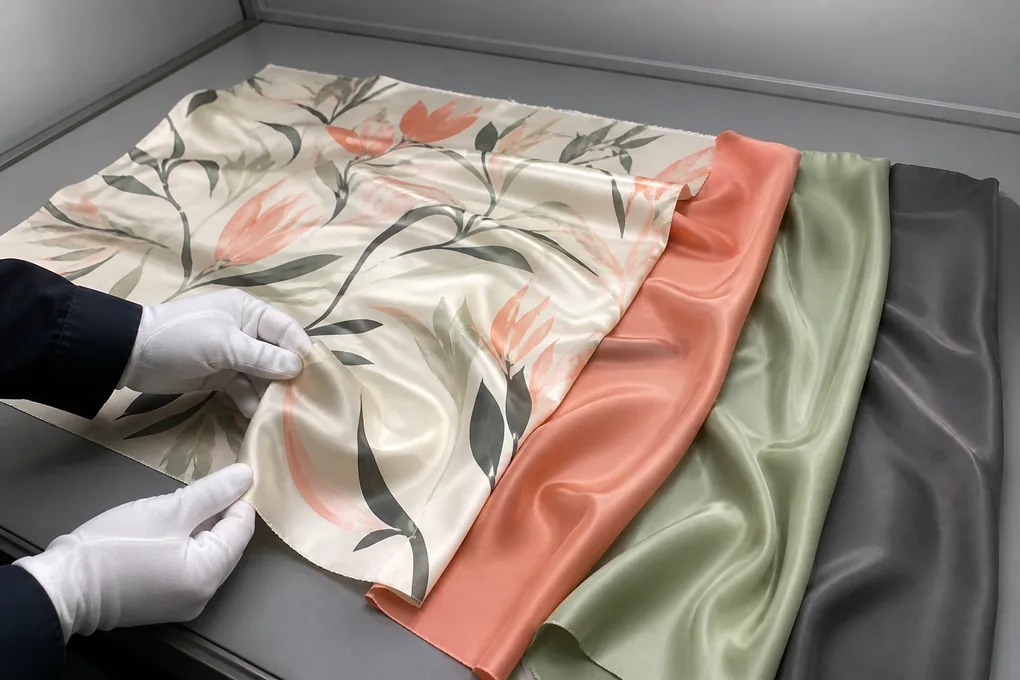
Make Fabric Surface and Colour Questions Specific to the Customer Unit
Buyers often begin a silk conversation with a visual or tactile direction: a quiet sheen, a smooth-looking surface, a fluid fold, a neutral colour story, or a more vivid accent. Make that observation specific to the finished article and the way a customer receives it. Separate the surface or colour issue from broad category language, so product, brand, and procurement colleagues know exactly what they are comparing. For a pillowcase pair, identify the sleeping face, visible reverse, opening edge, or fold used in product imagery. For bedding, distinguish the broad bed surface from the finished edge a shopper sees while making the bed. For an accessory, identify the front, contact area, or presentation side. Then state the colour or surface impression under review. This enables a focused response without assuming an unconfirmed material grade, construction choice, or selling claim.
Describe the Surface Observation Your Team Needs to Discuss
Use product language that points to a visible area of the finished item
A customer-facing surface should not be confused with every component
A buyer may want to discuss the visual surface of a pillowcase, bedding panel, eye covering, or hair accessory because it shapes the customer’s impression of the article. Name the item and the visible area, then describe the observation in ordinary language. You may be comparing a calmer or more reflective look, a smoother or more textured impression, or the way a textile sits within a product presentation. This gives the conversation a clear purpose without turning one descriptive word into a complete material statement. A photograph can help explain the visual direction, but it does not replace a written question about the component. We do not infer material composition, performance, or other unprovided detail from a surface observation. Explain what the team sees and the customer moment in which that observation matters.
Use Colour References to Explain Relationship Rather Than a Screen Match
A colour direction becomes clearer when it is connected to the article and pack layer
State what should lead and what should support the customer experience
In a silk assortment, colour often directs the visual hierarchy for retail, beauty, hotel, or gift concepts. Describe the role it should play in the customer unit. Should the textile article lead, or should a pouch, sleeve, card, or another layer provide contrast? A digital image or colour name can start the discussion, but it cannot settle the whole relationship. Identify the article and component involved, then describe the comparison your team wants to make. This enables brand and product colleagues to distinguish a collection palette from the colour question for one item. We do not assume that a screen view or a broad colour term resolves every choice. We stay with the stated visual issue and its defined customer unit.
Keep Surface and Colour Directions Separate From Customer Claims
A visual preference should not be asked to carry an unprovided promise
Use a direct buyer brief to keep each question proportionate
A product team may have a clear visual direction for a silk article while still deciding how its business will describe the item to customers. Keep those discussions separate. A surface observation, colour reference, or lifestyle image can explain the aesthetic under consideration; it does not automatically create a customer claim, material conclusion, or performance statement. State the article, visible component, and product role first, then name the choice needing discussion. This protects customer communication from being built on a phrase that only described an early visual idea. It gives procurement a sharply defined supplier question. We will not turn a general sample discussion into a promise about the finished product. We stay with the product direction and open choice your business has identified.
Use Artwork and Print References on the Correct Silk Surface
Artwork, logos, motifs, and written messages need a physical location on a silk article or a related presentation element. Name the textile surface or pack layer before describing the visual asset. A logo, pattern, or card phrase plays a different customer role on a pillowcase, bedding panel, eye covering, pouch, sleeve, or box. Clear placement questions stop a general file being read as a full product design. Describe the artwork issue from the customer’s viewpoint. A border may appear on a folded pillowcase, a repeating motif may cross an eye-covering panel, and a small message may be seen only after opening a pouch. Specify whether the asset informs an exterior face, inside card, label, or standalone presentation piece. This lets product and brand colleagues discuss scale, orientation, and hierarchy in the proper customer unit while preventing an artwork file from appearing to approve every component or package layer.
Map Each Artwork Asset to a Named Article Component
A motif or logo needs a physical destination in the customer unit
State whether it belongs on textile, label, card or packaging
When your team shares a logo, motif, pattern, illustration, or written phrase, identify its intended product location. It might belong on a pillowcase face, bedding panel, eye-covering front, pouch, sleeve, card, or box. That location defines the asset’s customer role. A logo on an outer sleeve introduces a unit differently from a quiet textile detail, and a motif on silk creates a different experience from a printed card. Name the one question the asset should inform and the point your team has not yet chosen. This keeps the art conversation connected to the finished article. We do not infer artwork rights, final placement, colour result, or a complete design from an unlabelled file. We discuss the buyer-owned input in the product context you provide.
Describe Pattern Direction and Placement as Product Questions
A directional visual needs to relate to the way the article is seen and folded
Name the customer view your team is considering
A pattern may look different on a flat artwork view, a folded pillowcase, a styled bedding component, a sleep-mask front or a gathered accessory. We encourage buyers to explain the customer view that matters to their discussion. Is the pattern intended to lead on the main visible surface, act as a quiet detail near an edge or relate to the way the product is folded in a package? This makes a placement question easier to understand. It also helps product and brand colleagues avoid carrying one visual direction across components with different shapes. We do not assume that a reference image settles every seam, opening, label or pack layer. A clear buyer note names the article, visual surface and intended customer moment, then identifies the placement question that remains open for the team.
Separate Textile Artwork From Card and Packaging Messages
A separate printed piece can carry words without crowding the silk article
Choose where the customer should encounter each buyer-controlled message
A buyer may want a textile article to remain visually calm while a card, insert, sleeve, or box carries a product name, brand message, or gift note. Select the layer that should deliver each message. A pillowcase motif can remain independent of an outer-sleeve message, while an eye-covering front can carry a limited visual detail and an insert can explain the customer occasion. This separation gives the unit a clearer visual hierarchy and lets your business retain control of customer language. We do not create unprovided claims, legal interpretations, or market directions. We discuss the placement and product role your team names, keeping artwork and printed messaging connected to the actual silk unit rather than a general creative concept.
Map Components and Presentation Layers Before the Discussion Expands
A silk customer unit can contain the textile article, its fold, a label, printed card, pouch, sleeve, or box. We help buyers map those layers simply. When every component has a stated role, a sample discussion can stay with the right question instead of becoming an unstructured list of product, artwork, and packaging ideas. The map need not be elaborate: show the recipient-facing unit and the aspect your colleagues want to examine. Start with the item the customer handles, then add only layers that alter the buyer question. An eye mask and pouch might be reviewed as a gift relationship, whereas a pillowcase pair may require a label location or fold sequence. Note what belongs inside the selling unit and what is only a later handling layer. This grounds the conversation in the customer experience without establishing packaging material, protective outcome, shipment method, or commercial arrangement.
List the Textile Article Before the Supporting Presentation Layers
The finished silk product is the centre of the customer unit
Name what the customer uses before you name what introduces it
Start a component map with the silk item the recipient will use: perhaps a pillowcase, bedding article, eye covering, hair piece, or another named style. Add supporting layers afterward, such as a sewn label, printed card, pouch, sleeve, or box. This order anchors discussion in the textile rather than an outer visual concept and shows which reference belongs to each component. A card can introduce a gift message; a pouch can shape the opening experience; a sleeve can present a pillowcase duo, while the sewn label stays with the article. Give every layer a concise job description. That makes a specific sample question easier to discuss without assuming shared material, artwork, or customer wording across every component.
Connect Each Reference to Its Layer in the Customer Unit
A photo or file should have one defined place in the component map
Keep textile, packaging and printed references from crossing scopes
Once you have listed the article and support layers, attach each reference to the layer it is meant to clarify. A swatch may relate to the main silk surface. A product image may show a fold or visual arrangement. A logo file may be intended for a sleeve. A card phrase may belong to an insert. This simple map prevents a reference from being interpreted too broadly. It also gives different buyer teams a clear way to discuss their part of the unit. Product colleagues can focus on the article, brand colleagues can focus on visual assets and procurement can bring the correct question into a supplier discussion. We do not assume that a single reference defines all parts of a set. A defined layer and purpose keep the conversation more accurate and reduce the chance that an early creative idea becomes a hidden product requirement.
Keep Customer Presentation Separate From Outer Handling Questions
A pouch or box for a recipient has a different role from a business grouping input
State the audience and layer before you raise a packaging issue
A buyer may have questions about customer presentation as well as outer business handling. Keep those topics separate in a sample discussion. A pouch, sleeve, card, or box shown to a shopper, guest, or recipient introduces the silk unit; an outer grouping or receiving matter belongs in the buyer’s operations context. Name the layer under discussion and its relevance to the present article. A sample or package image cannot establish carton size, carrier arrangement, transit results, or another unprovided term. A separate note preserves product-presentation clarity while creating room for procurement or operations to raise its own question. This distinction stops the customer unit from being buried beneath a generic packaging request.
Discuss Intended Customer Use Without Assuming Product Performance
A B2B buyer may be considering a silk article for sleeping, gifting, retail display, a beauty routine, a hospitality setting or another defined customer context. That use context helps us understand why a product feature or presentation detail matters. It does not establish performance, testing, material composition or a customer result. We ask your team to describe the intended use and the specific product question it raises, keeping the discussion practical and honest. Connect the use setting to an observable product moment. A hospitality buyer may be reviewing a made-bed appearance; a gifting buyer may care about the first reveal; a beauty-led brand may be considering a bonnet’s visible profile or a carded accessory arrangement. Say what the customer would see, touch, open, or wear and which article feature makes that moment relevant. This gives the discussion useful context without converting a lifestyle image or product category into a claim about comfort, wellness, performance, or consumer outcome.
Explain the Customer Setting That Gives the Article Its Purpose
Sleeping, gifting, beauty and hospitality can raise different product questions
Use the setting to focus the buyer conversation rather than make promises
The intended customer setting gives a silk sample conversation useful context. A pillowcase may be considered for a bedroom collection, a beauty-led retail edit or a gift unit. A sleep mask may be part of a travel, hospitality or corporate presentation. A scrunchie may sit within a smaller accessory range. We ask buyers to state the setting and the product question that follows from it. Perhaps your team is comparing the customer-unit fold, the role of a pouch, the visible colour, a pattern direction or the way a product is grouped. This is different from making claims about what the article will do. We do not infer performance, testing results or customer outcomes from the stated use. We use the context to understand why the feature matters to the buyer and which component should be discussed next.
Keep Customer Expectations Connected to the Actual Article
A category image should not create promises for an unnamed product
Name the item and component your team wants customers to understand
Customer expectations are shaped by the finished article, its visible components, the presentation around it, and the language your business decides to use. Keep those expectations attached to a named product. A broad image of silk bedding may create a mood, but it does not define the customer unit, individual pieces, labels, or packaging in your own range. An accessory image may show a style direction while leaving support components open. State the item and customer moment under review, then describe the issue your team wants answered. This allows brand and product colleagues to create more deliberate customer communication later. We do not turn intended use into a performance statement or a general product promise. We remain focused on the article, component, and buyer decision you describe.
Separate Use Context From Care, Testing and Commercial Questions
Different subjects need their own written buyer conversation
Do not let a simple customer setting carry unsupported conclusions
A buyer may have use context in mind while also thinking about care communication, product testing, commercial planning or other project questions. We ask you to separate them. The customer setting can explain why a pillowcase, bedding component or sleep mask matters to your range. It does not answer how your business will communicate care, what testing may be relevant, what product terms may apply or any commercial issue. A clear brief names the silk article and intended setting, then states the specific product or presentation choice the team wants to discuss. This keeps an early sample conversation concise and prevents one useful customer observation from being stretched into a claim that the site or reference material cannot support. We will discuss the buyer question in front of us and leave other matters to the appropriate project conversation.
Use Comparison Notes to Separate the Choices Your Team Is Weighing
A short comparison note can make a silk sample conversation more useful than a long request for a general impression. Write the alternatives under consideration, the article they affect, and the customer question that separates them. This helps your team compare product, colour, artwork, or presentation directions without treating one early reference as the final answer to every part of the brief. Make the alternatives mutually understandable. Instead of asking which version is better, identify the feature that differs: a closure view, colour relationship, printed panel, tie route, pack count, or customer-unit presentation. State why that difference matters to the buyer’s intended customer moment. Two labelled directions let the relevant reviewers consider the same choice and provide a concise basis for discussion. An early preference need not decide material, timing, price, or another separate project matter.
Write the Two Product Directions in Plain Buyer Language
A comparison should name the article and the difference your team sees
Avoid a broad request to decide what is best without context
A buyer may compare a single pillowcase presentation with a paired unit, a quieter surface with a more visible motif, a pouch-led eye-covering gift concept with a sleeve-led retail concept, or two ways to introduce an accessory selection. Express the alternatives in ordinary language. Identify the silk article, recipient-facing unit, and the difference under review. That gives every reviewer a clear comparison point and prevents an image from being read as an already-selected product direction. You do not need to call one option universally better. Explain how each route fits your customer or range and identify the choice that remains open. We discuss the comparison you have framed instead of presuming the route your business should take.
State the Buyer Criterion That Makes the Difference Matter
A comparison is useful when your team explains what it is trying to protect
Connect the choice to the customer unit, brand role or product question
Every meaningful comparison has a reason. Your team may want the silk article to remain central, a recipient-unit count to be clearer, a card message separated from textile, colour aligned with a collection, or a product feature kept visible in the fold. State the buyer criterion that makes the difference important. It creates one shared starting point for product and brand reviewers and helps procurement frame a precise B2B question. Your organisation need not settle every internal criterion before asking; describe the decision the comparison should inform. A clear criterion stops discussion from drifting into unsupported statements about performance, market response, or commercial results. We remain with the practical visual, product, or presentation question your team has identified.
Keep the Comparison Attached to the Current Article and Component
A useful note identifies where the alternatives apply
Do not let an accessory comparison decide a bedding article by accident
A comparison that makes sense for one silk article may not suit another. A pillowcase-fold question may not apply to an eye-covering front, and a card-versus-sleeve decision for a gift item may not apply to a bedding component. Put the article and component on every comparison note. This keeps variations inside their proper product boundaries and makes an RFQ clearer, because China EverBen Silks can see whether the decision concerns the main textile, edge, label, card, or pack layer. We do not infer that an option should move through a whole range merely because products are related. If the comparison only concerns a pillowcase face, state that it ends there rather than extending it to a scrunchie or bedding panel. This containment keeps each silk category from carrying an unrelated visual decision.
Coordinate Buyer Review Around the Product Question, Not a General Impression
A sample discussion can involve product, brand, quality and procurement colleagues, each looking at the article from a different perspective. We ask buyers to make the product question visible to every participant. A general impression such as looks good or feels premium does not give a team enough to compare. Name the silk article, component, reference purpose and open decision so each colleague can contribute to the right part of the brief. Give each reviewer a defined observation to make. Product may compare a construction relationship, brand may consider the visual impression, procurement may organize the business context, and quality may identify its own review question. The buyer can capture these inputs beside the same article and reference rather than collecting disconnected opinions. Name the next choice the group needs to make after the discussion. That structure keeps the sample exchange useful without treating informal comments as a final product, commercial, or approval decision.
Give Product Colleagues the Article and Component Question
The finished item should remain central when several teams join the discussion
State which physical part needs a product decision
A product colleague may need to consider the silk article, customer unit, visible surface, opening, edge, strap, label or presentation relationship. We encourage buyers to name that question directly. A pillowcase pair may require a discussion about the fold and customer unit. A sleep mask may have a question about the front visual field and the pouch. A bedding component may need to be separated from the broader set. By identifying the article and component, you give product colleagues a practical focus. They do not need to make conclusions about every aspect of the project to contribute a useful view. We do not treat a broad positive or negative impression as a product decision. We focus on the physical item and choice your team has stated, which gives the sample conversation a clearer purpose.
Give Brand Colleagues the Visual and Customer-Message Question
Artwork, colour and packaging ideas need a named customer role
Map the visual direction to the silk surface or presentation layer
A brand colleague may be considering a colour relationship, motif, logo position, product name, card message, or package layer. Identify the component or customer moment the visual idea concerns. A pillowcase face, sleeve, pouch, card, and box each carry different parts of a customer story. Naming that layer gives brand feedback a product boundary and prevents a creative conversation from becoming a general reaction to an image. It also tells procurement which buyer-controlled art or copy belongs in the B2B inquiry. We do not infer a final visual system or customer claim from a reference. We discuss the art or message role your business is actively considering for the named silk unit.
Give Procurement the Next Question That Needs a Direct Answer
A concise supplier question keeps the discussion from becoming an unstructured summary
Collect only the inputs needed for the immediate buyer decision
Procurement can move a sample discussion forward by gathering the article, customer unit, reference purpose, and buyer decision into one focused request. Begin with what product and brand teams have identified, then state the point still open. You may need to discuss a component, visual comparison, presentation layer, or recipient-unit arrangement. Leave unrelated finance, schedule, and other commercial planning outside this article-specific request. We do not assume those terms from an early inquiry. A concise message gives China EverBen Silks a better way to understand the B2B context and gives colleagues a clear summary of the issue. The result is a conversation tied to a real silk article instead of a general request for a sample impression.
Explain Changes to the Silk Direction in Plain Buyer Language
A silk article brief may change as your team compares colour, artwork, product units, folds, or pack layers. State the change, the article affected, and the active decision now raised. A useful update explains the revision rather than simply adding an unexplained image or file. It keeps everyone connected to the current product direction without treating a revised reference as an answer to every remaining choice. Use a before-and-after note: name the earlier direction, identify one change, and describe the decision it creates. A colour reference may change while the customer unit stays the same, or a pack idea may shift while the textile question remains open. This prevents a new attachment from silently displacing prior context and lets China EverBen Silks concentrate on the present issue instead of assuming earlier product or commercial conversations no longer apply.
Name the Article and Component Affected by the Update
A useful change note starts with the physical product rather than a file label
State whether the change concerns textile, artwork, package or customer unit
When your team changes a silk direction, first identify the article and component involved. The revision might concern pillowcase colour, an eye-covering motif, scrunchie-set arrangement, card message, or outer-sleeve relationship. This tells colleagues which part of the customer unit requires reconsideration and keeps an updated reference from seeming to change every product in the range. Explain the visible or recipient-facing reason in plain language. You might be making textile more central, moving a message into an insert, simplifying a colour relationship, or clarifying a gift-unit count. We do not assume a final outcome from the update. We discuss the current buyer question around the named item and leave other decisions open until your team is ready to address them.
State What the New Direction Is Intended to Clarify
A clear purpose makes a change easier for product and brand teams to evaluate
Tell us whether it affects hierarchy, colour, pattern, component or presentation
An update should answer a particular question. Your team may be changing a visual direction to clarify the recipient-unit hierarchy, make a product component easier to see, separate a show surface from a pack layer, or keep a collection message apart from a product identifier. Say what the adjustment is intended to clarify. Formal creative language is unnecessary. For example, a pillowcase may remain the visual focus while its sleeve becomes quieter, or an eye mask may retain its styling while the gift message moves to a card. These details show reviewers what changed and what stayed stable. We will not treat an updated image as a complete new product brief. We focus on the intended clarification and the next open question your business wants to discuss.
Keep Unresolved Choices Visible After a Change
A revised reference can still leave a buyer decision for the next discussion
State the remaining question instead of letting the team make assumptions
A revised colour, motif, fold, or pack layer can settle one visual concern while leaving another choice open. The buyer may still need to decide whether an article is offered as a pair, where a product name appears, how a pattern meets an opening, or which support layer belongs with a gift unit. Put the remaining question beside the change. This keeps the product conversation honest and gives each colleague a clear next step. It also helps procurement avoid sending a broad update without context. We do not infer that an altered asset completes the article or commercial brief. We discuss the named silk item, updated component, and unresolved buyer choice, so your business can develop the direction deliberately rather than through unspoken assumptions.
Send a Focused B2B Silk Sample Inquiry That Your Team Can Use
A well-prepared inquiry is a practical bridge from product thinking to a direct B2B discussion. It does not need to be long. Include the silk article, recipient-facing unit, component or presentation layer, reference purpose, business setting, and open decision. This makes the conversation useful for China EverBen Silks and understandable for the buyer’s product, brand, and procurement reviewers when they revisit it. Close with the question that should guide the reply. The buyer may want a visible surface direction compared, an article component clarified, artwork placement considered, or a selling-unit presentation understood. Identify the buyer function that will assess the next response and attach any reference that makes the question clear. This creates a focused sample discussion, while price, availability, order terms, timing, shipment, and final approvals remain subject to a separate written project conversation.
Open With the Article, Customer Unit and Buyer Context
The first lines should make it easy to picture the product your team is considering
Name the item before you describe a reference or visual preference
Open an inquiry with the silk article and recipient-facing unit. Identify the relevant merchandise route: a lone pillowcase, coordinated pair, bedding component, eye mask, hair bonnet, scrunchie selection, pouch-led item, or another defined product. Then give the business setting: retail, hospitality, beauty, gifting, or another customer context. This gives the sample conversation an immediate purpose and prevents a broad silk request from obscuring the finished item your business is developing. A complete project specification or assumed commercial terms are unnecessary. A clear article and buyer context let us understand the unit question under review and keep the B2B discussion connected to a real product rather than a general category.
Describe the Reference and the One Question It Is Meant to Answer
A swatch, photograph, drawing or comparison note needs a written purpose
Tell us which component or customer moment your team is examining
Add a reference only after identifying the article. Tell us what the item is—a swatch, fold photograph, shape drawing, sleeve-logo file, gift-card wording, or a two-direction comparison—and specify the single detail to be reviewed. Connect it to a precise place: the show face, opening, binding, card, pouch, or another presentation element. This turns an attachment into a useful buying input instead of an unexplained visual. Do not interpret that attachment as a full specification for construction, material selection, order quantity, delivery, or a commercial agreement. We respond to the stated article point, while project-specific requirements are clarified in subsequent written communication.
Keep Other Project Questions in Separate Lines
A product-focused inquiry is clearer when unrelated terms do not take over
State the open silk decision and leave other subjects for their own discussion
Your business may have wider work beyond the sample direction, including commercial planning, destination context, product wording, or other internal work. Keep the immediate article issue clear and open a separate conversation when a different subject needs attention. This gives product, brand, and procurement reviewers a clear view of the current request. China EverBen Silks can then address the named silk issue without having to select a wider priority. Keep the message compact: identify the item, recipient unit, component, visual purpose, and unresolved choice. That is enough to start a useful B2B exchange, avoid assumptions, and support the team’s next product decision. When several messages are active, put product development first and assign commercial planning or distribution work to its own approved discussion. That order keeps one reply from being asked to settle price, operational routing, legal review, and buyer approval for several internal teams alongside a single product observation.
B2B silk sample discussion questions
What should I include when I ask about a silk sample discussion?
Name the article, recipient-facing unit, component, reference purpose, buyer setting, and the specific decision for which you need a response.
Does an image or reference item define the finished silk product?
No. A reference can clarify one visual or product question, but the finished article, components and buyer requirements need their own written discussion.
Can a sample discussion settle price, timing or shipping?
No. Those matters are outside the scope of a general sample discussion and need to be raised as project-specific B2B questions.