
P044
B2B Website Use and Inquiry Terms for Silk Buyers
We built our website for wholesale, retail, hospitality, beauty and corporate-gift teams that need a practical starting point for silk product conversations. Use the information here to frame a product question, compare internal options and prepare an RFQ. We ask every buyer to keep commercial, technical and brand decisions in the written documents used for the relevant project rather than assuming that a category description settles a product detail.
Published by China EverBen Silks Reviewed by Mark Liu
Use Our Silk Website to Frame a Business Question, Not to Guess a Finished Product
When you are comparing silk pillowcases, bedding, sleep accessories or presentation ideas, a category page can help you put a name to the article and identify the questions that affect your buying brief. We want that first visit to save your team time. Start with the product family, then note the physical features, business use and unresolved decision that matter to your programme. That approach is more useful than treating a broad image or a short label as a complete product definition.
Begin With the Finished Article Your Customer or Guest Will Receive
Name the item before you compare materials or presentation details
A pillowcase, sleep mask, scrunchie or bedding component needs its own brief
We ask buyers to identify the finished silk article before opening a general material conversation. A pillowcase creates a different buying brief from a duvet-cover article, an eye-covering accessory, a hair-protection format, or a presentation pouch. The chosen item determines which surfaces are visible, which edges or closures need attention, how the article is folded, and what your customer notices first. If you are building a retail range, say whether the article is a core item, an entry point, a seasonal colour addition, or a paired offer. If you are planning hospitality or a corporate programme, explain the use occasion and the physical unit you expect to present. We can then discuss the relevant silk article in direct language. A category image may help your team start that discussion, but it should not replace a written description of the item you want to buy. Naming the article early also helps a procurement team keep a pillowcase question separate from a packaging question or a brand-artwork question.
Read Category Information Alongside Your Own Selling or Service Context
Your business model changes the questions worth asking
Retail, hospitality, beauty and gift programmes do not use silk in the same way
A wholesale buyer does not make decisions in a vacuum. A retailer may need to consider a colour story, shelf presentation, online product language and how closely a new silk item sits beside existing bedding. A hotel or spa team may be thinking about room use, laundering communication, replacement planning and the visual consistency of a guest experience. A beauty business may focus on how a sleep accessory is presented with a hair-care or skin-care offer. A corporate-gift team may be balancing recipient experience, brand restraint and a packaging moment. We ask you to describe that context in ordinary business language because it tells us which product questions to explore first. You do not need to write a long brief before you contact us. A concise note such as “we need a silk sleep mask for a premium welcome set and are deciding between a pouch and a sleeve” gives the discussion direction. The category information remains a starting point; your business objective gives it practical meaning.
Keep Unknown Details Visible Instead of Filling Them With Assumptions
An open question is more useful than an invented requirement
Separate what your team has decided from what still needs discussion
A productive silk inquiry does not need every detail settled before it begins. In fact, buyers often lose time when a preliminary brief quietly turns an assumption into a requirement. You may know that you want a silk pillowcase but still be weighing the size, closure approach, colour direction, edge treatment or package format. State those open choices plainly. Tell us which detail is fixed and which detail is still under review within your own team. That allows the conversation to focus on the decisions that genuinely affect the article rather than create false precision. We will not treat an image, a competitor listing or a broad category label as a substitute for your stated requirements. Use the website to identify the vocabulary you need, then bring your unresolved questions into the RFQ. That is particularly helpful when product, buying and brand colleagues are contributing to one range. Clear open questions let each colleague see where their input is needed without making anyone defend an early estimate as though it were final.
Keep Website Images, Product Language and Buyer-Supplied Details in Their Proper Place
Silk products are highly visual, yet a photograph cannot show every construction choice, material detail or commercial condition a B2B team may need to discuss. We use images and descriptions to help you recognise a product direction and prepare a better question. Bring your own required details into the conversation so we can address the article you intend to buy rather than rely on visual interpretation alone.
Use Images to Discuss Aesthetic Direction Rather Than Hidden Specifications
Colour, fold and presentation can be useful conversation starters
Visual similarity does not settle construction or commercial details
We know that buyers often begin with a visual response: a quiet ivory pillowcase, a jewel-tone sleep mask, a smooth folded sheet set, a narrow scrunchie or an understated gift box may fit the mood of your range. Use that response. Tell us what you see in the image that is relevant to your product direction, such as the colour family, overall presentation, visible edge, fold, proportion or degree of branding. Then state the questions that the image does not answer for you. A photograph cannot by itself establish the silk construction, dimensions, components, finish, packaging contents or terms of a project. It also cannot communicate the commercial choices that must be discussed with your buying team. When you use an image as a reference point, keep the request focused: “We like this calm, folded presentation; we need to discuss the article and the outer pack separately.” That gives both sides a clear place to begin and avoids asking a visual asset to carry more meaning than it can reasonably provide.
Treat Product Names as Conversation Labels Until Your Brief Adds Detail
A familiar name can cover many possible finished articles
Add the component, intended use and visible feature that matter to you
Terms such as silk pillowcase, silk bedding, sleep mask, bonnet and scrunchie help a buyer navigate a catalogue, but they do not describe every choice involved in a particular product. A pillowcase name alone does not tell us what edge, opening, dimensions, colour approach or selling-unit direction your team has in mind. A bedding label does not tell us which pieces belong in the discussion, how you plan to present them, or which components need aligned treatment. We ask you to add a few words that make the product name meaningful to your business. You might say “a silk pillowcase for a premium beauty-led retail edit,” “a sleep mask intended for a travel gift set,” or “a silk bedding component we want to place within a bedroom collection.” Those phrases are not legal descriptions; they are useful buying context. They help us distinguish a general category from the specific product question your organisation needs to work through. The more clearly you name the article and purpose, the less likely a generic title will create confusion between teams.
Bring Your Own Required Information Into the Written Conversation
Your brand and product rules belong in the brief you provide
Keep internal buying requirements clear without over-sharing sensitive material
Your business may have product language, artwork rules, packaging guidelines, channel constraints or internal quality questions that are important to the silk item. We invite you to identify the relevant requirements in a focused way. You can say which elements are buyer-owned, which are still open, and which colleague needs to consider a decision. There is no need to place unnecessary personal, payment or confidential information in an initial web inquiry. Begin with the information needed to explain the article and the decision. If you attach artwork, drawings, copy or reference images, provide only material your business is entitled to share and explain what you want us to consider. A clear note such as “the logo belongs on the outer presentation, not on the textile” is more useful than an unlabelled file. A concise brief lets us respond to the business question while your team retains control of its brand materials and internal criteria. It also makes it easier to return to a particular item when colleagues compare options later.
Use a Silk RFQ to Start a Focused Commercial Conversation, Not to Create Assumptions
An RFQ works best when it tells us what you want to discuss and why your team needs an answer. We use the initial inquiry to understand the article, buyer context, variant mix and open question. It does not turn an early conversation into a purchase order, a binding quantity, a settled product description or a final commercial arrangement. Keep the inquiry practical and let later written communication address the details your project requires.
Describe the Decision Holding Up Your Silk Purchase Plan
A single clear question can move a stalled brief forward
Tell us what your product, buying or brand colleague needs to decide
The most useful RFQs identify the decision behind the request. A buyer may be deciding whether a pillowcase should be offered as a single item or paired presentation, whether a sleep mask belongs in a branded welcome set, whether a scrunchie range needs a narrow or fuller silhouette, or whether bedding components should be discussed together or separately. These are concrete product questions, not vague requests for more information. Explain what is delaying your internal conversation and what kind of clarity would help. You may be comparing an existing range, developing a new programme or bringing a silk article into a category for the first time. In each case, tell us the business situation in a few direct sentences. We can then respond to the point your team is actually trying to resolve. Avoid presenting an internal target as a settled product commitment when it is still a working direction. We value a clear honest brief because it gives both sides room to address the right question before your team spends time on details that may not belong in the finished article.
Separate Quantity Context From a Final Purchase Commitment
A volume range can explain the scale of the conversation
Variant mix often matters more than one headline number
Business buyers commonly need to discuss a quantity context before every variant has been settled. You may be considering a single colour or several colours, one size or several sizes, one retail unit or several presentation formats. State the range or mix that your team is exploring and explain how the total is divided if that division is already known. A total number without the article, variant and selling-unit context can obscure the question you need answered. At the same time, an early quantity note should not be treated as a final purchase commitment. It is a way to help us understand the scale and shape of the discussion. If the mix remains open, say so directly. A concise note such as “we are comparing two colour directions for a pillowcase range and need to decide the range structure first” is more useful than a bare number. It gives your procurement team a starting point while leaving room for the written commercial discussion that follows.
Use One Inquiry for One Coherent Silk Product Question
Keep unrelated articles from obscuring the decision you need to make
A short series of focused questions is easier to evaluate than one catch-all request
A B2B enquiry becomes difficult to use when it mixes unrelated articles, brand concepts and buying questions without separating them. If your company is exploring a silk pillowcase range and a corporate-gift sleep mask at the same time, identify them as different discussions even if both involve silk. The customer, presentation, product surfaces and internal stakeholders may be different. We suggest grouping only the items that share a real commercial or design decision. A bedding programme can include coordinated components when your team is considering them as one collection. A sleep mask and a pouch can be discussed together when the pouch is part of the same recipient experience. Clear grouping prevents a busy purchasing brief from turning into a list of disconnected requests. It also helps you decide which colleague should answer which question before more information is exchanged. The aim is not to force a complex buying programme into a rigid format. It is to make each discussion readable enough that the relevant silk article, buyer goal and open decision remain visible from the first inquiry onward.
Make Silk Material and Construction Questions Specific Enough for a Buyer Conversation
Silk is not one generic finished-product answer. The article you want to buy may involve fibre, fabric, weave, finish, lining, filling, edge, closure, elastic, print, embroidery or packaging considerations. We ask B2B buyers to identify the physical element they mean when they use a broad material word. That helps product and quality colleagues discuss a silk question in a way that can be connected to the actual article.
Name the Textile Surface and the Component That Need Attention
A silk face, binding, lining or closure may raise different questions
Keep material language connected to the finished item rather than a category label
When a buyer says that a product should be silk, we ask which visible or functional part of the article that direction applies to. A pillowcase may involve a main textile surface, an opening detail and an edge finish. A sleep mask can include a front, a back, a binding, a strap and an elastic element. A bonnet can involve a crown, a band and an interior treatment. A scrunchie has a textile exterior and an internal shape that affect how it is handled and displayed. By naming the component, you help us understand where your material question belongs. You do not need to use technical language you do not normally use; a clear buyer phrase is enough. For example, say that you are considering the visible pillowcase surface, the mask front or the packaging textile rather than simply asking for silk quality. This keeps the conversation anchored in the product your customer will see and touch. It also lets your team compare the relevant elements without turning one broad material word into an assumption about every component.
Explain the Tactile and Visual Direction You Need to Discuss
Hand feel, drape, lustre and weight belong in a buyer brief when they matter
Describe the customer experience you seek without pretending a photo settles it
Silk is often chosen because a buyer wants a particular visual and tactile experience. Your team may be looking for a fluid drape, a smoother hand, a quieter sheen, a more substantial bedding feel, a lighter sleep accessory or a presentation that reads as refined rather than decorative. Those are valid business directions, especially when a product manager is balancing brand position, customer expectation and the rest of a collection. State the feeling or visual role in your own words and identify the finished article it concerns. Avoid asking a single descriptive word to settle the discussion. Terms such as soft, glossy, premium or smooth can mean different things to different teams unless they are connected to a product use. We can discuss your intended customer experience more clearly when you tell us whether the article is for sleeping, gifting, beauty use, a bedroom collection or another defined setting. Keep product photography in perspective: it can communicate mood, colour and styling, but it cannot replace the written conversation about the features your team considers important.
Separate Finished-Product Questions From Fabric-Only Questions
A finished silk article includes more than the textile itself
Construction and presentation can change the buyer experience as much as the fabric direction
A fabric discussion and a finished-product discussion overlap, but they are not the same. A buyer choosing a silk article also needs to consider how the textile is made into the item the end customer will use or receive. For bedding, that can mean the relationship between the main surface, edges, openings and coordinated pieces. For a sleep mask, it can mean shape, binding, strap and presentation. For a gift programme, it can mean how the textile article is folded, placed and introduced when the unit is opened. We invite you to tell us whether your question is about the fabric direction, the finished construction, or the relationship between both. That distinction helps avoid a common purchasing problem: a team agrees on a material mood but discovers later that the finished article still needs product decisions. Use the website to recognise the article category, then give us a written description of the element you want to discuss. A clear physical question makes it easier for product, procurement and brand colleagues to speak about the same item.
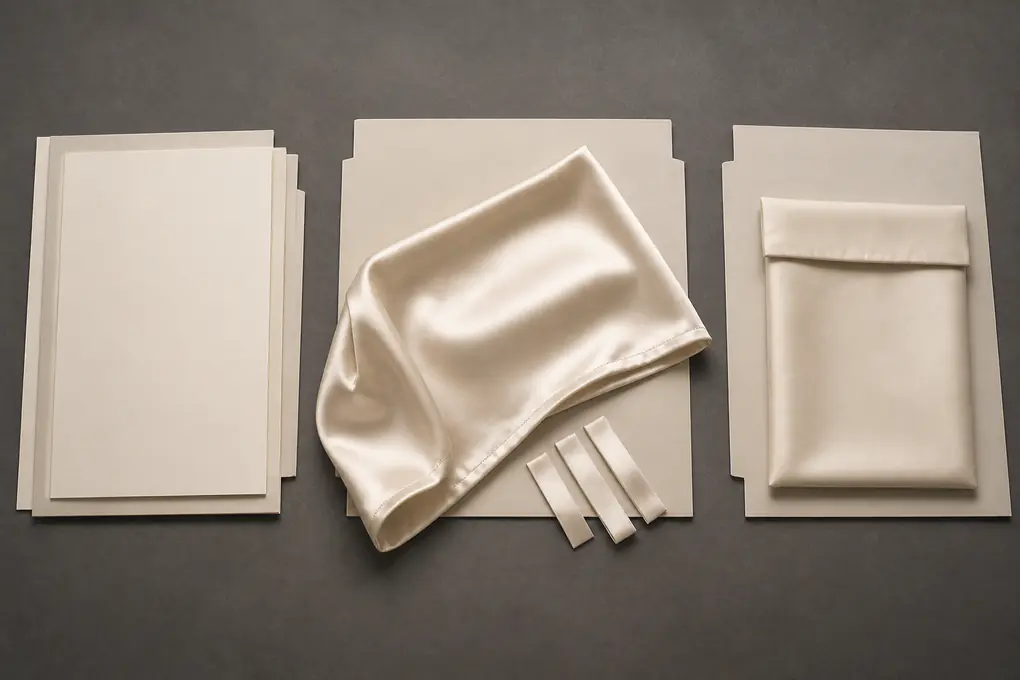
Keep Colour, Print and Brand Artwork Under Buyer Control From the First Silk Discussion
A silk range can depend on a restrained neutral palette, a seasonal colour story, a signature print or a corporate identity. Those decisions belong to your business. We can discuss where a colour, motif, logo or message may sit within the finished article and its presentation, but we do not assume artwork ownership, wording, colour standards or a final layout from a general inquiry. Clear buyer direction keeps a visual discussion useful without turning it into an unspoken commitment.
Describe Colour as a Product Decision Rather Than a Screen Impression
Tell us what role the colour plays in the collection or programme
A neutral bedding edit and an event gift may need different colour conversations
Colour can be central to a silk purchase, but an on-screen appearance is only one part of the conversation. We ask buyers to describe the role a colour should play in the product line: a quiet core neutral, a seasonal addition, a beauty-led accent, a hotel-room tone, a corporate palette or a limited gift concept. Then tell us whether you are choosing from an existing internal direction, developing a new one or comparing possibilities. This context matters because a pillowcase sold within a bedroom collection may need a different visual relationship from a sleep mask inside a beauty set. A colour name alone may not communicate the intended mood, the product surface involved or whether another component needs to coordinate. If you share a colour image, explain what you want us to notice and what remains open. We keep the discussion grounded in the finished silk article and its presentation rather than treating a digital image as a complete instruction. That approach helps buyer, brand and product teams talk about colour with the same practical goal in mind.
Place Logos, Motifs and Messages on a Named Physical Surface
Branding becomes clearer when the article and placement are stated together
A pouch, sleeve, card or textile face can serve different roles
When a buyer supplies a logo, motif or message, we need to know which part of the product experience it is intended to serve. A brand mark can appear in the outer presentation, a card, a pouch, a sleeve or a limited location on the textile, depending on your own direction. A motif can be part of the silk surface, an insert or an accompanying package element. The important point is to connect the visual material to a named physical surface and recipient moment. Rather than writing add our branding, tell us whether you want the mark to be the first thing a customer sees, a quiet detail discovered after opening, or a separate message outside the silk article. We do not infer your brand hierarchy or use wording beyond the materials you provide. Keep your files clearly identified and share only what your business may provide for the conversation. This gives your marketing and procurement colleagues a practical way to discuss placement, while the silk item remains the centre of the product decision.
Keep Artwork Decisions Separate From an Early Product Direction
A visual idea can guide discussion without becoming a final instruction
Separate buyer-owned design choices from the article questions still being explored
A mood board, logo file, campaign image or colour reference can be useful when it tells us what visual question your team is considering. It should not silently turn into a complete article definition. We suggest that buyers describe each shared asset in one sentence: what it shows, which product or presentation element it relates to, and what decision remains open. For example, you might say that a visual shows the quiet palette you want a pillowcase range to support, while the package format is still being discussed. Or you might explain that a logo is intended for a welcome-card concept, not for the sleep mask itself. This simple separation keeps design work from obscuring the product conversation. It also helps you protect your internal process by avoiding broad unlabelled file sharing. We will not treat an early creative direction as a settled arrangement. Our role in the initial discussion is to understand how your buyer-owned visual direction relates to the silk article, its components and its presentation.
Give Quality and Product Teams a Clear Way to Discuss Silk Expectations
Quality conversations are more useful when they are tied to an article, end use and question rather than a broad request for assurance. Your team may need to explore textile feel, visible appearance, construction, care communication, packaging condition or consistency across a range. We ask you to state the intended use and the detail your quality or product colleague needs to consider. That keeps an early discussion practical without making unsupported promises about a finished project.
Connect Every Quality Question to a Real Silk Product Use
Sleeping, gifting, retail display and beauty use create different buyer priorities
The end use tells us where your team wants to focus its attention
A quality question becomes easier to discuss when the buyer explains how the finished silk article will be used. A pillowcase intended for a consumer bedding range may lead your team to focus on the sleeping experience, visible finish, care communication and the relationship to companion items. A sleep mask within a travel or gift offer may bring attention to shape, comfort-related design questions, presentation and how the item is handled after opening. A silk scrunchie may raise questions about silhouette, texture, colour and how the product is displayed. We cannot decide your acceptance criteria for you, but we can understand the context in which those criteria will be considered. Start your inquiry with the article and use setting, then list the particular features your internal quality or product team needs to examine. This avoids a vague request for best quality and creates a practical route into the specific textile and construction questions that matter to the buyer.
Separate Product Appearance From the Information Needed to Support It
A polished image and a useful buyer brief serve different purposes
Ask for the detail your team needs rather than relying on a general impression
The visual appeal of silk is important, but a buyer may need more than a general impression when evaluating a potential product direction. If your team is considering a pillowcase, bedding set, sleep mask or accessory, say which visible and practical features need explanation. You may want to discuss the main textile surface, an edge, a closure, a lining, an elastic component, packaging treatment or the distinction between two product variants. Describe what you need to understand and why it matters to your customer or business use. We will not ask you to accept a broad marketing phrase in place of a meaningful conversation about the article. At the same time, avoid assuming that one short product description settles every technical question. The most productive route is to bring the article, intended use and specific point of comparison into the written discussion. That gives quality, product and procurement colleagues material they can review in their own roles without creating an implied promise from a general website statement.
Keep Buyer Criteria and Project Decisions Clearly Identified
Your internal requirements should guide the conversation without being assumed
State what needs consideration and which choices are still open
Every buyer organisation has its own approach to product review, customer communication and range management. Some teams arrive with detailed product criteria; others begin with a category opportunity and need to identify the right questions. Both approaches are workable when the brief makes clear what your team is asking us to consider. You can identify buyer-owned requirements, describe the product experience you seek and note which elements remain under discussion. For instance, a buyer may have a defined packaging rule but still be deciding the sleep-mask shape, or may have a selected colour direction while comparing pillowcase presentation options. We do not assume that an initial RFQ resolves those choices. We use it to understand where your team needs product conversation. Keep the language direct: say what you need to review, what is important to the finished item and what needs further discussion. This keeps quality-related communication useful for the people who must make decisions later, while respecting that each business retains its own internal criteria.
Keep Commercial Questions in the Written Silk Project Discussion
B2B silk purchasing involves choices that cannot be settled from a category page alone. Product scope, variant mix, packaging direction, buyer requirements and the commercial structure of a project need a focused written conversation. We do not display retail pricing or ask buyers to treat general website material as a quote. Use the RFQ to give your team’s context, then discuss the commercial questions against the product you actually intend to buy.
Ask Commercial Questions Against a Named Article and Variant Mix
The product definition should lead before an estimate is discussed
A single total can hide the silk details that matter to a buying team
A commercial conversation is most useful when the buyer has identified the article and the variant structure being considered. A total quantity can mean very different things depending on whether it concerns one pillowcase style, several colours, a bedding collection, a sleep-mask gift unit or a mixed assortment. We ask you to explain the product mix in ordinary B2B language and point out any choices that are still open. If your business is comparing a core range with a limited seasonal addition, say so. If packaging differs between channels, identify the channel question. If a gift programme has a textile item and a presentation component, tell us whether they belong in the same discussion. We do not put retail prices on the website because retail positioning is not a substitute for a buyer-specific conversation. A focused RFQ lets your procurement team discuss the article, selling unit and business context together, which is a better foundation for the written commercial information your project may require.
Keep Internal Budget Direction Separate From a Public Product Description
Your commercial target can guide your inquiry without becoming public copy
Explain the buying decision your team is trying to make
A buyer may have an internal budget direction, target retail position, programme allocation or category margin discussion that shapes the silk product conversation. You may choose to share the relevant context when it helps explain the decision, but you do not need to put sensitive internal information into a general web form. Begin with the article and commercial question in terms that your buying team is comfortable sharing. For example, you might say that you are comparing a gift presentation direction with a retail-ready direction, or that you need to understand how a proposed component affects the structure of the range. The website is not designed to publish a retail price list or to frame one customer’s commercial approach as the answer for another. We prefer a direct B2B conversation that respects your internal planning and stays connected to the named silk article. By separating your private budget work from the product description, you give your team room to discuss options without asking public website text to carry confidential business decisions.
Use Written Project Communication for the Details Your Team Must Rely On
General website guidance should not replace project-specific commercial documents
Bring the correct stakeholders into the conversation before assumptions travel further
Our category and product information can help you decide whether to start a silk discussion with us. Once your team needs commercial detail, make sure the written conversation identifies the article, relevant variants, buyer context and open issues. That is the point where procurement, product, brand and other appropriate colleagues can review the details that affect their work. A product image, a general description or an early website exchange should not be used as though it contained the whole commercial basis for a project. We want to reduce that risk by encouraging direct questions early. If one detail matters to your internal decision, name it in the inquiry instead of assuming it will be covered by a broad product title. The same approach helps when your team is comparing alternatives: keep the article and the comparison point visible in the communication. Clear written discussion gives your business a better way to assess its options than relying on a general web statement that was never written for your particular programme.
Use Samples, Drawings and Product Files as Focused Discussion Materials
Business buyers often need images, drawings, colour direction, packaging concepts or existing product references to explain a silk requirement. These materials are useful when each file has a defined purpose. We ask you to share only what your organisation may provide and to explain the product question attached to the material. That helps us focus on the silk article and avoids turning a folder of visual material into an unclear or overbroad request.
Label Every Shared File With the Question It Is Intended to Answer
A file name and a short note help your team keep product discussions organised
State whether the material concerns colour, shape, packaging, artwork or another feature
If you share a drawing, product image, logo, packaging sketch or existing item reference, add a short explanation of why it is relevant. Tell us whether the material is meant to show a silhouette, a colour mood, a visible edge, a retail presentation, a placement idea or a question your team is trying to resolve. A file without context can be read in many ways, especially when a silk article has several components. A sleep-mask image might show the shape you prefer but not the strap direction. A pillowcase photo might communicate the presentation you like but not the opening detail. A packaging sketch might explain an unboxing idea without defining the textile article. By labelling the purpose of each shared item, you help us discuss the correct feature and help your colleagues find the same conversation later. Keep the material limited to what is needed for the initial product discussion. A well-explained small set of files is usually more useful than a large collection with no indication of what your buying team wants to decide.
Do Not Treat a Reference Product as an Automatic Instruction
Use comparable items to explain direction, not to avoid writing your own requirement
State what you want to carry forward and what you do not
Buyers often find an existing pillowcase, silk sheet, sleep accessory or gift item useful as a conversation point. We welcome a clear reference when you explain what your team wants to discuss. Say whether it is the fold, colour, visible construction, product proportion, packaging mood or brand restraint that interests you. Just as importantly, say which parts are not relevant to your own brief. A comparable item may reflect another brand, another channel or another consumer proposition, so it should not be treated as a complete instruction for your business. We will not infer that you want every aspect of a reference article reproduced merely because it has been attached to an inquiry. Keep the conversation centred on your own customer, range and intended silk product. A focused note transforms a generic reference into a practical buyer question: we are using this to show the folded presentation; our item and brand direction are different. That gives your team a cleaner basis for comparing ideas and keeps the product discussion within the scope you intend.
Protect Buyer-Owned Artwork and Commercial Information in an Initial Inquiry
Share only the materials needed to explain the silk product question
Keep personal, payment and unnecessary confidential information out of the web form
An initial inquiry should be useful without becoming a storage place for sensitive or unrelated information. We ask buyers not to send payment-card details, identity documents or unnecessary personal information through a general website form. For brand files, commercial notes and product concepts, provide only what your organisation is entitled to share and only what is needed to explain the discussion. If an image contains confidential material, consider whether a written description can answer the early product question first. When you do share a file, identify your organisation’s intended use for the discussion and keep ownership language clear. This approach is helpful for both sides: your team retains control of its internal material, and we can focus on the actual silk article rather than sort through information that does not affect the first conversation. It also makes it easier for a procurement manager to involve the right brand or product colleague later, after the initial question has been narrowed to a defined product and decision.
Keep Changes to a Silk Brief Visible as Your Buying Team Refines the Direction
A silk product brief often develops as procurement, product, brand and quality colleagues compare options. That is normal. Problems begin when an early assumption remains hidden while the article, colour, packaging or customer use changes around it. We ask buyers to state what has changed and which question needs to be reconsidered. Clear updates are more valuable than trying to preserve a neat but outdated brief.
Say What Changed in the Article, Variant or Buyer Objective
A simple update helps the right people revisit the right decision
Do not let an earlier pillowcase, bedding or gift assumption travel unnoticed
If your team changes the article, selling-unit direction, colour approach, packaging idea or intended business use, say so directly in the next written message. A pillowcase range may become a paired presentation; a beauty accessory may move into a gift concept; a bedding discussion may narrow to one component; a corporate programme may decide that the message belongs on a card rather than the silk item. None of these changes is unusual, but each can alter the questions worth discussing. We encourage buyers to identify the earlier direction, the new direction and the reason the decision needs another look. You do not need to rewrite the entire brief every time. A short clear update can prevent a product, procurement or brand colleague from working from an assumption that no longer fits the project. It also keeps the conversation focused on the actual item your business is considering rather than an image of the range as it looked at the start.
Separate a New Idea From a Requirement Your Team Has Already Chosen
Use clear labels for explored options and buyer-owned decisions
This keeps a creative conversation from being mistaken for a settled brief
Product development often includes useful suggestions, visual references and alternative directions. We ask buyers to distinguish those exploratory ideas from requirements their organisation has chosen for the relevant article. You might be considering a different edge treatment, a new packaging mood or an additional colour, while only the basic pillowcase or sleep-mask direction has been selected internally. State that difference. It helps us understand whether you want an opinion, a comparison or a discussion of an existing buyer decision. This is especially valuable when several people contribute to one project. Brand colleagues may be exploring a visual direction while procurement needs to compare the commercial implications of a defined product. Product teams may have selected the article while still asking how a presentation detail affects the customer experience. Clear labels let every contributor see the role of a suggestion without turning it into an implied final instruction. We will respond to the question you state, rather than assume that an early idea is already a fixed part of the silk brief.
Bring the Right Buyer Stakeholder Into Each Silk Decision
Product, procurement, brand and quality colleagues may own different questions
A focused contact helps prevent one colleague from carrying an unrelated decision
A B2B silk project can involve several people with different responsibilities. A procurement manager may need to understand the purchasing context, a product manager may be defining the article, a brand colleague may own visual direction, and a quality colleague may need to consider product expectations. We do not assume one contact has authority for every question. Tell us who is considering the particular issue when that context helps, and keep decisions connected to the relevant part of the product. For example, a brand-team question about a card need not be mixed into a material question about the visible pillowcase surface. A product discussion about a sleep-mask shape may not require the same participants as a retail presentation discussion. By bringing the appropriate colleague into the written conversation at the right time, your business can make decisions with less backtracking. The purpose is not to create a complicated process. It is to keep each silk question with the person or team best placed to consider it.
Use Buyer-Owned Brand Materials and Website Content With Care
Your brand names, artwork, product concepts, photographs and written materials remain important business assets. Our website content also has a defined role: it introduces China EverBen Silks and helps buyers prepare silk product questions. We ask visitors to use both kinds of material responsibly, keep buyer-owned files within the scope your organisation intends and avoid presenting general website content as though it were tailored product documentation for another business.
Share Only Artwork and Content Your Organisation May Provide
Give us a clear reason for every logo, image, text or drawing you attach
A focused submission protects the business context around your silk project
When you send artwork, product copy, packaging language, brand guidelines or images, please make sure your organisation may provide them for the B2B conversation you are starting. We do not require a complete brand library before considering a named pillowcase style, a bed-linen element, a nighttime accessory, or a gifting proposal. We need the material that explains the item and the decision. State whether a logo is intended for a card, pouch, sleeve or other presentation element. Identify whether an image is only a colour or mood reference. If written copy is still being reviewed within your business, say that it is an early direction rather than a settled requirement. This keeps the inquiry clear and reduces the chance that a shared asset is interpreted outside the purpose you intended. It also lets your own brand and procurement colleagues participate in the conversation with a shared understanding of what each item was meant to communicate. A short purposeful submission is better for a silk discussion than a large unlabelled collection of files.
Do Not Reuse General Website Copy as a Stand-In for Your Own Product Material
Category guidance can inform a buyer without becoming another company’s product description
Write customer-facing claims and range language for the product your business actually offers
We publish website information to help B2B buyers identify silk categories and begin a conversation with us. That information should not be lifted into another business’s retail listing, specification sheet, advertising or customer communication as though it described that business’s finished product. Your final customer-facing language needs to match the article, positioning and information your own organisation is prepared to stand behind. The same principle applies when you use category images or descriptions during internal planning. They can help a team recognise a direction or build a list of questions, but they do not replace the material your business needs to create for its own range. If a product manager wants to refer to a website article in a meeting, keep the discussion focused on the product idea and then create buyer-owned wording for the actual programme. This protects the clarity of your range and avoids confusing a general B2B introduction with a customer-ready product statement.
Keep Competitor and Marketplace References Within a Useful Buyer Discussion
Use a listing to explain a market observation, not as a substitute for your own brief
Name the feature you are comparing and keep your brand direction independent
Retail listings and competitor products can show your team how a category is presented in the market, but a B2B silk inquiry still needs to state what your organisation wants to develop or buy. If you provide a marketplace link or image, explain the one feature that matters to your discussion: perhaps the product grouping, an apparent package format, a colour mood, a customer use or the way an article is positioned. Do not assume that another seller’s wording, image or product arrangement can serve as your own complete brief. Your customer, brand, channel and product direction may be different. We can discuss the silk article and buyer objective you name, not recreate an unexamined third-party listing. A focused comparison helps a procurement or product team identify market context while keeping the work anchored in the business decision it needs to make. It also reduces the risk that a reference becomes a shortcut for writing down the actual product requirements your organisation intends to consider.
Use the Website and RFQ Form Responsibly in a Business Buying Context
We welcome genuine B2B silk inquiries from organisations exploring a relevant product discussion. Please use the website and compact RFQ form for real business questions, provide accurate business contact details, and leave unrelated or unnecessary material out of first-contact messages. Thoughtful use helps us focus on the article, buyer objective and open choice rather than spend time untangling incomplete or unrelated submissions.
Give Business Contact Details That Support a Useful Follow-Up
Tell us who is asking and what role the inquiry serves
A company context helps us understand the B2B purpose of the silk question
When you contact us, provide the business details needed to understand the inquiry and reply to the appropriate person. A company name, business email, role, product category and concise description of the question are usually more useful than a large amount of unrelated information. Tell us whether you are purchasing for retail, hospitality, beauty, corporate gifts or another business setting. You do not need to give personal details that do not relate to the product discussion. Be accurate about the organisation and purpose of the inquiry so we can place the silk article within the proper business setting. If several colleagues are involved, identify the primary contact and explain which team is working on the question. This helps prevent a product conversation from being mistaken for an individual consumer request or an unrelated message. It also gives your own buying team a straightforward way to see what was asked and why when the discussion continues internally.
Keep Website Forms Free From Unnecessary Sensitive or Harmful Content
Use the form for silk product questions rather than private financial or personal material
A limited initial inquiry is safer and easier to handle well
The RFQ form is designed for B2B product context, not for payment information, identity documents, medical information, passwords or other sensitive material. Please do not submit anything of that nature in a general product inquiry. Keep the form focused on the silk item, business purpose, product direction and question your team needs to explore. Do not use the website to send abusive, unlawful, misleading or technically disruptive material. A practical business inquiry lets us focus on the category and decision you want to discuss while avoiding information that has no place in an early product conversation. If you believe a later stage of a project requires a different type of information exchange, ask for a suitable contact route rather than placing sensitive details into the web form. This is a simple habit that helps purchasing teams protect internal information and keeps the first interaction centred on the silk product rather than administrative risk.
Use Links and Downloads as Buyer Research, Not as a Complete Procurement File
Website navigation can help you organise a conversation with colleagues
Keep the final product brief in the written materials your business controls
Our links, category pages and supporting information can help a buyer explore the silk articles that may be relevant to a range or programme. Use them to prepare questions, identify product families and share a starting point with colleagues. They are not a replacement for the written product brief, internal review materials or project documents your organisation uses for a real procurement decision. If you send a colleague a link, add a note explaining why it is relevant: perhaps it identifies a pillowcase category, a sleep-mask direction or a packaging question worth discussing. That small step makes the link useful rather than ambiguous. We want the website to support a more informed buying conversation, not encourage your team to rely on general online information where your own product requirements need to be stated. Keep the final brief under your organisation’s control and use the web content as one input among the practical information your team considers.
Contact China EverBen Silks When a Website Question Needs a Direct B2B Answer
If a silk category, product image or buying question leaves your team with an unresolved decision, contact us with the article and context rather than wait for a general website description to answer it. We welcome focused B2B conversations about silk pillowcases, bedding, sleep accessories, scrunchies, bonnets, gift presentations and related silk product directions. The best next step is a concise question written for the business decision you are trying to make.
Ask a Product Question in the Language Your Buying Team Uses
Direct buyer language is more valuable than a perfect technical vocabulary
Name the article, use case and decision that need attention
You do not need to use specialist textile terms before you contact us. We would rather receive a clear business question in the language your team uses than a generic request built from phrases that do not describe your product. Tell us that you are considering a silk pillowcase for a beauty-led retail range, a sleep mask for a guest or gift programme, a silk bedding component for a collection, or a scrunchie assortment for a particular customer. Then identify the one decision that remains open: perhaps the visual direction, component relationship, package role, variant mix or product feature your colleagues are debating. We can begin from that grounded description and develop the conversation around the actual silk article. If your product or brand team has a file or image that clarifies the question, share it with a brief note about its purpose. This approach gives every participant a better chance to understand the conversation without asking you to turn an early inquiry into a finished product specification.
Use the Contact Route for Website, Product and B2B Inquiry Questions
Choose the compact RFQ form when you want to keep the product context together
Use direct contact when your question does not fit a product-category conversation
Use the compact RFQ form when you are reviewing a product category and want to keep the silk article, business use and open question together in one message. The form is designed to start a B2B discussion without sending you to a separate retail checkout or email programme. If your question concerns general website use, a link, a product category or another business matter that is not connected to a particular item, use the Contact route and explain the issue in plain terms. You can also reach China EverBen Silks at silk@silkspillowcase.com for a focused B2B question. Keep the first message concise and relevant to the topic you need addressed. We do not need an extensive history to begin; we need enough context to understand the product or website question and direct the discussion appropriately. A clear starting message is the best way to move from browsing information to a useful business conversation.
Return to Written Project Details as the Silk Discussion Becomes More Specific
Keep each later decision connected to the named article and buyer objective
Website guidance remains a starting point while your business develops its own brief
As a silk discussion becomes more detailed, keep the written communication tied to the article and decision that prompted the inquiry. If your team changes the product direction, adds a variant, narrows the customer use or separates a packaging question from the textile question, say so directly. This makes it easier for China EverBen Silks and your own colleagues to follow the current business need. Website content can remain useful as a navigation tool, but the meaningful details of your project should be set out in the communication your organisation uses for that project. We do not expect an initial visitor to have every decision finished. We do ask buyers to keep evolving information clear and relevant. That habit supports more productive conversations about silk products and reduces the chance that a broad category statement is mistaken for the detail your team needs to rely on. When in doubt, contact us with the specific question rather than make an assumption from a general website description.
B2B website and inquiry questions
Does a website inquiry create a purchase commitment?
No. An inquiry starts a business conversation. Product, commercial and project details need to be addressed in the written communication used for the relevant project.
What should a wholesale silk buyer include in an RFQ?
Name the article, intended business use, material direction, size or component details, colour or artwork context, quantity mix and the decision your team needs help resolving.
May a buyer share artwork or product references?
Yes. Share only materials your business is entitled to provide, explain what question the material is intended to answer, and keep ownership and use directions clear in your inquiry.