
P037
Custom Silk Product Sampling Plan for B2B Buyers
China EverBen Silks frames a sampling plan around a buyer’s exact silk article and variation. Identify the revision, feature for review, current reference, sale unit, buyer context, and the next action to consider. The guide is intended for procurement, product, brand, packaging, quality, and commercial colleagues developing articles such as paired pillowcases, separate bed-linen pieces, eye masks, hair accessories, and coordinated presentation sets.
Published by China EverBen Silks Reviewed by Mark Liu
Connect each sample stage to the decision it must support
Identify the article, reference version, variables, observation, approver, and next-stage question.
Define the Custom Silk Article Before You Request a Sample
A useful custom silk sampling plan begins with the article your buyer team wants to review. Identify a named product: one or paired pillowcases; a component for a sheet or duvet cover; a sleep item; a hair-care piece; or a coordinated presentation. Then add its variation, colour or print direction, sale-unit count, and the feature that makes a sample worth reviewing. At China EverBen Silks, we use this information to discuss the named product point rather than invent a specification from a category name or inspiration image. A sample inquiry opens a focused product exchange; it does not confirm materials, construction, quantities, prices, minimums, availability, timing, delivery, certification scope, customer acceptance, or commercial terms. For instance, a buyer comparing a charmeuse pillowcase pair with a gift-oriented eye-mask set should name the active article, what the recipient receives, and the visible detail that requires attention. That discipline keeps the meeting anchored in a tangible silk item rather than a mood board, category label, or broad expectation.
Name the article and proposed selling unit
A single silk item, a pair, and a set component are different sample questions
State form, variation, count, and customer-facing context
Start with a product description a new procurement or product colleague can recognize. Identify a single pillowcase, a pair, a sheet, duvet-cover component, sleep mask, bonnet, scrunchie, or accessory group. Then explain whether the sample is intended to represent one customer-facing unit, a color or print option, a construction direction, or a component inside a wider range. A familiar style nickname does not replace a clear article description. The sample discussion becomes more useful when the buyer identifies the selected variation, its count, and the decision that prompted the review.
Describe the customer moment behind the sample question
Retail, hospitality, beauty, and gift programs may create different product priorities
Use business context without claiming a customer outcome
Tell us how the buyer expects the article to fit within its product program. A home-textile collection may be comparing pillowcase and bedding components. A beauty-oriented range may be reviewing a sleep accessory. A retailer may need a defined selling unit, while a corporate or hospitality buyer may be considering a presentation relationship. This context helps explain why a visible product feature deserves attention. It does not create an external requirement or a promise about performance, retailer approval, market outcome, shipping, or delivery. Keep the customer context connected to the exact article and sample decision.
Set one primary sample decision
A focused question is better than an undefined request to approve everything
State the feature your team needs to observe first
Choose the decision the sample should help your team make. It may involve an opening, edge, component relationship, color direction, printed placement, mask contour, bonnet silhouette, scrunchie fullness, packaging fold, or the relationship between items in a set. Explain why the feature matters to the customer-facing article. We do not need every future detail to begin a discussion, but we do need the buyer to identify the real question. That keeps the sample conversation direct and prevents an early product idea from becoming an unexamined assumption about the full program.
For a pillowcase, do not rely on the word standard, queen, king, or luxury as if it answers the product question. Explain the proposed form, whether the buyer is discussing a single article or a pair, the intended insert relationship if relevant, and the visible edge or opening your team wants to consider. For a silk sleep mask or accessory, name the wearable form and the customer-facing count. That amount of detail gives every colleague a concrete article to discuss without turning an exploratory sample request into a promise about final specifications or commercial terms.
Keep the Active Product Revision Visible Throughout Sampling
Custom silk sampling becomes difficult when a review is based on an earlier drawing, a related colorway, or a photograph that no longer reflects the buyer's current direction. State the product variation, current visual or written reference, and which feature the sample is meant to represent. A revision may involve a pillowcase size, closure, print, edge, pack direction, mask strap, bonnet opening, scrunchie proportion, or related accessory component. The purpose is to make sure the buyer, product team, and China EverBen Silks are discussing the same item at the same point in its development. When a revised print repeats on only one face of a pillowcase or a new tie changes a bonnet silhouette, say so plainly. A current revision note lets your team compare the right visual and physical details without accidentally treating an earlier concept as the version now under consideration.
Identify the current drawing, image, or written brief
A reference should show the feature that the sample needs to represent
Name the article, variation, and purpose of the reference
Attach or describe the current reference that makes the question visible. A marked photograph can show a pillowcase flange, opening, printed face, or pair presentation. A drawing can identify a construction relationship. A swatch can raise a color or surface question. A pack image can show a proposed selling unit. Say what the reference is intended to explain and what it does not define. This lets a buyer use a useful visual direction without treating every detail in that image as an instruction for material, dimensions, components, packaging, or commercial conditions.
Separate the active variation from nearby alternatives
A solid, printed, resized, or repacked article may need its own review
Avoid carrying one sample decision across different product versions
If your range contains close variations, list the one the sample is meant to represent. A printed pillowcase pair is not automatically the same product question as a solid pair. A bedding component may have a different size or customer-facing role. A sleep mask with a changed strap, a bonnet with another opening direction, or a scrunchie with a new proportion should remain distinguishable. State whether other versions are later possibilities or outside the current discussion. This helps a buyer avoid applying a useful observation from one configuration to a different article without a deliberate product decision.
Explain what changed and why the change matters
A revised feature may alter the product question that a sample must answer
Connect the change to one practical buyer decision
Describe the change in direct product terms. It may be a new edge, different opening, updated print placement, revised component count, another size, or a new pack relationship. Explain which visible or physical relationship your team now needs to review. This does not mean every earlier direction has been discarded; it means the current sample question is clear. The buyer can then decide whether the next discussion should focus on product geometry, visual direction, construction, packaging, or commercial context without assuming that a changed image alone resolves the broader project.
Keep the active version in the buyer’s request even when a similar image sits beside it. A file may show a former color, a different size, or an earlier edge direction while still being useful as visual context. Say exactly which details belong to the current custom silk article and which details are only reference points. When the buyer distinguishes those roles early, product, brand, packaging, and procurement colleagues can comment on the same version instead of sending incompatible changes through one sampling conversation.
Write a Fit and Measurement Question a Custom Silk Sample Can Address
A fit or measurement question should identify the finished article, the point your team is evaluating, and the customer-facing relationship that makes it important. For pillowcases, that may involve finished size, insert context, opening, flange, or paired arrangement. For bedding, it may concern a component relationship. For masks, bonnets, and accessories, it may concern visible shape, opening, strap route, gathered body, or other product geometry. Use one measurement system and state what your buyer needs to compare. A sample question does not establish final tolerances, manufacturing instructions, performance, price, minimums, timing, or delivery. Put the measurement beside the physical point instead of sending an isolated number. Saying that a cuff, envelope opening, gathered band, or printed panel is being compared gives a US bedding or beauty buyer a clearer basis for reviewing the sample with merchandising and product-development colleagues. A concise fit note also helps the team keep a visible proportion question separate from any later comfort or performance evaluation.
Name the measurement point and product context
Finished dimensions and customer-use context are different inputs
State the article, unit, location, and comparison point
Tell us whether the point concerns finished size, usable opening, insert relationship, edge width, strap route, crown shape, scrunchie body, or another named feature. Give the unit of measure and attach it to the exact article variation. A product photo alone may not show the relationship your team needs to evaluate. By identifying the physical point, a buyer can make the sample conversation more concrete. We can discuss the selected geometry without presenting an early measurement note as a final tolerance, completed specification, or commercially confirmed term.
Connect fit to the visible product decision
A shape question should explain what the customer-facing article must show
Describe the relationship your team wants to review
Explain why the measurement or shape matters to the product under review. For a pillowcase, the question may concern finished dimensions, insert context, or the opening. An eye mask may require attention to contour or strap placement. A hair bonnet may involve crown and opening relationships, while a gathered accessory may raise a proportion question. This gives product and procurement colleagues a defined feature to compare. It does not make a universal fit, comfort, beauty, hair, sleep, or performance claim; it only identifies the point the sample review should address.
Keep size alternatives visible in the sample brief
One variation should not silently represent every size in a range
State which size is central and which remain later questions
If the buyer is considering several sizes or forms, list them separately and identify which one the current sample is intended to represent. A change in pillowcase size may affect its print placement, opening relationship, edge profile, pair presentation, and packout. A bonnet or mask variation may have another geometry. Explain whether the additional size is a later possibility, a comparison point, or outside the present sample discussion. This gives a supplier conversation a clean scope and prevents one measurement direction from being read as an instruction for an entire collection.
If the team is comparing two size directions, describe them as two alternatives and explain which one is the immediate focus. A finished product measurement can have a different purpose from a component measurement or a visible proportion, so keep those ideas separate. Give the product team a plain-language question such as whether the stated opening relates properly to the intended insert or whether the selected mask contour suits the defined format. This lets a sample conversation remain clear without implying that any measurement, tolerance, or fit outcome is already final.
Choose Observable Product Criteria Before You Review a Silk Sample
A productive sample review starts with features your team can actually observe on the defined silk article. For a pillowcase, that may be the visible face, opening, edge, print placement, flange, piping, pair arrangement, or label position. For bedding or accessories, the observed point may be different. Write the product feature, where it appears, and the buyer decision it should support. This does not create an approval standard or a product release. It simply gives the buyer a practical basis for discussing the article in front of them instead of relying on broad descriptions such as premium, luxury, or good quality. Ask reviewers to point to a specific panel, seam, fold, trim, or component while holding the selected item. A comment that identifies a location and a comparison is far easier to use than a general impression that can mean something different to brand, quality, and procurement teams. Photographing or marking the exact point may help your buyer team revisit the same visible question later, especially when several colorways or set components appear in a review meeting.
Name the feature and where it appears
A visible location makes a sample observation more useful
Describe the face, edge, opening, component, or pack layer
State the physical location your team wants to consider. A pillowcase question may concern the face panel, reverse, closure, flange, piping, corner, printed area, or the relationship between two cases in a pair. A mask or bonnet may need another named point. Mark an image if that clarifies the location. This helps us understand which product relationship matters to your buyer. It also prevents a general impression from being treated as a complete statement about the material, construction, packaging, or commercial program.
Separate product observations from buyer-owned judgments
A sample can inform a decision without approving every project element
State what the review is and is not intended to decide
Tell us whether your team is comparing a visual direction, a construction relationship, a color reference, a pack interaction, or another article-level feature. A defined observation can be useful even when other choices remain open. Do not ask one review to carry material, legal, market, commercial, delivery, and customer decisions at the same time. We can discuss the named sample feature in context while the buyer decides what additional information its own product, brand, packaging, quality, or commercial colleagues need.
Use criteria that match the specific silk article
Pillowcases, bedding, masks, bonnets, and accessories need different questions
Keep the review tied to the selected product family
Choose criteria that fit the article. A pillowcase pair may require a question about matching presentation, opening, edge, or printed face. A bedding component may require a question about coordinated set appearance. A sleep mask may raise an edge or strap issue; a bonnet may raise a crown or opening issue; a scrunchie may raise a gathered body or card relationship. These distinctions give a custom silk sample discussion real product depth. They avoid the mistake of applying one generic review phrase to every silk item in a range.
A buyer can also decide in advance which observations would be unhelpful. Words such as premium, elegant, or high quality do not identify a point on a silk article that a colleague can find, compare, and discuss. Replace them with a named product area and a buyer decision: the visible overlap on an envelope pillowcase, the border around a printed face, the shape of a sleep-mask panel, or the relationship between an accessory and its card. The discussion then stays connected to an observable article rather than a broad impression.
Decide Which Custom Silk Variants Belong Inside the Sample Review
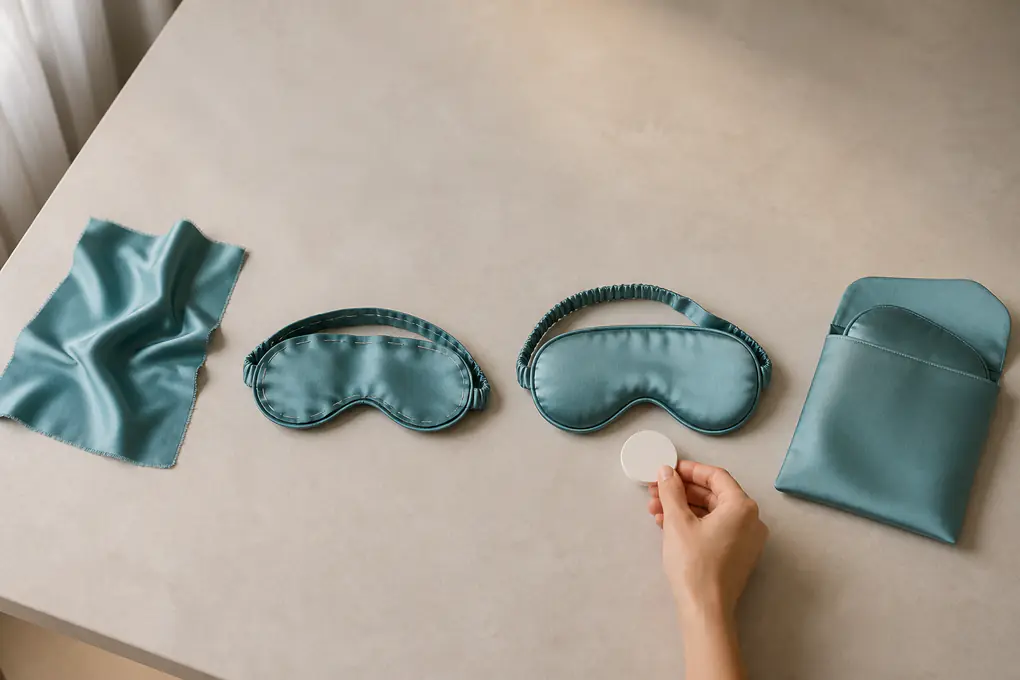
A custom silk program can contain several colors, prints, sizes, closures, pack directions, and selling units. A sampling plan should make clear which variation the buyer wants to review now and which items remain future possibilities. This is especially important where a pillowcase family includes solid and printed versions, a bedding range has coordinated components, or an accessory collection shares a color palette but not a product form. At China EverBen Silks, we use the buyer's stated sample scope to discuss the selected article without assuming that every related variation is included, available, approved, or commercially confirmed. Give a sample one clear name that combines the article and its active distinction, such as a printed queen pillowcase pair or a navy silk bonnet with a specified opening direction. That naming habit helps teams avoid carrying a comment about one color, pack, or component into another variation merely because the two belong to the same range.
Identify the anchor variation for the current sample
One defined article gives the review a useful center
Name the color, print, size, form, and selling unit
Select the product variation that the sample should represent. It might be a classic solid pillowcase pair, a printed pair with a particular motif direction, a selected bedding component, a mask construction, a bonnet form, or a scrunchie size. Describe the customer-facing count and the product feature that matters. The anchor variation lets your team compare a real article rather than an abstract family name. It also keeps the sample discussion clear when a range includes closely related colors, sizes, and packaging ideas.
List the variations that need separate future questions
A shared range direction does not make items interchangeable
Keep later colors, prints, sizes, and pack concepts visible
State which related products are not part of the present sample decision. Another size, print, color, closure, bundle, or pack direction may need its own review because it changes the article or customer unit. A pillowcase print may behave differently from a solid color; a pair can have a different presentation question from a single case. This does not slow a buyer's work. It allows the team to make one clear product decision at a time instead of treating a limited observation as though it settled every variation in the collection.
Explain why the selected scope is commercially useful
Sampling effort should reflect the buyer's next product decision
Connect the review to range planning without making a commitment
Tell us why the chosen variation is the right one for the immediate discussion. It may be the anchor style for a planned collection, the variation that best shows the visual direction, the unit that needs a packout decision, or the article that a buyer team must compare first. This gives procurement, product, and brand colleagues a shared reason for the sample scope. It does not create a launch promise, a production allocation, a price, minimum, timing, delivery plan, or customer commitment. It keeps the custom silk conversation anchored to a practical buyer decision.
Where a range uses coordinated colors or prints, identify whether the current review is about the article itself, the selected color direction, or the relationship between components in a set. A pillowcase pair and a matching sleep mask can share a visual direction without being the same product question. The same distinction applies to a bedding collection with several customer-facing units. By saying which variation is central today, the buyer avoids treating a sample of one form as an unspoken commitment about every related item in a future range.
Use a Sample to Discuss the Custom Silk Construction Question
A construction question should name the actual relationship your team wants a sample to clarify. For a pillowcase, that may be an opening, envelope overlap, zipper concept, flange, piping line, corner, label position, or printed boundary. For a mask, bonnet, scrunchie, or other accessory, the question may involve a strap, tie, opening, edge, gathered body, trim, or component connection. Describe the selected article and the visible or physical feature that matters. We do not treat a sampling guide as confirmation of factory capability, a manufacturing method, a production outcome, an inspection result, or final product approval. A buyer can ask whether an edge reads cleanly beside a printed face or whether a bonnet opening has the intended visible relationship to its gathered body. Those are precise product questions that invite useful feedback without pretending an exploratory review has already resolved the finished construction. Where more than one construction detail is changing, rank the question that affects the customer-facing article most directly and leave secondary possibilities clearly separate.
Locate the construction feature on the selected article
A named edge, opening, seam, or transition is easier to discuss
Use direct product language instead of broad workmanship claims
Identify the feature and the location your buyer is considering. A pillowcase can have an opening, perimeter, flange, piping line, printed face, or label relationship that needs review. A sleep mask can have an edge or strap relationship. A bonnet can have a crown, opening, tie, or lining question. A scrunchie can have a gathered body or enclosed-core question. Clear location language helps us discuss the relevant article-level point without pretending that a general photo has already determined the finished construction.
Explain the visual relationship that matters to the customer unit
Construction choices can change the way a silk product reads
Describe face, reverse, pair, pack, or component interaction
Tell us what relationship the buyer wants to examine. It may be the way an opening sits on a pillowcase reverse, how a flange frames a face panel, where a printed motif meets an edge, how two cases appear as a pair, or how an accessory component sits beside a buyer-managed card. This makes a custom construction conversation specific. It does not imply a physical performance, quality result, or final manufacturing direction. The buyer can use the discussion to decide what further product or sample question is needed.
State the decision that follows the construction review
A sample question should support one clear next action
Keep unrelated business terms outside the limited review
Explain what your team needs to decide after considering the feature. It may be a choice between two visible directions, a request for a clearer product reference, a packout question, or preparation for a later commercial discussion. We do not claim that one construction observation settles material, quantity, price, timing, delivery, legal, market, customer, or release issues. A focused question is still valuable because it gives product and procurement colleagues a real next action for the defined custom silk article.
Marking the feature on an image or drawing can make this construction discussion more useful, provided the buyer identifies what the mark is intended to show. A line near a pillowcase edge may refer to a visual border, an opening direction, or a component transition; it should not be left for another team to guess. Use the same approach for a mask strap route, a bonnet opening, or an accessory edge. The goal is a clear product question about the selected article, not an assertion that a particular production method or finished result has been agreed.
Review Custom Silk Artwork and Placement on the Finished Product
Artwork and colour references should be considered on the actual silk article, not only on a screen. A buyer may be reviewing a printed pillowcase panel, a bedding piece, a contrast edge, an eye-mask face, a hair-accessory motif, or a buyer-owned presentation card. Identify the article, visible zone, current artwork or colour reference, and the exact visual point for review. This creates an article-specific conversation without confirming print reproduction, colour matching, ownership rights, market claims, retailer acceptance, product availability, timing, or a final artwork result. When the concept includes a border, directional motif, or contrast trim, identify the position it would occupy on the item. That lets a design team assess placement on silk rather than draw broad conclusions from a digital file alone. Keeping the product variation in the note also helps the buyer distinguish a fresh artwork question from an earlier colour or placement observation.
Identify the visible panel and placement question
A flat image does not show every finished-product relationship
State face, edge, opening, fold, or component order
Describe where the artwork or color direction matters on the selected product. A pillowcase print may need a visible face, an opening relationship, a flange, or a pair orientation considered. A bedding component may have another visible panel. A mask, bonnet, or scrunchie may have a different body and edge relationship. Attach a marked image or write a clear note about the area your buyer wants to compare. This helps us discuss the actual product direction instead of treating a flat artwork file as a complete construction and pack instruction.
Keep buyer-owned visual assets with the buyer
Brand copy, logos, product names, and artwork need a clear owner
Discuss physical placement without claiming approval
If your team provides artwork, a logo, brand message, color name, product title, or customer-facing card direction, identify the article and pack layer it belongs to. We can discuss how a buyer-owned asset relates to a visible silk product or selling unit. We do not validate ownership rights, write buyer claims, approve legal wording, or decide market acceptance. Clear ownership keeps an artwork discussion focused on the product feature your team wants to review and prevents a draft asset from being treated as settled language across every variation.
Ask a visual question that one buyer team can use
A narrow art question is better than a broad request for approval
State the article, current reference, and next decision
Frame the question in a way that product or brand colleagues can act on. You may need to compare a motif location, visible color relationship, printed scale, contrast detail, or card-to-product arrangement. Name the variation and buyer role that will use the next conversation. We do not treat a sampling guide as approval of material, construction, packaging, label content, commercial conditions, or a final product release. A defined visual question is valuable because it keeps the custom silk discussion tied to the real customer-facing article.
For a printed silk article, state whether the question concerns the visible face, a repeated area, the position near an edge, or the way an image relates to the product’s fold or opening. For a solid-color item, the visual question may instead concern how contrast components are arranged. Keep the buyer’s artwork, brand language, logos, and product naming under buyer control, and ask the product question in practical terms. A sample review can help a team describe a placement discussion without representing a final legal, commercial, or customer decision.
Describe the Customer-Facing Pack Question in Your Silk Sample Plan
A custom silk sample may need to be considered as a customer-facing unit rather than a loose article. Start with what the customer, account, or recipient is meant to receive: one pillowcase, a pair, a bedding component, a mask with a pouch, a bonnet, a scrunchie card, or a coordinated set. Then state the pack relationship your buyer needs to discuss, such as fold, visible face, product order, card, sleeve, insert, pouch, or box. This helps us distinguish the silk article from a proposed presentation layer. It does not confirm packaging materials, protection, carton performance, shipment, delivery, price, minimums, timing, or commercial terms. Clarify whether the reviewer needs to consider how two articles sit together, which face is visible first, or how a branded insert relates to the item. The question becomes more useful when the buyer describes the customer unit before discussing any later outer-handling arrangement. This also keeps a presentation choice from being lost when the buyer moves from a sample observation to a pack review.
Define the unit before you describe its pack layers
Product count and pack layers should not be mixed together
State what one customer-facing unit contains
Identify what the customer is meant to receive and how the article variation is grouped. A single pillowcase, pair, bedding set component, mask-and-pouch unit, bonnet, scrunchie card, or accessory set can create different presentation questions. Then mention any proposed card, sleeve, insert, pouch, wrap, box, or inner group. This gives the sample discussion a clear unit basis. It does not require a final pack decision; it helps the buyer explain what relationship between the silk article and its presentation needs attention.
Describe the visible customer moment that matters
Fold, orientation, and component order can change the discussion
Connect the pack question to the named silk article
Tell us what the customer should see or handle first. A pillowcase pair may need a defined fold or a visible face. A printed case may need its motif direction considered beside an opening or card. A bedding component may need a clear count or size relationship. An accessory set may need an order that keeps each item recognizable. We can discuss the named product and presentation question without making claims about packaging protection, shipping, storage, or retail performance. The buyer retains responsibility for its own customer and channel decisions.
Keep buyer-owned pack text and identifiers scoped
Labels, inserts, barcodes, and carton fields have different purposes
Name the buyer owner and the intended layer
If your plan includes buyer-owned wording, care content, barcodes, retailer fields, a card message, or a carton mark, identify the physical location and name the party responsible for it. A sewn label, insert, pouch, sleeve, and carton can carry different information. We can review each item’s physical connection to the selected silk unit. We do not provide legal advice, regulatory confirmation, retailer approval, or market claims. This boundary prevents a draft field from being treated as a settled instruction across an entire custom silk range.
Separate the customer-facing pack question from the way a unit may later be handled outside the customer experience. First name the article and what the recipient receives. Then describe what the buyer wants to consider in the presentation, such as whether the pillowcase is folded with a face showing, whether a sleep mask sits in a pouch, or whether a coordinated set has a defined order. This distinction lets packaging and product colleagues contribute useful comments without treating an early pack discussion as a confirmation of materials, protection, outer logistics, or delivery arrangements.
Assign the Buyer Roles for a Focused Silk Sample Decision
The next observation becomes useful once the buyer identifies who will use it. The purchasing function may coordinate the inquiry; the product group can define the article; a brand colleague can set visual direction; packaging can shape the sale unit; quality can assess the selected item; and commercial colleagues may decide when comparison is appropriate. A formal approval chart is unnecessary at the outset; name the person or team able to clarify the sample point and choose the next action. We then have a grounded procurement context while the buyer retains authority over release, market, legal, commercial, and customer decisions. For example, a home-textile buyer might name the product manager needing the answer first and the purchasing colleague who will turn it into a later inquiry. That sequence prevents a valuable product observation from being left without an owner. It also gives the receiver a clear reason to record the feedback against that one product variation.
Name the buyer role that owns the immediate question
A sample review needs an identifiable decision-maker
State whether product, brand, packaging, quality, or procurement will use it
Tell us which buyer role will use the sample discussion. A product manager may need to decide a pillowcase form, closure, edge, or component relationship. A brand lead may need to compare a color or print direction. A packaging colleague may need to consider a pair, card, pouch, or customer unit. Procurement may need context before a later commercial comparison. This does not transfer the buyer's authority to a supplier. It simply makes the next conversation easier to direct toward the person who can act on the defined silk product question.
Keep different buyer decisions separated
One sample can raise several topics without giving one team every responsibility
Explain which decision belongs to which colleague
A color question may belong with brand, a construction question with product, a pack question with packaging, and a commercial comparison with procurement. Quality, customer, or legal colleagues may have their own questions as well. State the one decision that the current sample should help resolve and keep other topics visible as separate questions. We can discuss the selected article at the right level without implying that a product observation approves every part of the project. This is a practical way to prevent a useful sample note from becoming a broad commitment.
End with the next buyer action
A focused review should lead to a direct product or commercial step
State what your team needs after considering the sample
Explain whether the next action is to clarify a product feature, compare visual directions, ask another sample question, discuss a selling unit, review a document scope, or prepare for commercial comparison. Name the buyer role that needs the next conversation. We do not promise that an initial sample discussion settles price, minimums, availability, timing, delivery, market acceptance, or release decisions. A clear next action is still valuable because it keeps the sampling plan linked to a real B2B purchasing decision rather than an unstructured series of comments.
Different roles can read the same sample for different reasons, but the request should still identify one person or function responsible for the immediate answer. For example, a product manager may need to decide whether the visible article reflects the intended shape, while a packaging colleague considers the selling unit and procurement coordinates the next discussion. State that sequence in the request. It prevents comments about artwork, construction, documents, and commercial context from collapsing into one vague response and gives the buyer a practical way to close the immediate product question.
Use Sample Feedback to Define the Next Custom Silk Product Question
After reviewing a custom silk sample, the useful result is one clear product question. It may concern a pillowcase opening, edge, print, pair arrangement, a bed-linen relationship, an eye-mask contour, a bonnet opening, a gathered accessory proportion, pack presentation, or another defined feature. Record what was observed, where it appears, and which buyer decision requires attention. This is not final product approval, an inspection result, a factory-capability statement, an availability statement, a delivery statement, or a commercial undertaking. It keeps the next exchange connected to the sample variation and sale article being considered. Capture the observation while the article, colourway, and reference remain easy to identify. A note such as review the corner piping on the ivory pair gives a product developer a stronger starting point than a general request to change the appearance. Include a review date only if it helps distinguish physical samples or product revisions; the essential point remains the visible item and the next action. Keep the written observation close to the individual sample so a later review does not confuse it with a neighbouring colourway or component.
Describe the observed feature in direct product language
A useful comment identifies what was seen and where
Avoid broad statements that hide the decision
Write the observation around the article, feature, and location. For a pillowcase, name the face panel, opening, edge, flange, piping, print, pair relationship, or label position. For a mask, bonnet, scrunchie, or bedding component, identify the corresponding part. Explain what your team wants to understand or compare next. A direct product description is more useful than a broad request for better quality because it lets procurement, product, and brand colleagues see the same feature without guessing what the buyer means.
Separate a revised product question from unrelated conclusions
One observation does not settle the full commercial program
Keep scope proportionate to the feature under review
A sample may lead to a revised color question, another construction discussion, a packout consideration, or a request for a different reference. It does not automatically confirm every material, dimension, sample, document, price, minimum, timing, delivery, or customer condition in the program. State what the feedback is intended to address and what remains outside the current discussion. This makes the buyer's next step more credible and prevents a limited product observation from being repeated later as though it were a complete release decision.
Choose the most useful next step for the buyer team
Product, sample, pack, document, and commercial questions can follow different paths
Name the decision your team needs to make next
Tell us whether the next conversation should focus on a product feature, visual direction, another physical comparison, customer-facing unit, document scope, or a later commercial review. Identify the article variation and the buyer role that will use the answer. This gives a custom silk sampling plan momentum without turning it into a schedule or commitment. The value is not a generic next stage; it is a clear connection between the sample observation and the practical B2B decision your team needs to make.
When feedback points to a change, restate the selected article and variation before raising the next question. A note about a pillowcase edge should not silently become a decision about every pillowcase in a collection, and a comment on a mask panel should not be applied to a separate accessory. Explain the physical area, the buyer’s observation, and the next question in a short sequence. That approach creates an orderly conversation for the B2B team while making clear that technical, commercial, and approval matters require separate written treatment for the named project.
Keep Custom Silk Document Questions Tied to the Sampled Components
A document or label question should remain connected to the same custom silk article and components your team is reviewing. A certificate preview, declaration, material statement, questionnaire, care-content draft, buyer-owned label, barcode field, customer card, or other attachment may apply to a specific face, trim, opening, label, or pack layer. State what you have, which sampled item it relates to, and what buyer decision the information is meant to support. We do not give legal interpretation, certification confirmation, retailer approval, customer acceptance, or final reliance advice. Those decisions remain with the buyer and relevant reviewers. A practical request identifies the component and the decision, for example a material wording question for the visible silk face or a label-placement question for a pillowcase pair. That level of detail is more valuable than attaching a generic document title with no stated relationship to the item being reviewed.
Pin a Material or Label Question to One Visible Silk Part
Make article, component, and intended decision readable in the same note
Use a component-specific description instead of a document title alone
Begin with the exact sample in front of your team and identify the part that prompted the question. A buyer reviewing a silk pillowcase pair might need to discuss the wording associated with its visible face, while a sleep-mask program may need to distinguish the eye panel from a strap or presentation card. State the item, the component, the attachment or field, and the decision that needs support. A clear note can mention a material statement, a care-content draft, a certificate copy, a barcode field, or a customer insert without letting that document name stand in for the whole finished unit. If the attachment displays a date, holder, or version, describe the visible detail so your colleagues can recognize the same reference during the next conversation.
Map Each Non-silk Piece Before Extending a Product Statement
Openings, elastics, ties, linings, labels, and presentation layers need their own context
Describe the boundary around the component your buyer is asking about
Treat the finished article as a collection of named parts rather than a single broad material label. A pillowcase can include an opening treatment and a sewn label. A mask can pair its silk-facing panel with a strap, edge, or inner layer. A bonnet can bring together a crown, elastic, tie, lining, and hangtag; a scrunchie combines gathered fabric with an enclosed core; and a gift unit may add a pouch, card, sleeve, or box. In the request, say which one of those pieces is connected to the wording or attachment and which pieces are not part of that question. This helps your quality, packaging, product, and purchasing teams avoid applying a limited statement beyond the clearly named component.
Route the Component Question to the Buyer Team That Must Decide
Product, quality, packaging, legal, and purchasing teams can use different parts of the same brief
Ask for clarity on the selected sample without shifting buyer-side responsibility
Say what the information should help your organization decide next. Purchasing may coordinate the inquiry, a product manager may identify the active style, a quality colleague may examine the selected item, and packaging or legal teams may evaluate requirements that sit within their own responsibilities. China EverBen Silks can discuss the specific silk article and the question you raise. Your company remains responsible for deciding what it needs for its customers, channel, claims, and commercial program. Naming the decision-maker turns an attachment from a loose file into a practical prompt for the right buyer-side conversation.
For instance, a buyer could ask about wording connected to the visible silk face of a pillowcase while separately identifying an elastic, zipper, lining, label, pouch, or box as different parts of the customer unit. Put that boundary in the request with the sample variation and desired next decision. The resulting conversation is more useful because each colleague can see what is being considered and why. It also avoids turning a narrow product question into a conclusion about a different component, a complete range, or a future commercial arrangement.
Close the Custom Silk Sampling Brief With One Next Buyer Decision
Before you send a custom silk sampling inquiry, check that the message names the article, variation, current reference, feature under review, customer-facing unit, buyer context, and the decision your team needs next. A useful brief does not need to be a finished specification. It needs to be clear enough that China EverBen Silks can discuss the product your team is considering rather than infer a broad program from scattered images and terms. Product scope, materials, dimensions, construction, packaging, documents, quantities, pricing, minimums, availability, timing, delivery, and commercial terms remain subject to project-specific written confirmation. A final read should let a colleague understand what you want to look at, why it matters to the proposed selling unit, and who will decide the next move. If those three points are visible, the custom silk sampling conversation can begin with a useful question instead of a collection of unrelated files.
Open With a Buyer-Recognizable Silk Product Description
Let a colleague identify the article and active variation without decoding shorthand
State form, visual direction, relevant dimensions, components, and selling unit
Read the opening line as someone who did not join earlier product calls. That reader should recognise whether the request concerns a pillowcase pair, an independent bed-linen piece, a travel mask, a gathered accessory, a lined hair cover, or a coordinated presentation unit. Include the active colour or print direction, relevant size or form, an opening or edge where useful, and the sale-unit count. A short description such as a printed pillowcase pair with a specified front panel is more useful than a category label like silk bedding. It gives purchasing, product, and brand colleagues a shared picture of the article before they discuss a particular sample point.
Give Every Shared Reference a Distinct Job in the Sample Brief
Photographs, swatches, drawings, pack images, and attachments should answer different questions
Keep visual, construction, presentation, and component wording topics separate
List the purpose of each reference beside its filename or short description. A photograph may show a pillowcase face and perimeter; a swatch may direct attention to colour or surface; a drawing may clarify an eye-mask contour, bonnet opening, or accessory placement; and a pack image may show how a pair or set is presented. A document may raise a question about one labelled component. When every item has a distinct job, the buyer can identify the question that requires attention first. This prevents a useful visual cue from becoming an assumed complete product instruction or a conclusion about unrelated commercial matters. Technical, legal, pricing, and final-approval questions must be addressed separately for the named project.
Finish With a Single Owner and Immediate Sampling Decision
A short closing request should name who will use the answer and what they will decide
Make the next action specific enough for a B2B silk buyer to schedule
Close with one immediate choice rather than a list of disconnected wishes. Your team may need to compare two pillowcase edge directions, decide whether a printed layout should be reviewed again, clarify a sleep-mask contour, or discuss the presentation of a named customer unit. Identify the colleague who will use the response and the reference that makes the question visible. A focused ending gives a B2B silk buyer a practical starting point for the next call, while quantities, pricing, production timing, and supply arrangements remain separate project discussions.
Before you submit the inquiry, write the decision in a sentence that a busy purchasing manager can repeat accurately: for example, the product manager needs to compare the opening treatment on the specified pillowcase pair, or the packaging lead needs to consider the order of items in a gift set. Connect that action to the selected variation and supporting reference. This gives the sample request a clear destination without presenting an exploratory review as a completed specification, a purchase commitment, or an assurance about future delivery.
Custom Silk Product Sampling Questions for B2B Buyers
What should a custom silk sampling brief include?
Include the selected article and variation, current reference, product feature under review, customer-facing unit, buyer context, and next decision.
Can one sample represent every custom silk product variation?
No. A different color, print, size, closure, component, or pack direction may create a separate product question and should be identified clearly.
Does a sample inquiry confirm final product or commercial terms?
No. A sample discussion helps frame a product question; specifications, quantities, pricing, minimums, timing, delivery, and commercial terms need project-specific written confirmation.