
P022
Silk Product Sampling and Approval for B2B Buying Teams
When your silk brief is vague, we can only compare vague references. We start with the article your customer will buy, the decision delaying the range, and the active reference your team trusts. That keeps material, construction, print, label, pack, and commercial questions separate rather than allowing an early visual conversation to be treated as release of a whole programme.
Published by China EverBen Silks Reviewed by Mark Liu
Choose the evidence needed before the next approval point
Identify the article, revision, measurement, workmanship, color, pack, and decision owner for the sample.
Start With the Silk Article Your Customer Will Actually Buy
We begin with the finished item your customer is expected to receive, not a loose request for silk. A silk pillowcase pair, a fitted-bed sheet, a duvet-cover style, an eye mask, a tie bonnet, and a scrunchie assortment all have different customer uses, components, labels, and packs. When we can see the article, its active version, and the commercial role it plays in your range, we can talk about the decision that is genuinely delaying your next product step. For example, a hospitality buyer reviewing a bedding refresh needs a different discussion from a beauty retailer choosing a sleep-accessory gift. Tell us whether the item is intended to stand alone, join a set, or support a seasonal story, so we can keep the review anchored to the selling decision rather than a broad silk category.
Name the selling unit before we discuss the silk surface
A pillowcase pair and a single sleep mask are different buyer decisions
The customer-facing unit gives every reference a practical meaning
We ask you to name the sellable item in commercial language: a pillowcase pair, a fitted-bed sheet, a duvet-cover style, a travel eye mask, a bonnet with ties, or a scrunchie assortment. Then explain its customer setting: bedding, a gift, a hair accessory, a travel item, or part of a coordinated collection. A smooth silk surface in a photograph does not tell us whether you are deciding an envelope opening, a sheet corner, a duvet closure, a bonnet tie, a mask shape, or the number of scrunchies in a pack. The selling unit does. This one line stops product, procurement, and brand colleagues from reviewing similar-looking silk items as though they share the same customer use and business question. It also stops a later comment from drifting from one style into another merely because both use silk.
Anchor the conversation to the current style, not the whole category
A named variant keeps close silk options from being blended together
We need the active closure, shape, print, or pack reference in view
When your range contains several pillowcases, bedding pieces, or accessories, we need the exact version under discussion. A pillowcase with an envelope opening is not the same conversation as a concealed-zipper concept. A printed duvet cover is not the same as a plain fitted sheet. A bonnet with long ties has a different visible and use question from a pull-on bonnet, even when the colour direction is shared. Give each active version a working name and attach the relevant drawing, reference image, artwork file, or swatch purpose. We do not treat an inspiration photograph as a full product definition. We use it only for the feature you identify. That lets us discuss your actual article without suggesting that unshown components, materials, labels, commercial terms, or future variants have been settled.
Put the blocked buyer decision in the first paragraph
A plain decision question serves better than a general approval request
We can discuss the feature delaying the range instead of guessing
Tell us the immediate decision slowing your work. It could concern whether a pillowcase opening looks too visible, whether a duvet-cover print has the right scale, whether a sheet pack needs a different fold, whether an eye-mask shape reads clearly online, whether a bonnet tie placement feels balanced, or whether a scrunchie assortment needs a clearer size hierarchy. We do not need you to pretend every decision is complete. We need to know what matters now. A focused question gives the buyer decision owner something concrete to judge and gives us a direct B2B conversation to have with your team. It also protects you from receiving a positive general comment that cannot be used to decide what should change, stay open, or move into a project-specific written discussion.
Turn Pillowcase, Sheet, and Duvet Cover References Into a Clear Brief
Bedding references often look simple until a buyer tries to compare them across sleep, bedroom, gift, and ecommerce programmes. We keep pillowcases, sheets, and duvet covers tied to the construction and customer moment that matter to you. A bed photograph can guide colour or drape direction, but it cannot silently answer questions about openings, corners, panels, labels, or pack format. We ask you to separate the image you like from the detail you need to decide. If a competitor listing, retail image, or mood board prompts the question, identify the one visible feature you want to evaluate instead of asking us to replicate an entire listing. That approach helps us focus on the bedding article your team is developing and the customer-facing choice that must work in your own range.
Describe the pillowcase opening and edge as customer-facing choices
Envelope, zipper, panel, and edge details change the visual conversation
We need to know which point your buyer wants to judge
For a silk pillowcase, we ask what the customer will see and handle first. Is your team looking at the face panel, reverse opening, envelope overlap, zipper concept, piping, narrow edge, border, or label location? These are separate design and construction questions. A reference image may show a smooth front face while leaving the opening out of view. If the opening is your concern, say so and point to the current reference. If the issue is the way an edge frames a print or contrast colour, show the intended side and finished use position. We can then discuss the practical pillowcase decision rather than responding to a generic phrase such as luxury silk pillowcase. That keeps visual preference, component discussion, and later written commercial confirmation from becoming one unclear request.
Give sheets and duvet covers their own measuring and assembly questions
Flat dimensions do not explain every made-bed or fitted-corner concern
The buyer can identify the point that must be seen on the finished article
Sheets and duvet covers need different context from a pillowcase. We ask whether you are reviewing a flat-bed sheet, a fitted-sheet style, a duvet-cover option, a sham, or a coordinated set, then ask for the measuring point or use position that matters. For a fitted sheet, your team may be comparing a corner profile, elastic route, depth reference, or product representation in a package. For a duvet cover, you may be looking at panel relationship, closure location, opening orientation, print direction, or finished fold. We do not infer these points from a bed photograph or broad size name. A clear buyer brief treats dimensions and construction references as buyer inputs for a written product discussion, so a later response stays connected to the correct item instead of a loosely described bedding family.
Use coordinated collections without losing item-level accountability
A shared colour story does not make every bedding component identical
We keep each article, label, and pack role visible within the set
A coordinated silk bedding collection can feel considered online, but individual product decisions remain necessary. A pillowcase pair may use one label location, a fitted sheet another identifier, and a duvet cover a different pack explanation or artwork placement. Show us the relationship you want among the pieces while naming the item needing attention today. You may want a printed duvet cover to lead the visual story while the pillowcases remain quieter, or one colour to connect a sheet with a bonnet gift addition. That is merchandising direction, not a confirmed technical specification. We use it to understand your intent without stating that unconfirmed materials, constructions, labels, packs, or programme terms are fixed. Procurement gets a clearer basis for comparison and product teams keep control of individual article decisions.
Choose Silk Surface and Momme Inputs Before Material Questions Stall Your Range
A buyer can like a silk reference and still be unable to give product, quality, or procurement colleagues a useful material brief. We discuss the surface you want customers to notice, the article where it will appear, and the role a momme preference plays in your comparison. Momme is a buyer input for a material discussion; it is not a public promise about performance, durability, feel, availability, or outcome. We keep that boundary clear while helping you ask a precise question. Include the product image or swatch that gave rise to the question and say whether your buyer is judging sheen, print definition, colour depth, hand impression, or the way the surface appears on a bed or small accessory. That makes a material conversation useful without turning preference into a claim.
Describe the surface impression you are trying to protect
Surface character and printed detail give buyers distinct review cues
We turn a visual reaction into a usable product discussion
When you show us a silk reference, tell us what attracted your team to it. A buyer reviewing a pillowcase may seek a smooth, light-catching face for an ecommerce image. A sheet or duvet-cover buyer may consider how the surface reads across a made bed, a fold, or a layered collection. An eye-mask buyer may want a refined, compact appearance, while a bonnet or scrunchie buyer may be looking for a softer gathered visual. We do not convert those preferences into unverified fabric, finish, or performance claims. We use them to clarify the material point your team wants to explore. The more directly you describe the desired customer impression and the article where it matters, the easier it is to keep surface, construction, lining, elastic, label, pack, and commercial questions in their proper places.
State the momme preference as a comparison input, not an outcome claim
Momme can help a buyer frame a silk-material conversation
We keep composition, weave, finish, and performance confirmation separate
If your buying team uses a momme range or target in a product brief, give us the number with the article and the reason it matters to your comparison. A pillowcase programme may have one visual reference, a bedding range another, and a small accessory a third. We treat that number as your input for the material conversation, not proof of how an item will wear, feel, wash, perform, or be available. We also do not assume a momme preference answers questions about a particular silk construction, finish, colour route, printed design, supporting component, or finished article. This lets a procurement manager communicate material direction without overstating what an early reference has established, while product and quality colleagues can identify what needs written clarification for the actual configuration.
Separate the silk-facing surface from every supporting component
A visible silk face does not settle liner, closure, elastic, or label choices
We ask which component is part of the material question and which is not
A silk pillowcase face, bedding panel, sleep-mask exterior, bonnet body, or scrunchie tube can each be the focus of a surface discussion. That does not mean every associated part belongs to the same material decision. A buyer may need a separate conversation about a mask backing, bonnet tie, enclosed elastic, zipper concept, woven label, or packaging insert. Name the component represented by the swatch or reference and identify anything outside that question. This reduces the risk of favouring a desirable silk impression while discovering later that another visible or functional component was never considered. It also lets your team compare articles honestly: the customer-facing surface may be the priority while construction, label, pack, compliance, and commercial questions are discussed separately.
Specify Construction Details That Change How Each Silk Article Is Used
Construction is where a polished silk reference becomes a practical B2B buying question, because a photograph does not show every seam, panel, opening, elastic route, tie point, or reverse-side detail your team must assess. Instead, we ask you to identify the elements that change the way the customer opens, wears, makes the bed, stores, gifts, or understands the article. That gives construction a direct connection to product choice rather than turning it into hidden technical language. A marked photograph, flat sketch, or close detail can be enough when it identifies the precise point: which side faces the customer, where a closure is expected to sit, or which seam affects the product silhouette. We can then discuss the article on its own terms rather than applying a bedding observation to an accessory or the reverse. For a retail buyer, that clarity can prevent a beautifully styled reference from masking the practical issue that affects returns, product photography, or customer instructions. It also gives the person reviewing construction a clear reason to respond.
Map panels, seams, and openings where the customer will notice them
A visible construction point deserves its own buyer instruction
We connect the seam or opening to the article's actual use moment
For a silk pillowcase, a buyer may need to discuss an opening, overlap, zipper concept, reverse panel, edge seam, or label position. For a duvet cover, the concern may be closure location, panel join, or the side used in product photography. For a sleep mask, the shape, bridge area, elastic entry, or edge profile may be central. Mark the part on the selected drawing or reference and tell us why it matters to your customer. A construction note such as make it premium cannot be reviewed in the same way as the opening must remain visually discreet when the pillow is in use. Tell us which construction point you want to consider in a written product discussion, rather than leaving a useful customer detail hidden inside a vague request.
Treat bonnet and scrunchie construction as product-specific detail
Gathering, ties, elastic, and seam position change the finished appearance
We need the selected silhouette and customer use to understand the concern
Bonnet and scrunchie programmes suffer when an accessory is described only by colour and silk. A bonnet buyer may be discussing panel arrangement, tie placement, tie length reference, gathered volume, inner-panel scope, or label position. A scrunchie buyer may be reviewing the visible tube, gathered fullness, enclosed-elastic relationship, seam location, or how different sizes will be sold together. Put the intended customer use beside those details. A sleep bonnet for a retail range, gift set, or fashion accessory line can carry different product questions even if visual direction overlaps. We do not turn those decisions into performance, comfort, hair, or technical claims. We use them to keep the construction discussion tied to the specific silk style your team is building.
Separate a construction reference from a finished-product commitment
An image can show the point you want to discuss without becoming a full specification
We preserve open components until they receive written attention
A product image, marketplace listing, sketch, or prior sample can help a buyer point to a construction feature. It should not silently settle every unseen detail. State the feature the reference illustrates: perhaps a pillowcase edge, fitted-sheet corner, duvet-cover opening, mask profile, bonnet tie route, or scrunchie silhouette. Then state which points are open. This protects your team from copying a broad competitor look when your own customer, label, pack, artwork, and range objectives differ. It also gives procurement colleagues a clearer basis for comparison because the feature under discussion is named, while material scope, measurements, components, documents, pricing, timing, and commercial terms need a written product discussion for the selected item.
Control Print, Artwork, Colour, and Placement Across Silk Components
Print and colour choices can move quickly through a silk range and still create confusion when artwork, base reference, and placement are not tied to one article. We discuss the item in front of you: a pillowcase face, sheet, duvet-cover panel, sleep mask, bonnet, or scrunchie. Then we ask what the buyer is deciding about scale, direction, repeat, colour reference, visible placement, or the relationship among coordinated products. We do not present an artwork reference as a final print, colour, or production result. Let us know whether the artwork is meant to lead a collection, create a quiet supporting element, or distinguish a giftable accessory from the bedding line. We can discuss visual hierarchy with that commercial purpose in mind, while keeping every article’s placement and component question separate. Where a print crosses bedding and accessories, show the intended crop for each article. The same motif can look balanced across a duvet panel yet crowded on a sleep mask or hidden in a gathered scrunchie.
Give artwork a named job on the product
Placement and scale matter as much as the motif itself
We need to know what the buyer wants the customer to see first
A floral, geometric, monogram-inspired, or abstract artwork file needs an article-specific instruction. On a pillowcase, your team may judge face-panel placement and balance around an opening. On a duvet cover, you may consider repeat across a large surface and its relationship to pillowcases. On a sleep mask, the question may be motif scale at a compact size. On a bonnet or scrunchie, gathering and seams can change what the customer sees. Show the active artwork, identify the visible area, and name the decision you need to make. We do not assume a digital image predicts a final outcome. It is a reference for your buyer conversation, with project-specific material, print, construction, and commercial details still open for written discussion.
Use colour references with their viewing context
A colour name alone does not tell us how the article will be judged
We ask which reference, channel, and product surface matter
When a buyer says ivory, navy, champagne, rose, or another direction, we need to understand the reference and product context. Is your team comparing a physical swatch, digital artwork file, photography target, coordinated bedding set, or accessory assortment? Does the colour need to lead a retail page, gift programme, seasonal launch, or replenishment line? We treat the reference as a buyer input rather than a promise that an unverified final article will match a screen or photograph. This gives brand and product colleagues room to express visual intent without asking procurement to infer a complete colour approach. It also prevents a pillowcase, duvet cover, mask, bonnet, and scrunchie from sharing a colour name while being reviewed against different references.
Protect coordinated collections from accidental artwork drift
Each item needs an explicit relationship to the collection story
We keep a shared direction from replacing the article-specific brief
A silk collection can use one print family or colour story without applying the same artwork treatment to every item. You may want the duvet cover to carry the largest expression, pillowcases to use quieter placement, a sleep mask to take a small motif, and a scrunchie or bonnet to support the colour family without repeating the full print. Tell us which relationship you are trying to build. We can then discuss visual hierarchy rather than assuming one artwork file governs every component. Brand can protect the collection story, product can identify the item-specific point, and procurement can keep the selected reference set attached to the right request. Use a written product discussion to decide how artwork, colour, materials, labels, and presentation belong with each finished silk article.
Use Measuring Points to Stop Size and Fit Comments From Crossing Products
Size comments become unreliable when a buyer, designer, and supplier use different points of reference. We ask you to show where the product is measured alongside the customer-use context. A pillowcase, a sheet style, a duvet cover, an eye mask, a bonnet, and a scrunchie do not share the same important dimensions. We treat your measurement list as a buyer input for a project discussion, not as a confirmed specification or tolerance. That lets us focus on the point causing uncertainty without pretending every dimension is agreed. When several buyers are reviewing a range, include a simple annotation beside the point under review and explain the retail or use reason for it. That gives product teams a common reference and helps us respond to the question behind the number, not just the number in isolation.
Mark pillowcase, sheet, and duvet-cover points on the active reference
Length, width, opening, depth, and panel points should have clear names
We can discuss the point your quality and product teams are viewing
For bedding, use a simple annotated drawing or clear photo that names the points your team is discussing. A pillowcase may have finished length, finished width, opening depth, envelope overlap, zipper position, border, or face-panel placement. A fitted sheet may raise a width, length, corner, depth, or elastic-route question. A duvet cover may involve panel dimensions, opening position, or visible print area. The exact values remain buyer inputs for the written product discussion, but named points give everyone common language. Without them, one reviewer can say the pillowcase is too short while another thinks the comment refers to an opening or a fold in a package. We keep the discussion tied to the measuring point that affects the customer experience or merchandising requirement you are trying to solve.
Use article-specific references for masks, bonnets, and scrunchies
Compact silk items still need clear dimensions and use positions
We do not let a small accessory inherit bedding language that does not fit
For a sleep mask, your team may discuss visible face, bridge area, eye-coverage shape, elastic route, or pack position. For a bonnet, you may compare panel proportions, tie length, tie placement, gathered circumference, or the relationship between body and tie. For a scrunchie, you may look at finished width, tube width, opening, gathered volume, or how several sizes sit in a set. Identify the point, selected reference, and customer-use situation that makes it important. This keeps a visual conversation from becoming a vague statement about fit or comfort. We do not make performance, comfort, or outcome claims from a reference image. We help you state the dimensional question so the colleague responsible for that product point can consider it in the next written discussion.
Keep measurement comments separate from style preference
A buyer can like the silhouette and still need a named point reviewed
We distinguish a visual target from the dimension that supports it
A comment such as make the bonnet more generous or make the pillowcase look fuller mixes an aesthetic reaction with an unknown measurement question. State both parts. Show the current silhouette or photo that expresses your visual target, then identify the named point your team wants to discuss. A bedding buyer may want a made-bed look with a particular drape while still needing a clear sheet or duvet-cover reference. A scrunchie buyer may want a fuller gathered appearance while keeping relevant finished width and set composition separate. This makes feedback usable for product and procurement teams and less likely to turn into competing instructions. We keep the conversation on your active question while final specification, tolerance, feasibility, price, timing, and release decisions need a written product discussion for the selected item.
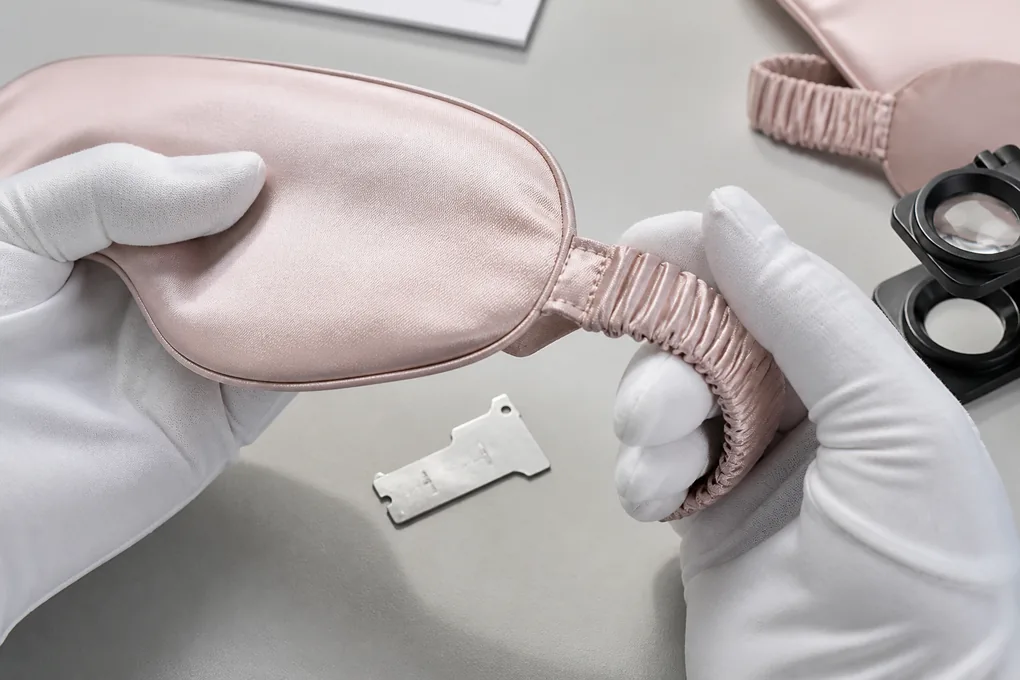
Review Closures, Edges, Elastic, Ties, and Seams by Silk Product
Small components carry much of the customer experience in silk bedding and accessories. We discuss a closure, edge, elastic, tie, or seam in the article where it belongs. A customer can judge an envelope pillowcase opening differently from a duvet-cover closure, mask elastic route, bonnet tie, or a scrunchie's enclosed component. Identify the visible point, selected reference, and product reason for your question before a general description becomes an unclear instruction. Consider the first touch, the on-shelf view, the unboxing step, and the way a customer recognises the correct orientation. Those moments can reveal a question that is not obvious in a flat product image and deserve a direct, article-specific discussion. If your retail team has received questions about how an article opens, adjusts, or folds, include that use moment in the brief. We can make the buyer’s concern concrete without using general language that means something different to design, merchandising, and quality reviewers.
Make closures and edges visible in the bedding brief
The reverse of the article can be as important as the front photograph
We ask how the customer opens, changes, and stores the item
Pillowcases and duvet covers often look resolved in a front-facing image while the buyer's real question sits on the reverse. Is the issue an envelope overlap, opening orientation, zipper concept, edge treatment, border, or label location when the article is opened? A fitted or flat sheet may raise an edge or corner question that matters more in use than in a folded pack image. Point to the location and tell us what your customer, merchant, or quality colleague needs to judge. This lets us discuss the construction detail affecting the range. It does not turn a public reference into a final component specification or promise about performance, availability, timing, or commercial terms. Those matters need their own project-specific written basis.
Give elastic and tie routes a clear product purpose
A mask, bonnet, or scrunchie needs a use-specific component question
We avoid treating every elastic or tie as the same accessory detail
For a sleep mask, a buyer may discuss where an elastic route appears relative to face shape or pack. For a bonnet, the question may concern tie placement, tie length reference, visible relationship between ties and panels, or product-image presentation. For a scrunchie, the buyer may review gathered fabric, enclosed-elastic relationship, seam position, or size differentiation in an assortment. Connect the component to the customer-use or visual reason that makes it relevant. This is more useful than asking for a vague stronger or better component, which every reviewer can understand differently. We keep your component question specific while materials, construction, measurements, performance, and commercial details are considered in the written product discussion for the selected article.
Identify which seam or finish needs a visual decision
A seam can affect appearance, pack presentation, and customer handling
We need the current article view and buyer decision standard
A seam is not just a technical note when it changes a visible line, product fold, label location, or customer-facing impression. Mark a pillowcase edge, duvet-cover panel join, mask perimeter, bonnet seam, or scrunchie closure point and explain what the team is comparing. We then have a focused discussion about a named feature rather than guessing from a broad luxury or quality description. This is especially useful when brand and product references are not identical: your team may like the mood of one image but need a different seam placement for its own product. We do not state that an unseen construction is final. We help define the point that needs a decision before later specifications and terms are agreed in writing.
Plan Labels, Care Information, and Brand Presentation With the Selling Unit
Labels and care information are not afterthoughts when a buyer is building a silk range for retail, ecommerce, gifting, or wholesale distribution. We ask you to show the selling unit, current brand presentation, and location where a customer or staff member is expected to find information. A silk pillowcase pair, a bedding set, an eye mask, a bonnet, and a scrunchie pack can each need different visual hierarchy. We do not offer legal, market, or label-compliance conclusions in an early product conversation; we help keep the buyer's product question clear. Bring the selling image, proposed product name, and customer moment into the same conversation. A buyer may be deciding whether identity belongs on a product edge, a band, an insert, or the outer presentation; those are meaningful range decisions even before formal wording is reviewed. We can also help you distinguish the product identity a shopper needs to recognise from the presentation element a retailer needs to merchandise. Keeping those purposes separate supports a clearer brief for every selling unit.
Decide where the customer encounters brand and product identity
Product label, hangtag, insert, and outer pack do different jobs
We ask which touchpoint your customer or retailer sees first
A buyer may be deciding whether the first branded touchpoint belongs on the product, inside a folded bedding set, on a pillowcase band, with a sleep mask, beside a bonnet, or with a scrunchie assortment. Identify the selling unit and customer moment. A label location appropriate for a pillowcase pair may not work for a small accessory or multi-piece bedding pack. Show the active logo, artwork, or reference as a discussion input and tell us what needs to be judged: visibility, hierarchy, placement, or relationship between product and package. We use a reference as a visual discussion aid rather than final legal wording, market approval, or confirmation of a document requirement. Your product, brand, legal, and quality owners can handle their decisions without copying assumptions across the range.
Keep care and product wording attached to the exact article
A bedding set and hair accessory should not inherit unexplained copy from one another
We separate product wording from legal or market reliance
If your team is considering care wording, fibre wording, product naming, or a short customer-facing description, attach it to the exact article and selling unit. A silk pillowcase description may need a different customer context from a fitted sheet style, a duvet-cover option, an eye mask, a bonnet, or a scrunchie. We can discuss where a proposed line is expected to appear and how it relates to product image, pack, or merchandising story. We do not provide legal advice or say a draft fulfils any destination, retailer, advertising, labelling, or customer requirement. Your qualified buyer-side people should decide what may be used. This prevents a generic silk phrase from being copied into another item without recognizing that the article, component, or market question has changed.
Use packaging references to support a retail decision, not a vague premium claim
Fold, insert, band, pouch, and carton ideas need an identified customer role
We keep the pack conversation connected to the silk article inside it
A pack reference can help your buyer team discuss a retail issue: how a pillowcase pair is revealed, how a sheet set is folded, how a duvet cover is grouped, how a sleep mask is presented for travel, or how a bonnet or scrunchie gift set is organized. Identify the article, channel, and presentation decision. A clean photograph, insert idea, band, pouch, or carton mock-up can then be used for that purpose. We do not describe a package as premium merely because it looks polished, and we do not assume a pack image establishes materials, wording, components, commercial terms, or retailer requirements. A direct buyer brief lets brand and procurement colleagues use the same reference while seeing precisely what remains open.
Build Packaging and Pack-Out Decisions Around the Retail Moment
Packaging is where an otherwise clear silk product can become confusing to a customer, merchant, or warehouse team. We look at the selling unit and the retail moment you want to protect: a pillowcase pair on an ecommerce page, a folded sheet set, duvet-cover gift, travel mask, bonnet, or scrunchie assortment. Then we separate the visible pack question from unconfirmed material, labelling, fulfilment, document, and commercial details. This keeps the conversation useful without broad claims about a final programme. Explain the planned discovery moment: a replacement bedding purchase, a coordinated set, a gift, an add-on, or a travel accessory. That tells us whether the immediate buyer question is product visibility, collection relationship, assortment clarity, or presentation without making assumptions about the wider programme. If a multi-piece set is involved, identify the item a shopper should understand first and the secondary pieces that should remain recognisable. This helps the range feel coherent without allowing one item’s details to disappear inside a broad gift story.
Match the pack format to the article and channel
A pillowcase pair, bedding set, and small accessory need different pack logic
We ask how the buyer wants the product discovered and compared
A pillowcase pair may need the customer to see colour, a visible edge, or collection story before opening the pack. A sheet or duvet-cover set may need its components and size relationship to read clearly in folded presentation. A sleep mask, bonnet, or scrunchie set may be bought as a gift, add-on, or travel item and need different hierarchy. Identify the channel, active packaging reference, and decision your team is making about first impression. We can then discuss the product-and-pack relationship that matters to you. We do not infer packaging materials, retail compliance, logistics, packing method, dimensions, or commercial conditions from an illustrative image. Those are separate questions for a written product discussion about your selected item.
Show how coordinated products are grouped without hiding item differences
A set needs a clear relationship among its pieces and customer story
We keep each silk item visible when a collection is sold together
If your programme groups a pillowcase pair with a sleep mask, duvet cover with pillowcases, or bonnet with scrunchies, show us the intended set relationship. Tell us which item leads the pack, which details a customer should notice, and which pieces need their own identity. A coordinated colour or print can make a set appealing, but it should not obscure a different construction, label, or use question attached to each item. We use your grouping reference to understand the buyer decision, not to claim every item has the same material, specification, relationship to a document, or commercial arrangement. This lets buyers discuss range architecture and customer presentation while retaining the item-level precision procurement and product teams need later.
Keep the pack message proportional to what has been decided
A customer-facing statement should not outrun the product brief
We ask what is approved for the product story and what remains with the buyer
An insert, band, outer box, or online pack image often creates pressure to write a complete product story before buyer decisions are complete. State what the pack needs to communicate now: article name, collection relationship, artwork direction, gift cue, or another defined point. Keep fibre, care, performance, environmental, certification, market, or legal language with the people who own those decisions. We can discuss visual hierarchy and product relationship without turning an early packaging review into assurance about everything the customer may later read. This lets a serious buyer move a silk range forward while protecting final customer-facing accuracy. It also keeps project-specific commercial, logistics, timing, or supply decisions out of a broad packaging moodboard.
Compare Silk Product Versions Without Losing Customer Detail
When a silk item changes between an image, swatch, drawing, artwork file, and buyer comment, memory alone is not enough. We ask you to identify the current product version and connect each comment to the article and feature it concerns. That helps a procurement team avoid comparing an earlier pillowcase opening with new artwork, a previous sheet reference with a different pack, or a bonnet idea with another tie route. Clear decision notes keep the written product discussion centred on what the customer will see and use. Use an everyday version name that your merchandising, design, quality, and purchasing colleagues can repeat without interpretation, such as navy pillowcase with envelope opening or floral sleep mask with the current bridge shape. When a feature moves, state what prompted the change and which features remain under review. That small discipline avoids confusing an image update with a wholesale product decision and makes feedback easier to compare across a collection. We welcome a short comparison note that identifies the earlier image, the current version, and the one customer-facing reason for the revision. It is much easier to discuss a changed edge, motif, closure, or pack view when your team does not have to infer the difference from filenames alone.
Name the Reference Your Team Is Reviewing
A swatch, photo, sketch, artwork file, and pack concept can be discussed together
Each image should explain one product feature or customer moment
Give the product version a simple name, date, and purpose. A physical swatch may support a surface or colour question. A pillowcase sketch may point to an opening or edge. A sheet drawing may identify a corner or measuring point. A duvet-cover artwork file may guide placement. A sleep-mask image may show shape. A bonnet reference may show a tie route, and a scrunchie image may show size or gathered silhouette. The aim is not complicated administration. It is helping product, brand, quality, and purchasing colleagues react to the same silk article while earlier ideas remain clearly identified as earlier ideas.
Describe the Changed Feature in Direct Product Language
A product version is easier to compare when the affected feature is named
Explain the customer reason behind a pillowcase, bedding, mask, bonnet, or scrunchie change
When your team changes a silk article, name the feature and the customer reason. You might reconsider a pillowcase opening because the front view needs a cleaner line, alter a sheet reference because the set relationship is unclear, adjust duvet-cover artwork because the motif scale feels too large, revisit a mask shape for a product image, change a bonnet tie reference for visual balance, or separate scrunchie sizes within a pack. Say which version is being discussed and which product details have not changed. That lets everyone compare the same article without treating a new image as a wholly new product or inferring specifications and commercial terms from visual changes alone.
Bring the Right Colleague Into the Next Product Discussion
A useful review note identifies who must decide next
Product, brand, quality, and purchasing views can remain distinct and connected
A silk range can involve product managers, designers, merchants, procurement managers, quality colleagues, and business leaders. Each can offer a useful perspective, though each may be considering a different part of the product. Beside an open point, name the review colleague to consult next: artwork placement, product reference comparison, customer wording, or a commercial question. This gives us a clearer B2B brief and helps your colleagues distinguish a preference, a question, and a decision. We discuss the silk product question you bring to us; your team decides how it will use the information in its wider product and commercial work.
Separate Silk Product Detail From Commercial, Testing, and Market Decisions
A product conversation is easier to use when it does not try to settle every commercial, testing, legal, market, or release question at once. We discuss the silk article, buyer reference, and product point needing attention. If your team needs to consider availability, final specification, test information, document scope, price, minimums, timing, shipment, retailer acceptance, or commercial agreement, name that need beside the selected article. Keeping each question clear makes a sourcing conversation more direct and credible. It also helps your purchasing colleagues ask commercial questions without losing the customer-facing product detail that gives those questions meaning. In practice, a procurement manager may need an item identity and product direction before requesting a comparable commercial conversation, while a quality specialist may need to name the component requiring follow-up. Separate those questions in your inquiry so each owner can assess the right point without treating an early image, swatch, or discussion as a complete programme decision. A buyer who states which questions are visual, operational, commercial, or compliance-related gives every colleague a practical starting point. We will keep our conversation focused on the product detail you want to explore and respond to related commercial questions when your selected article and context support that discussion.
Use the product brief to define the question before commercial comparison
A clear article makes later quantity and price discussion more meaningful
We ask for business context only when the buyer is ready to share it
A buyer may explore silk pillowcase pairs, bedding components, duvet-cover styles, eye masks, tie bonnets, or hair scrunchies before a final commercial brief exists. We can discuss named article, visual direction, construction question, measuring point, artwork reference, label, and pack issue without pretending an early reference creates a price, minimum, timing, or supply commitment. Once your team can provide a quantity scenario, destination, channel, or range timing, that context can make project discussion more relevant. Until then, mark it open rather than fill the brief with assumptions. This keeps product colleagues free to make the next article decision while procurement retains control of the commercial comparison it will conduct later.
Keep Testing, Documents, and Claims Tied to the Exact Article
A product image or swatch does not answer every material or market question
Name the component, destination, and detail your team needs to assess
If your team has a question about a material statement, care wording, product claim, test, certificate, retailer request, or destination requirement, identify the article and component involved. A general silk image does not establish document coverage, testing, certification, legal compliance, or market acceptance. A useful inquiry says whether the question relates to a pillowcase face, sheet component, duvet-cover panel, mask, bonnet, scrunchie, label, or packaging item, and names the colleague or team that will consider how the response is used. Keep the product discussion factual, then involve the qualified advisers your organization uses for reliance and market questions.
Keep a Positive Product Conversation in Its Proper Scope
One selected visual point does not settle every material or commercial question
Decision notes should show what the team wants to discuss next
A buyer may decide that a pillowcase artwork placement, bedding colour direction, mask shape, bonnet tie appearance, or scrunchie assortment looks appropriate for the next conversation. That is useful progress, but it should be described precisely. It does not settle every material input, construction detail, measurement, label, pack, document, test, price, timing, shipment, or commercial condition associated with the article. Note the points your team has considered and the points it wants to discuss next. We discuss the B2B silk product question you bring to us, while your organization makes its own qualification, legal, commercial, customer, and market decisions.
Send a Buyer Brief That Leads to a Useful Silk Sourcing Conversation
The best first message is not the longest attachment bundle. We need one named silk article, its current reference, the buyer question delaying the next decision, and the colleague or team who will consider the response. Whether you are working on silk pillowcase pairs, fitted sheets, duvet-cover styles, eye masks, tie bonnets, hair scrunchies, or a connected collection, a focused brief helps us understand the commercial purpose behind product detail. It also lets your team keep important information open until a project-specific written discussion is appropriate. A concise email or RFQ can still be detailed when it tells us who will sell the article, how the item will be presented, and which choice has held up your next range action. We will respond more usefully when the brief shows a specific buyer decision rather than a collection of unrelated references.
Send the article, current reference, and one buyer question together
A concise request lets us see the product decision without guessing
We can begin with the feature that genuinely affects your range
Start your inquiry by naming the article and attaching or describing the active reference. It might be a pillowcase pair in silk with an envelope-opening question, a fitted-bed sheet with a corner reference, a duvet-cover style with artwork placement, an eye mask with a shape discussion, a bonnet with a tie route, or a scrunchie assortment with size hierarchy. Then state the immediate decision your team must make. We do not need a polished final specification to have a useful first conversation. We need enough background to see why the feature matters to your customer, channel, or range. This helps you avoid the slow exchange that occurs when a supplier receives multiple images and a broad request to quote or approve without knowing which article, feature, and buyer decision should guide the response.
Add material, construction, artwork, measurement, label, and pack inputs only where they change the decision
Relevant context makes a B2B response comparable without turning open points into claims
We keep buyer inputs visible and written confirmation separate
Include silk surface reference, momme input if your team uses one, construction point, artwork or colour reference, measuring point, label idea, or packaging reference when it directly affects your question. A pillowcase opening may be connected to a face-panel print; duvet-cover artwork may need matching pillowcase reference; bonnet tie question may need a label location; scrunchie set may need pack hierarchy. We treat these as buyer inputs that help us understand your programme. We do not present them as confirmed product facts, performance statements, final specifications, document conclusions, or commercial terms. Share business context such as intended channel, quantity scenario, destination, or range timing when ready, while leaving open choices with the colleagues who own them.
Define the Decision Your Next Silk Reply Must Resolve
The inquiry should have a clear customer-product purpose
Keep the next conversation tied to the selected silk article and product question
End the brief by telling us what a useful response needs to help you decide. Perhaps your product manager needs to compare two pillowcase openings, a bedding buyer needs to resolve a sheet or duvet-cover visual point, a brand team needs to assess artwork hierarchy, or a procurement manager needs a clearer article definition before a commercial discussion. Name the colleague or team that will consider the response, and identify any point that should not be treated as settled. We will use that context to discuss the B2B silk product question you define. Product availability, feasibility, specifications, materials, pricing, minimums, timing, documents, and commercial terms need a written product discussion for the selected item. This keeps the conversation clear without asking either side to make claims before the brief is ready.
Questions B2B Buyers Ask During Silk Sample Approval
What information should I send before discussing a silk sample?
Name the article, share the current drawing, swatch purpose, artwork or reference image, explain the one decision you need to make, and identify the buyer who will review the reply. Add destination, selling-unit, and commercial context only when they are relevant to that decision.
Can one review approve every part of a silk product?
Usually no. A review may be useful for a single feature such as an envelope opening, a print placement, a bonnet tie route, or a packaging presentation. Keep every other material, construction, document, commercial, and release question visibly open until its own written scope is agreed.
How do I keep later feedback from conflicting with an earlier silk sample discussion?
Use one current version name, date each change, identify the feature affected, and state whether a comment replaces, narrows, or supplements an earlier decision. Send the same current brief to product, procurement, design, and quality reviewers so they are not reacting to different references.