
P002
Wholesale Silk Product Families
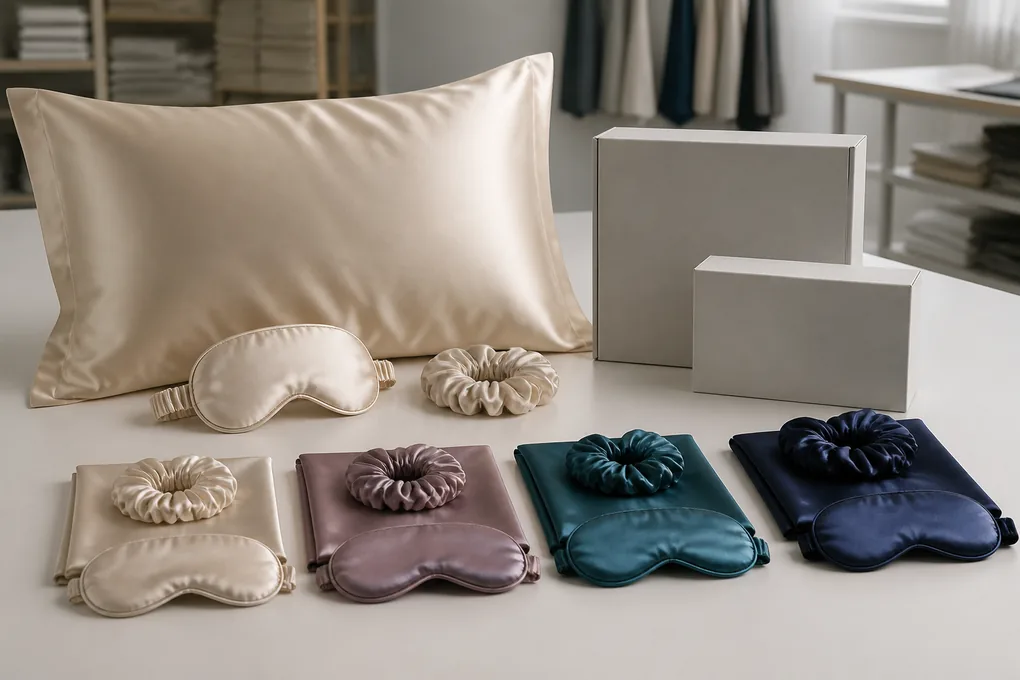
Choose a silk product family by the customer use, finished-item question, and buyer decision it must support. We help private-label and bulk buyers separate pillowcase, bedding, sleep-mask, scrunchie, bonnet, and accessory questions so fit, construction, artwork, packing, and approval conversations do not get mixed together.
Published by China EverBen Silks Reviewed by Mark Liu
Avoid comparing unlike silk product formats
Use the product-family split to identify which article route owns each buying decision.
Choose Silk Product Families by the Buyer Job
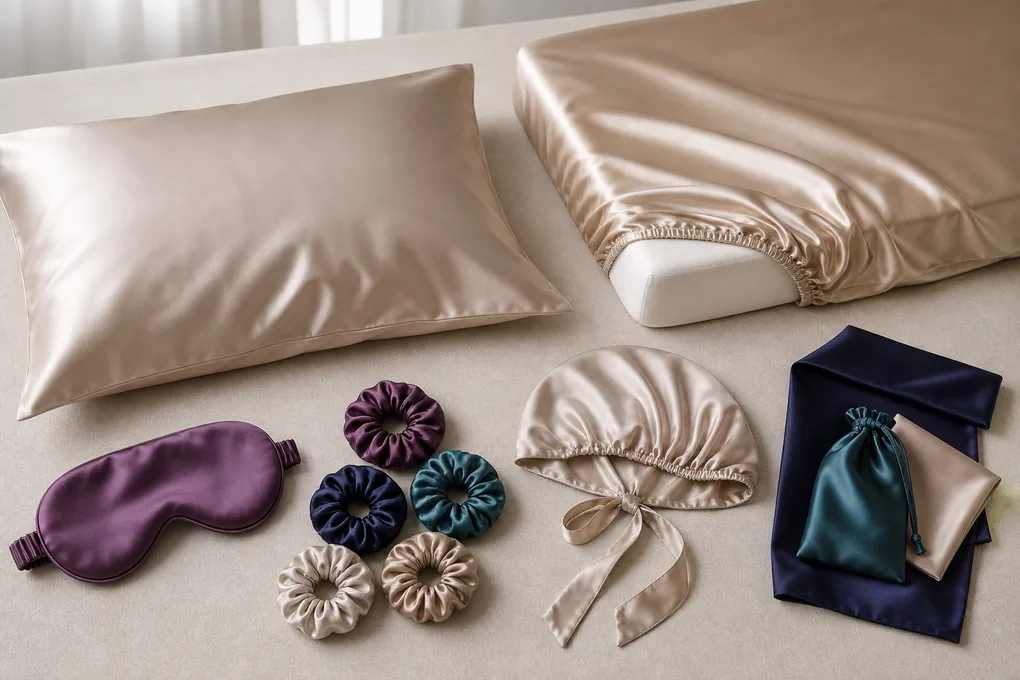
Bulk buyers rarely need every silk product at once. They need a range that performs a defined job: repeatable bedding basics, a beauty-sleep offer, a travel accessory, a hair-protection program, a coordinated gift set or another clear commercial purpose. Use that job to decide which family deserves development first. The selection is not based on visual similarity. Pillowcases, sheets, masks, scrunchies and bonnets place different loads on fabric and require different measurements, components and checks.
Translate the Commercial Goal into Physical Products
Channel, customer and use condition before SKU count
A shortlist with an explicit reason for every family
A home-textile buyer may begin with pillowcases and bedding because those products share bed-size and color coordination decisions. A beauty buyer may combine pillowcases with masks, but the mask still needs its own face geometry, layer and strap specification. A hair-care company may prioritize scrunchies and bonnets, where elastic, crown volume and overnight retention matter more than mattress sizing. We identify the customer action behind the range and choose products whose construction can support that action.
The intended channel changes the level of variant complexity. A replenishable wholesale basic benefits from stable dimensions, core colors and packaging that can be reordered. A gift program may need a tighter color story, insert copy and exact set contents. Hospitality buyers may focus on size control, care and replacement logic. We state the channel and usage assumptions in the brief, then remove families that add visual breadth without serving the stated job. This protects quantities and development attention for the items most likely to succeed.
Keep Neighboring Families from Becoming Substitute Specifications
Related merchandising does not create technical equivalence
Separate material, fit and component decisions by product
A silk pillowcase and sleep mask may both touch the face, yet one wraps a pillow insert and the other must fit varied facial profiles while blocking light. A scrunchie and bonnet both relate to hair, but a gathered elastic ring cannot define crown coverage or tie pressure. Keep shared palette and branding decisions across the range while maintaining separate product drawings, BOMs, measuring points and functional checks. This avoids the familiar mistake of approving several styles from one attractive color sample.
The same discipline applies to material language. A pillowcase face can use one selected silk route; a mask may include filling and adjustment components; a bonnet may be single or double layer; a scrunchie contains elastic. The whole collection should not inherit one blanket fiber statement. We identify what is silk in each finished product and which supporting or functional parts are different. This allows accurate labels and product copy without weakening the visual relationship among the families.
A range decision should also identify what success will look like six or twelve months after launch. Core products may be judged by replenishment continuity and return reasons, while seasonal products may be judged by sell-through and presentation. We recommend preserving SKU-level sales and complaint categories that correspond to the physical construction. If zipper cases return for hardware exposure while envelope cases do not, the buyer can revise the right route. This feedback makes the next assortment more precise without expanding it through guesswork.
Use a Product-Family Scorecard Before Sampling
Customer need, technical risk and range economics
Development order follows decision readiness
We score candidate families against buyer relevance, variant count, custom artwork readiness, fit data, packaging status and the number of unresolved construction questions. A product with clear dimensions and an approved color direction may be ready for a prototype while a second family still needs customer measurements or artwork. Sequencing prevents all items from entering sampling at the same time and returning with unrelated open issues. The buyer receives useful answers sooner and can refine the range using real decisions.
The final shortlist records why each family is included, which configuration is being explored and what remains excluded. Optional products stay optional rather than appearing in quantity estimates or pack renderings. When the program expands, the new family receives its own technical brief instead of inheriting the nearest existing product. This makes expansion controlled: the buyer knows which decisions can be shared, which evidence must be repeated and how the added SKU changes assortment quantities and carton planning.
Assortment economics are considered at family level as well as SKU level. Pillowcases may support repeat replenishment, bedding can raise order value but multiply dimensions, and accessories can widen gifting opportunities while increasing pack combinations. Compare those roles before approving color count or launch breadth. A buyer who needs dependable replenishment may favor fewer constructions with deeper allocations; a buyer review a new audience may choose a focused capsule with deliberately different use cases. The decision is not based on the number of products a buyer can show. It is based on how clearly each family earns inventory, development time, inspection attention and a place in the buyer’s channel.
Move from the Product Directory to the Correct Detailed Route
A wholesale directory should help purchasing reach the right technical discussion quickly. Broad family pages compare product types and expose the decisions they do not share. Detailed product routes handle the exact construction: classic, printed or reversible pillowcases; fitted sheets or four-piece bedding sets; classic or adjustable masks; 5 cm or printed scrunchies; tie bonnets and other defined variants. We direct a buyer to the narrowest route that matches the intended physical item instead of repeating one shallow description across every destination.
Use Category Routes for Selection and Comparison
Family-level choices before construction lock
A category decision is not a finished specification
The pillowcase family route is useful when a buyer is still comparing solid, printed and reversible concepts or deciding between envelope and zipper closures. The bedding route helps distinguish sheet, duvet-cover and set needs. Mask, scrunchie and bonnet categories explain the main geometry and fit choices. At this level a buyer can discuss a fabric-weight route catalog references, custom color and size capability, and common construction directions without pretending that one combination has already been selected.
A category inquiry should end with a shortlist. The buyer identifies the likely product form, intended use, target dimensions or fit reference, material direction and variants needing samples. Once those choices exist, the work moves to a detailed product route and a construction-specific brief. This separation protects buyers from pages that appear comprehensive because they repeat generic material, sampling and QC language while omitting the question that actually differentiates the products.
Detailed routes also keep search language from becoming a project shortcut. A query such as wholesale silk bedding may reveal the commercial category, but it does not define whether the buyer needs a flat sheet, fitted sheet, duvet cover, pillowcase set or coordinated combination. Once the relevant route is chosen, dimensions, closures, attachment details and pack count can be discussed without forcing unrelated alternatives into one response. This separation gives purchasing a cleaner comparison, gives product management a usable assortment structure and gives quality teams a stable product identity for measurements and inspection. The directory remains the starting point, while the detailed route carries the decisions that make the item manufacturable.
Use Product Routes for Measurable Construction Decisions
Variant-specific geometry, components and failure modes
The correct URL supports the correct sample question
A classic pillowcase route can concentrate on insert fit, solid-color repeatability, envelope overlap or hidden zipper engineering. A printed pillowcase route must instead address artwork, repeat, placement and color fastness. An adjustable mask route needs head range, adjustment travel and hardware concealment; a classic mask focuses on lower-edge contour and covered elastic. A 5 cm scrunchie needs finished width and gathering control, while a printed scrunchie adds motif behavior after stretching. These are not cosmetic page differences.
Routing also prevents mismatched RFQ attachments. A buyer requesting a fitted sheet should provide mattress and topper dimensions, not only a bed-size word. A tie-bonnet inquiry should include hair-volume and head-fit expectations, not a mask strap drawing. We preserve the selected route in the CTA context so the initial message already indicates which technical questions apply. Purchasing spends less time restating the request, and the product review begins with the correct product logic.
Preserve Navigation When a Range Contains Several Variants
Parent family plus child SKU rows
No variant disappears inside a general inquiry
A multi-variant program can use the directory as a parent reference while listing detailed routes for each construction. The range matrix might include a classic zipper pillowcase, a printed envelope pillowcase and a reversible case; each receives a separate row and relevant reference. Shared destination, palette or packaging hierarchy can remain at parent level. Dimensions, face materials, closures, artwork and quantities stay at child level. This structure gives the buyer one coherent project without merging unlike specifications.
We also identify exclusions in routing. A product not selected for the launch does not receive a placeholder SKU or appear in the sitemap of the purchase brief. A discontinued reference is not used to define a current variant. If the buyer needs a construction not represented by a detailed route, we describe it explicitly in the B2B product inquiry and confirm whether custom development is appropriate. Navigation supports decision-making; it does not limit the brief to whatever label happens to be closest.
Navigation must remain stable for teams that revisit a project. The selected route and product ID appear in sample labels, comment sheets and RFQ context, so a later reviewer can trace why the project entered that construction. If the project changes from classic to printed or fixed to adjustable, the route change is recorded with the new questions it creates. This avoids approving artwork against an obsolete body or carrying fit comments into a fundamentally different variant.
Shortlist Silk Pillowcases by Fit, Face and Closure
Pillowcase listings often lead with fabric-weight reference and color while leaving the insert, contact face and closure unclear. Reverse that order. The intended pillow dimensions and loft establish fit; the chosen face construction determines what touches the sleeper; envelope, hidden zipper, flange and piping decisions shape retention and workmanship. A reference range supports a fabric-weight route references, custom sizes and colors, and several closure or edge styles, but a wholesale SKU selects one coherent combination for sampling and quotation.
Match the Case to the Actual Pillow Insert
Inside dimensions, loft and insertion clearance
Nominal size names remain secondary
Standard, Queen and King labels vary by market and do not reveal pillow thickness. We request the insert width, length and loft or a physical sample where fit is critical. Finished inside measurements, opening length and corner fill are reviewed around that reference. A case that matches a flat size chart can still sag on a thin insert or strain at the zipper on a lofty one. Numeric fit allows us to pattern the product the buyer will sell, not an assumed regional convention.
Fit review includes inserting and removing the pillow, closing the case, checking corner fill and observing surface wrinkles or stress. Envelope styles need enough overlap to retain the insert without creating a bulky ridge. Hidden zippers need adequate opening clearance and a protected puller or coil. If the buyer carries several pillow types, we identify the intended fit range and decide whether one case can serve it or whether separate SKUs will produce a better customer result.
Care and packaging are included in pillowcase selection because they expose construction differences customers notice after purchase. A zipper should be closed or protected according to the validated care process; an envelope flap must recover without twisting; flange or piping should not shrink or press unevenly. The packed fold must not put the puller against the contact face. Reviewing these details during shortlisting reveals whether the selected style supports the buyer’s care message and presentation goals.
Choose Which Surface Is Silk and How It Is Presented
One-sided, two-sided and reversible boundaries
Component claims agree with the construction
A classic case may use silk on both main faces; a reversible concept may use two silk colors or an explicitly named mixed reverse. A reference range includes reversible references, including a silk-plus-linen concept. Define face A, face B, surface direction and the side or sides intended for contact. Zipper tape, piping cord, thread and labels remain visible in the component BOM. This prevents a 100% silk face statement from being interpreted as a whole-product statement that the assembled case cannot support.
Surface direction matters because charmeuse luster changes when panels are turned. Cutting markers preserve the approved face and grain; reversible products receive a two-orientation review. Labels and closure placement should not make the second orientation unusable. If mixed faces are selected, care must work for both materials and copy must name them accurately. We recommend separate samples when a buyer is comparing a simple two-face silk case with a mixed-material reversible style because their drape and edge bulk differ.
Closure preference should be tested against the buyer’s actual complaint history. An envelope may be favored when concealed components and a soft edge matter, yet an insufficient overlap can allow the pillow to migrate. A zipper can improve retention, yet puller position, end finishing and laundering behavior become inspection points. Flanges and piping add a visual frame, but they also demand dimensional balance at corners and after care. We ask which failure costs the buyer most: exposed pillow, closure discomfort, uneven border, difficult laundering or inconsistent packed appearance. That answer helps rank construction features instead of treating every visible option as an automatic upgrade.
Select Closure and Edge Details for the Retail Position
Retention, hardware contact and decorative proportion
Workmanship checks follow the selected style
An envelope closure offers a hardware-free route but depends on overlap and pillow loft. A hidden zipper can produce secure retention and a clean edge when the opening, guard, end stops and reinforcement are engineered correctly. Flanges and piping change the silhouette, seam path, pressing and packed dimensions. We ask the buyer which detail supports the intended product position rather than assuming that more decoration always means greater value. Every choice is shown on the drawing with measurable dimensions.
Sample inspection concentrates on the chosen risk: flap gaping or insert escape for envelope cases; operation, puller exposure and seam stress for zippers; ripple, corner shape and differential shrinkage for flanges or piping. Fine silk seams are reviewed for puckering, skipped stitches, needle damage and slippage. The accepted case is packed using the proposed fold so hardware cannot mark the face. These results give the wholesale buyer a real construction comparison instead of a list of closure names.
Map Silk Bedding to Mattress, Duvet and Pillow Dimensions
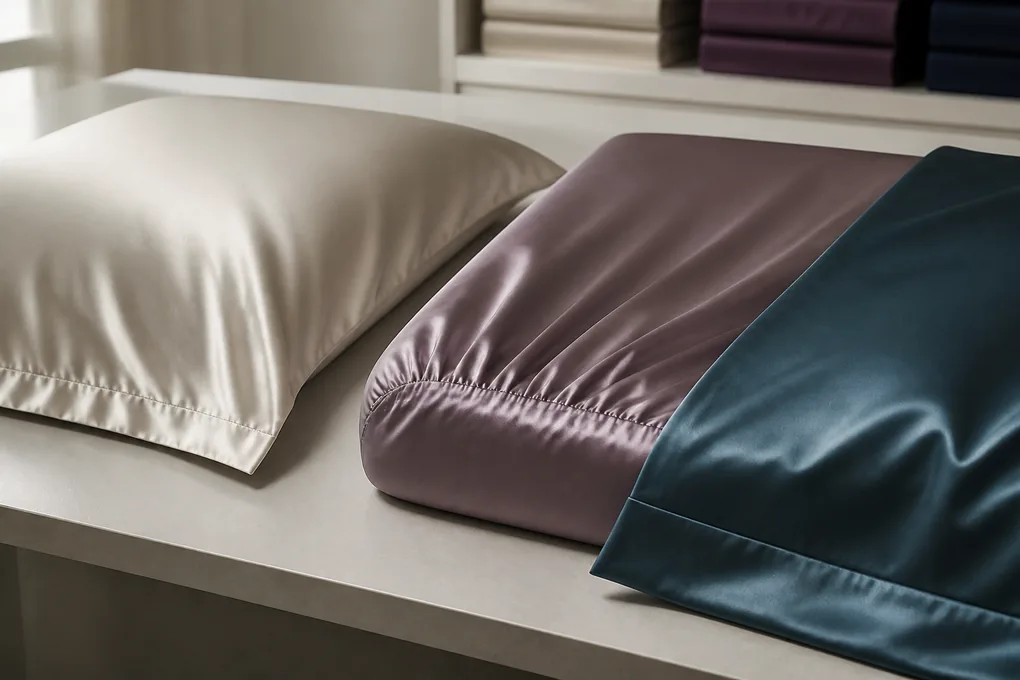
Silk bedding must fit several physical references at once. A fitted sheet wraps a mattress and any protector or topper; a duvet cover contains an insert; pillowcases fit nominated pillows; a set must place the correct pieces, sizes and colors in one selling unit. A reference range includes a fabric-weight route references, custom color and size development, and a four-piece starting configuration of a 220 x 240 cm duvet cover, 250 x 260 cm sheet and two 48 x 74 cm pillowcases. Destination measurements decide whether that reference is suitable.
Convert Regional Names into a Numeric Bed Specification
Width, length, thickness and included pieces
Queen and King alone cannot control fit
Mattress and duvet naming differs among the United States, Canada, Europe, the United Kingdom and other markets. We record actual width and length for every component. Fitted-sheet development also needs total mattress height, including the protector and topper the customer will use. Pillowcase dimensions follow the pillow insert, not the mattress label. This numeric table becomes the parent reference for patterns, labels, online size charts and receiving inspection, preventing one regional convention from being silently substituted for another.
Write set contents one component at a time. A four-piece bedding offer can include a duvet cover, base sheet, and a pair of pillowcases, while the base sheet may be fitted or flat and the pillowcase closure may vary. Give every component its own child identity and state whether replacement ordering is relevant. When a buyer adapts a catalogue reference, review the revised duvet, sheet, and pillow dimensions together so a nominal set label cannot disguise incompatible pieces.
Separate Fitted-Sheet, Flat-Sheet and Duvet Functions
Pocket, tuck and insert-retention engineering
Large rectangles carry different use risks
A fitted sheet depends on pocket depth, corner geometry and elastic layout. Total bed height plus a controlled tuck-under allowance determines the pocket; full-perimeter elastic must retain the sheet without overstressing silk or making installation impractical. A flat sheet instead needs finished width, length, hem, orientation and usable tuck. Large panels may require disclosed joins depending on fabric width. Show those joins and surface direction rather than using a seamless claim unless the selected size and material route support it.
A duvet cover needs a compatible opening and a method of stabilizing the insert, such as agreed concealed ties or loops. Their number, position, length and reinforcement follow the nominated insert. Movement trials reveal empty corners or attachment strain that a flat measurement misses. We keep these functional decisions separate in the directory so a buyer can enter the fitted-sheet or set route with the correct measurements and avoid receiving one generic bedding proposal.
Bedding inquiries should identify whether the consumer uses an adjustable bed, unusually thick topper or nonstandard duvet attachment. Silk charmeuse does not stretch like a knit, and articulation can place different loads on a fitted construction. Do not promise universal compatibility. Instead, we request the physical reference and decide whether a use trial is needed. Limitations identified before launch can guide size selection or product wording and prevent a standard sheet from being marketed for a bed system it was never designed to fit.
Coordinate Shade, Care and Pack Across Large Components
Set-level appearance under directional light
Complete-bed approval before bulk
Silk luster makes shade comparison directional. Duvet, sheet and pillowcase panels are aligned and reviewed both flat and on a dressed bed. Where feasible, components intended to sell together follow a planned lot or controlled shade grouping. Thread, zipper, elastic and piping are considered in the visual plan. A color name is not used as proof that different lots or materials will appear identical. The buyer approves the relationship among pieces, not just isolated swatches.
Care is validated on the selected fabric, construction, elastic, closure and trim. We record dimensional change, surface appearance, shade, hand and function after the agreed procedure. Packing checks set completeness, fold condition, size and color identity, barcode hierarchy and carton assortment. A wrong pillowcase can invalidate the entire set. The detailed bedding routes convert these risks into product-specific samples and inspection points after the directory has established which components belong in the program.
A coordinated bedding set needs an explicit component relationship. The duvet cover, flat or fitted sheet and pillowcases may share color and fabric direction, but each consumes material and behaves differently in cutting, sewing, pressing and packing. Set presentation also creates a replacement question: will the buyer replenish complete sets only, or must individual components remain traceable? We recommend separate component identifiers even when the selling unit is one set. This permits measurements and inspection results to be recorded at the correct level, prevents one failing component from becoming an unidentified “set issue,” and supports accurate rework, replacement or repeat-order discussion.
Choose Silk Sleep Masks by Face Geometry and Retention
Silk alone does not determine whether a mask offers the desired face coverage, stability, or comfort. The relevant buyer inputs are the body shape, lower-edge contour, layer arrangement, eye-clearance question, strap route, intended wearer context, and selling-unit presentation. A reference image or existing mask can start the discussion, but the selected dimensions and construction remain project-specific until your team reviews the finished direction.
Compare Flat, Padded, Contoured and Wrap Shapes
Coverage, eye space and side-sleeper bulk
Geometry comes before decoration
A flat or lightly padded classic mask can be compact and easy to pack, but the panel and strap must avoid pressing the eyes. A 3D design creates cup clearance yet adds thickness and must remain symmetrical. Extended or wrap forms can increase coverage while changing heat, ear contact and side-sleep behavior. We ask whether the product is intended for home, travel, gifting or another use, then compare the geometry on representative faces rather than selecting it from a front photograph.
The mask body is specified through width, height, eye-center relationship, nose notch or baffle, edge thickness and total layer stack. Catalog dimensions are not copied across designs. A 21.5 x 9.5 cm contoured form and a 23 x 10 cm adjustable flat form solve different fit problems. We preserve their distinct patterns and approval methods. Printed, embroidered or decorative variants enter only after the body shape has shown acceptable coverage and contact.
Light exclusion must be evaluated without confusing darkness with comfort. A larger opaque body may block edge light on one face yet press against lashes or interfere with side sleeping on another. A contoured cup can create clearance, but cup placement and depth must match the intended fit range. A nose detail can reduce a central gap while creating local pressure if its shape is unsuitable. We therefore ask buyers to rank blackout, eyelid clearance, side-sleeping profile, strap stability and pack thickness. A prototype can then be judged against the intended priority rather than praised with a single broad comfort claim that cannot represent every wearer.
Balance Nose Seal, Eye Clearance and Adjustment
Three interacting sources of customer complaints
Fit range requires more than strap length
Light commonly enters around the nose or lower edge, where face profiles differ most. Increasing strap tension can reduce one gap while creating eye pressure, morning marks or slippage elsewhere. We develop notch shape, baffle or padding distribution and strap angle together. Contoured cups are reviewed for eyelash and blinking clearance, including side-sleep compression. Observations are recorded by leakage zone and pressure location instead of compressed into a universal blackout promise.
Retention choices include covered elastic, twin straps, sliders, buckles, ties and hook-and-loop systems. The brief states intended head range, usable adjustment travel, hardware position and hair-snag precautions. Fixed elastic needs force and recovery review; adjustable hardware needs cycling, creep and attachment checks. A mask that fits one reviewer is not enough. Use a fit panel appropriate to the intended customer and preserve the limits observed during development for honest product wording.
Disclose Layers and Validate Care on the Complete Mask
Shell, lining, fill, strap and hardware
After-cleaning shape remains a functional requirement
A silk outer surface does not make filling, foam, blackout interlayer, strap elastic or slider silk. We list outer shell, skin-contact lining, middle layers and adjustment components separately. If a fabric-weight route is stated, the claim is attached to the applicable silk component. This detail helps buyers compare a simple double-silk construction with a mixed layer stack and prevents an online whole-mask claim from exceeding the product.
Care validation checks more than color. We examine filling migration, edge distortion, cup symmetry, strap recovery, hardware condition, odor and surface hand after the agreed method. Dark colors receive suitable transfer and fastness review; light colors need stain and opacity attention. The selling unit protects shaped edges and explains adjustment without medical claims. These questions determine whether the buyer should continue to a classic or adjustable mask route for a construction-specific quotation.
Mask packaging and instructions should not hide fit limitations. The insert can show how to adjust the strap, orient the nose edge and care for the selected construction, but it should not promise that one geometry fits every face. If the design uses eye cups, removable pads, gel elements, long ties or hook-and-loop parts, contents and handling are described accurately. The directory helps buyers decide whether those additions support the intended customer or merely create another component that must be sourced, labeled and inspected.
Build Silk Scrunchie and Bonnet Ranges Around Hair Fit
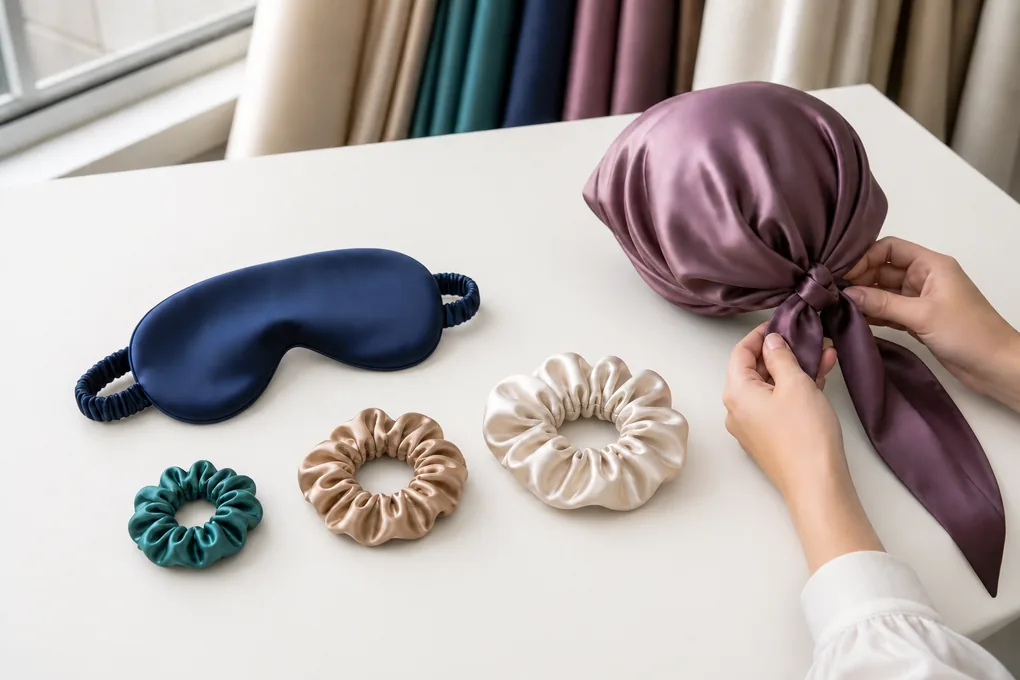
Hair accessories return for opposite reasons: a scrunchie may be too loose or too tight, while a bonnet may fall off or create pressure. The products need different fit language. Scrunchies are controlled by finished width, fabric fullness, inner circumference, extension force and wrap count. Bonnets depend on head opening, crown diameter and depth, layer stack, hair coverage and retention system. A reference range supports scrunchies from 1 to 8 cm and tie, adjustable, long and printed bonnet forms in a fabric-weight route silk references.
Create Scrunchie Widths That Hold Named Hair Volumes
Ruffle profile, elastic force and wraps
A visible size ladder instead of one elastic in many sleeves
Finished scrunchie width is measured on the relaxed product, not inferred from cut-strip width. Fabric strip length and gathering ratio determine fullness; silk face direction and seam placement affect appearance around the ring. Inner circumference, maximum recommended stretch and elastic force determine how many wraps the product can make on fine, medium or thick hair. A 1 cm style, 5 cm style and 8 cm style should not be produced by changing only the visible sleeve while leaving every elastic decision untouched.
We approve the relaxed silhouette, stretched appearance and worn hold. Repeated extension and recovery tests expose weak elastic or an insecure join. The tube closure is inspected around the full circle so loose thread and bulky hand finishing do not hide in gathers. Printed styles add motif scale and placement review; the artwork must be judged compressed and stretched. Multipacks receive an exact color, width and piece-count BOM to prevent duplicates or substitutions.
Hair-accessory programs also require clear age and use boundaries. Small decorations, clips, cord ends and removable parts introduce considerations that a plain fabric-and-elastic scrunchie does not. Kids products or products intended for vulnerable users may require additional target-market review. Do not transfer an adult accessory assumption into another audience. The buyer identifies the intended user, and component choices, warning needs, tests and pack language are assessed for that actual scope before the style advances.
Size Bonnet Crowns for Hairstyles, Not Generic Large Claims
Opening, volume, layers and adjustment
Retention must not depend on excessive pressure
A bonnet for short or fine hair does not require the same crown as one intended for long curls, braids, locs or rollers. We define opening, diameter, depth, gusset or panel volume and named hair segment. Single- and double-layer routes identify which silk face contacts hair and whether the construction is truly reversible. Crown seams and labels are positioned away from contact or pressure zones. The buyer can then build sizes around physical coverage instead of relying on one-size language.
Tie, elastic, drawcord and slider systems create different retention and comfort trade-offs. Tie dimensions and knot positions influence sleep pressure; elastic width and force influence forehead marks; hardware must avoid snagging hair. Use representative head and hair forms to review containment, movement, slippage and edge comfort. A tighter fit is not automatically an improvement. The detailed bonnet route records the intended segment and adjustment path so bulk inspection can challenge the correct feature.
Accessory dimensions are linked to the styling action. A narrow scrunchie can serve subtle everyday tying, while wider bodies create greater visual volume and different fabric consumption. A long bonnet may accommodate braids yet require thoughtful weight distribution and tie placement; a compact adjustable bonnet addresses another hair volume and retention problem. Multipacks add color coordination and count verification, while individual premium packs emphasize presentation. We translate the merchandising idea into body width, elastic behavior, opening range, tie or adjuster construction, seam placement and pack count. This lets buyers compare styles by use rather than by an attractive photograph alone.
Coordinate Hair-Accessory Color Without Merging Function
Shared palette, product-specific construction
Gift and multipack contents remain truthful
Scrunchies and bonnets can share a palette or print family, but the gathered ring and curved crown display motifs differently. Artwork is resized for each shape, and shade is assessed with luster direction in mind. A double-layer bonnet may show two colors; a printed scrunchie may reveal only fragments of a repeat. We approve the products individually, then review them together for range balance. Shared styling does not transfer elastic, size or care approval from one family to the other.
Gift sets list every component, material scope, size, color or print and quantity. A card cannot describe the bonnet lining and scrunchie elastic as though they are all silk. The package protects ruffle and crown volume rather than crushing both into a minimal cavity. Final pack checks confirm piece count, color order, barcode and instructions. This gives the directory a clear route: scrunchie questions enter width or print development; bonnet questions enter crown and retention development.
Use Reference Details Without Treating Them as Universal Offers
A catalog proves that a reference has been presented; it does not prove that every option is currently available for every quantity, color, construction or delivery objective. Use reference details as starting points for a buyer discussion and confirm the selected configuration during RFQ review. Major families show a fabric-weight route references, custom colors and sizes, several closure styles and named product dimensions. Those facts stay attached to their product context. Supporting documents, tolerances, check grades, coverage and commercial terms require separate current evidence.
Keep Each Catalog Number Attached to Its Product Context
Reference specification versus confirmed order
No cross-family copying of dimensions
A 20 x 9 cm mask reference does not establish a universal mask size, and a 48 x 74 cm pillowcase reference does not define every market. The four-piece bedding dimensions describe one starting set, while custom size language invites a new measurement brief. Scrunchie width references describe named formats, not elastic force or inner circumference. We quote these numbers when they help the buyer identify a direction, then record the final measuring points and tolerance for the selected SKU.
Fabric-Weight Reference follows the same rule. The presence of a fabric-weight route options supports a material discussion, but the order chooses one route for the applicable component. A printed, reversible, padded or double-layer design can change how that cloth behaves. Do not combine all catalog options into one product description or imply that a buyer will receive unspecified alternatives. Confirmation connects material, construction, color, size, quantity and pack in one offer.
Separate Verifiable Product Facts from Market Conventions
Common wording is not independent proof
Public copy follows approved scope
Marketplace listings frequently use Grade 6A, 600 thread count, hypoallergenic, anti-aging, cooling and complete-blackout language. Some are material descriptions, some are conventions and some are performance or health claims requiring substantiation. Do not copy them merely because they rank or convert. Fiber, fabric-weight reference, weave, dimensions and construction are stated from approved product specifications. Documented scope or check language is used only when a current document covers the exact route and the claim matches what that document establishes.
The directory can explain available development directions without promising outcomes that depend on fit or use. A mask can be developed for light blocking, but the fit evaluation defines the observed result. A bonnet can be designed for retention, but head and hair segments matter. Silk offers a smooth surface, yet medical or guaranteed beauty benefits remain outside an ordinary product specification. Narrow factual language gives wholesale buyers stronger material for their own compliance and marketing review.
A product fact can remain useful even when a commercial value is still open. The directory can show that custom color and size development exists while the RFQ confirms feasibility for a particular combination. It can list catalog reference dimensions while inviting the buyer to provide destination measurements. This is more honest than filling every card with a fixed minimum quantity or delivery promise. Purchasing receives enough information to choose a route and a clear reason to send the specifications that determine the current offer.
Confirm Availability and Commercial Values in the RFQ
Current material, setup and allocation review
Unknown values remain questions until answered
Custom color and size are meaningful capabilities, but feasibility depends on product, material, shade, artwork, variant mix and pack. Review those inputs before confirming minimums, sample route, timing commitment or cost. A complicated assortment can divide a large total into small project rows. A selected print route may have setup requirements. Packaging artwork readiness can control schedule. Discuss these drivers for the actual inquiry instead of placing one permanent number across the directory.
The resulting offer names included configuration and assumptions. If availability, check scope or timing depends on a later document or sample, that dependency is visible. A change to material, dimensions, artwork, quantity split or pack reopens the affected values. Buyers can therefore compare offers on an equal basis. The catalog remains useful inspiration and reference, while the written RFQ response becomes the commercial source for the product being purchased.
Material language is reviewed at component level because a finished item can combine face fabric, filling, elastic, zipper tape, thread, labels, prints and packaging. A silk statement that applies to the principal fabric should not silently extend to every hidden or functional component. The product specification names which part receives each fiber, weight, color or finish requirement. Where a buyer needs a particular claim on packaging or online listings, we request the exact proposed wording and destination before approval. This prevents a general category label from becoming an unsupported statement and helps artwork, purchasing and quality teams examine the same declared scope.
Convert a Broad Silk Idea into a Defined B2B Product Brief
Many enquiries begin with a short request such as “silk bedding with a selected fabric route” or “custom silk accessories.” The phrase offers direction but leaves the development team to infer the object. Translate it into decisions that can be drawn, sampled, and inspected: end use, finished dimensions, component materials, construction, variants, distribution by option, colour or artwork, retail pack, and intended market. A buyer need not answer every point at the outset. Open items remain visible, and recommendations stay proposals until accepted.
Start with the Physical Reference the Product Must Fit
Insert, mattress, face, hair or pack context
Measurements gain meaning from use
A pillowcase brief begins with pillow width, length and loft. Bedding begins with mattress, topper, duvet and pillow dimensions. A mask requires target face and head range plus the intended geometry. Scrunchies need hair-volume and wrap expectations; bonnets need head opening and crown coverage for named hairstyles. These references convert category words into fit decisions. They also reveal when one SKU cannot credibly serve the entire proposed range and separate sizes or constructions are needed.
Finished measurements identify exact points, units and product condition. We distinguish inside dimensions from outside cut size, relaxed elastic from maximum stretch, pocket depth from total fit range, and mask body dimensions from strap length. Care-related change is considered where relevant. A number copied from an online listing is treated as a reference until its meaning is clear. This protects the buyer from approving two conflicting targets hidden behind the same familiar size name.
Measurement information should be supplied in the form most useful to the product. A pillowcase brief starts from pillow dimensions and desired fit; bedding starts from mattress or duvet dimensions plus depth and attachment needs; a mask may require body, strap and fit references; hair accessories need opening, body and retention context. We distinguish finished-product dimensions from fabric cut dimensions and from nominal market size names. Tolerances are proposed only after construction and measurement method are defined. This avoids comparing figures taken at different stages or under different tension and gives the sample review a repeatable basis.
Describe Material and Construction as One Build
Components, layers, closures and contact surfaces
No option list without a selection path
The material brief names the silk component, selected or considered fabric-weight reference, weave or surface direction and any mixed materials. Construction adds faces, panels, layers, closures, elastic, ties, hardware, seams and edge details. Show how these choices interact. A heavier fabric can change gathered fullness; a zipper needs adequate opening and reinforcement; a double layer changes bonnet weight; a mask fill changes edge thickness. The buyer sees the complete object rather than unrelated catalog attributes.
Where alternatives remain, we present them as controlled routes. An envelope and hidden zipper pillowcase can be sampled against the same insert. A classic and adjustable mask can be compared for the same target use. The brief states what each alternative is intended to answer and which commercial values may differ. Once selected, the unchosen route leaves the SKU specification. This prevents a project team from treating “envelope/zipper” or “alternative fabric routes” as permission to choose later.
Add Variants, Artwork and Pack Only After Product Identity
Allocation by choices that change the SKU
A complete object ready for development
Colours, prints, and branding attach to the selected construction. Solid shades need stated targets and viewing conditions. Artwork needs a controlled file, scale, repeat or placement intent, and product overlay. Divide demand by the choices that change the item: measurement, textile route, colour or print, closure or adjustment, and retail-pack format. This view reveals an overly fragmented mix and lets the buyer simplify deliberately before sampling or quotation.
The selling unit identifies piece count, fold or placement, protective materials, labels, inserts and barcode. Destination and channel guide disclosure and receiving needs. With those inputs, a buyer can propose a material reference, color submission, construction prototype or packaging mockup that answers a real question. The broad idea has become a B2B product brief without losing flexibility: unknowns are listed, recommendations are reviewable and every accepted decision can flow into the final specification.
A defined brief also improves cross-functional buyer approval. Product managers can review use and construction, quality teams can review measurements and failure controls, brand teams can review color and artwork, and purchasing can review allocation and commercial assumptions. Because all decisions refer to the same SKU rows, comments do not float between documents. The buyer can approve in parallel where decisions are independent and sequence them where one result controls another, shortening development without sacrificing product clarity.
Develop Custom Silk Products Through Controlled Changes
Customization is not a single checkbox. A buyer may change color, size, fabric-weight reference, closure, print, embroidery, edge, elastic, layer structure, packaging or set composition. Each change affects different operations and approval risks. Begin from the closest reference-based reference, identify what will remain and what will change, then build a sample sequence around the changed features. This preserves useful knowledge from an existing construction without claiming that a visibly similar product already proves the new one.
Choose the Closest Reference for the Right Reason
Function and construction before color resemblance
A starting sample with known limits
The nearest reference should share the main product mechanism. A zipper pillowcase is a better basis for another zipper style than an envelope case that happens to use the desired color. A contoured mask is a better starting point for cup clearance than a flat mask with similar decoration. A 5 cm scrunchie informs fullness better than a 1 cm style in the same print. We explain what the reference proves and which new decisions remain open.
The buyer confirms whether the goal is modification or a new construction. If dimensions, layers, closure and use all change, treating the project as a simple color customization hides risk. We establish a new pattern or prototype route. If only a controlled shade changes, existing construction evidence may remain useful while color and pack artwork reopen. This decision avoids unnecessary sampling without allowing old approval to cover new physical behavior.
Custom development should preserve a decision log concise enough to use. We record the request, why it matters, the affected files, the sample or evidence needed, the buyer decision and release status. This is different from retaining every discussion as an instruction. The log lets a new reviewer understand why a closure, dimension or material changed without rereading an entire message history. It also helps the project team distinguish an approved correction from an idea that was discussed but never selected.
Track the Consequence of Every Requested Change
Material, pattern, sewing, care and pack dependencies
Revision control prevents partial updates
A fabric-weight reference change can alter drape, seam handling, fold size and print appearance. A size change can alter fabric consumption, artwork placement and carton cube. A new closure changes pattern openings, trim allocation and function checks. A double layer affects weight, heat and care. Map the consequence before quoting the revision and tell the buyer which samples or evidence need renewal. Customization becomes transparent rather than an unexplained commercial value or timing adjustment.
Current files move together. The BOM, measurement chart, construction drawing, artwork, labels and pack instruction receive linked revisions when affected. Superseded files are withdrawn from the project. Sample comments name the version they address. This matters when several buyer departments review at different times: a packaging approval should not accidentally restore an old product size, and a new print file should not erase the accepted closure position.
A custom change is assessed for neighboring consequences. Increasing a flange alters both appearance and finished dimensions; changing from solid color to print introduces artwork scale, repeat and placement decisions; adding embroidery can affect the contact face, backing and folding; changing a bonnet tie can influence fit range and packed presentation. Map the primary request to affected materials, operations, measurements, tests and artwork before sampling. This makes the sample informative. Otherwise, a buyer may approve the visible feature while missing a new seam, label position or care implication that arrived with it.
Freeze Only the Selected Custom Configuration
Pre-project reconciliation before cutting
Reorders compare against a stable control set
A custom SKU is ready when material, dimensions, construction, color or print, labels, selling-unit pack and approval comments agree. The pre-project sample brings those decisions together and exposes conflicts that isolated submissions cannot show. Do not freeze unresolved alternatives inside the same row. If the buyer wants two options, each receives its own identifier and quantity. This gives the project team a reproducible instruction and gives purchasing a clear description of what was selected.
For replenishment, retained references and records show the accepted shade, hand, construction, dimensions and pack. Review whether materials, processes or destination requirements have changed before carrying approval forward. A reorder can proceed efficiently when its control set remains valid; otherwise the affected feature is resubmitted. This balance supports continuity without promising that every historical input stays available or unchanged indefinitely.
Connect Branding and Packaging to Product Construction
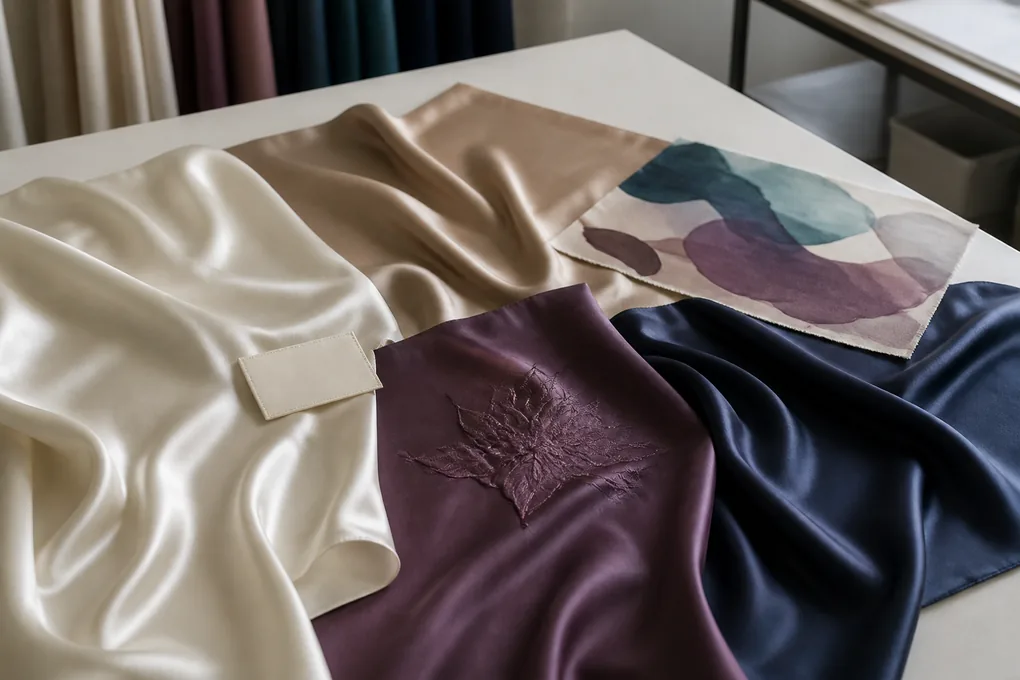
Branding enters the silk product through woven or printed labels, embroidery, monograms, printed fabric, color, packaging artwork and set presentation. These elements depend on physical construction. A logo placed before the pillowcase closure is chosen may land in a seam; a mask embroidery can create unwanted contact; a scrunchie motif can disappear into gathers; a bonnet label can spoil reversibility. Packaging dimensions and protective methods also depend on shape, hardware and fold recovery. We develop branding against the selected product, not as a detached artwork exercise.
Place Brand Elements Where They Remain Legible and Comfortable
Safe zones, orientation and contact surfaces
A finished-product overlay before decoration
The artwork brief identifies size, position, orientation, color, technique and permitted variation. We place it on a finished-product drawing that shows seams, folds, closures, gathers, cups, ties and labels. Pillowcase marks respect the filled orientation; masks avoid pressure zones; scrunchie art is viewed relaxed and stretched; bonnet art follows crown panels. The buyer can approve the relationship between brand and object before decoration is applied to silk.
Technique matters. Printing changes with fabric ground and finish; embroidery adds thread, backing, holes and local stiffness; woven labels add edges and seam bulk; monograms require exact spelling and placement. We sample the chosen technique on representative material and inspect the reverse or skin-contact side. A decorative approval covers the identified size and construction. Scaling it to another variant triggers a placement check rather than relying on visual proportion alone.
Build Packaging Around the Finished Silk Shape
Protection, presentation and disclosure together
Dielines follow the packed product
A box or pouch is sized after the fold and protection trial. Zippers, sliders, clips and buckles are isolated from visible silk. Gathered or padded products retain enough space to recover. Tissue, sleeves, bands and supports receive a specific protection purpose. We condition and reopen the selling unit to observe hard creases, scuffing, color transfer, odor and shape loss. Reducing carton cube is useful only if the item still opens in saleable condition.
Packaging copy identifies the finished item, its measurement, colour or print, piece total, component-fibre scope, care, origin, and responsible-company details needed in the intended market. Barcode and variable labels must match the contents. Gift sets use component-level descriptions rather than one blanket silk statement. Environmental or recyclability wording requires appropriate support. The pack can remain elegant when accurate disclosure is planned into its hierarchy rather than appended at the end.
Brand consistency extends to naming. The product name on the range matrix, label artwork, barcode record, pack and shipping documents should identify the same item and variant. Marketing may add a collection name, but SKU recognition cannot depend on it alone. Stable SKU identity prevents two visually similar colors or constructions from being packed under one label. It also gives customer service and replenishment teams a precise way to request the same product later.
Synchronize Artwork Revisions with SKU and Pack Versions
One source for product and packaging identity
Opening checks confirm the brand promise
Every artwork file and dieline has a version linked to the SKU. A product change that alters dimensions, color, construction or piece count triggers a packaging review. Old labels and inserts are segregated so they cannot re-enter packing. First-off units are scanned and opened before the line continues. This catches wrong color stickers, unreadable barcodes, obsolete claims or a fold that hides the intended motif while correction is still inexpensive.
Final packed inspection compares the physical product, sewn labels, insert, exterior identifier and carton allocation. Multipacks are counted and arranged according to a visual BOM. The product should emerge without marks and resemble the approved customer-facing presentation. These checks are more persuasive to a wholesale buyer than generic branding capability language: they show how identity survives material, decoration, packing and receiving as one controlled item.
Packaging development begins with the selling unit, not with a generic box choice. The buyer states whether one case, a pair, a bedding set, a mask kit or a multipack is sold together. From there we define fold, protection, insert, label, barcode and outer-carton relationships. Delicate surfaces should not be marked by hard components or excessive compression, and color names must remain consistent across physical labels and the assortment file. If the buyer supplies artwork or packaging components, ownership, version, delivery timing and approval responsibility are recorded. The finished pack is then reviewed as part of the product rather than as an afterthought.
Approve Samples and Inspect the Product-Specific Risk
Wholesale silk development needs evidence matched to the decision. Swatches support material comparison; lab dips and strike-offs support color or print; construction prototypes check fit and function; packaging mockups check the selling unit; pre-project samples reconcile all selected inputs. Inspection then follows the failure modes of the chosen product. Do not use repeated quality language as a substitute for naming what can go wrong and where it will be observed.
Assign a Question to Every Sample Submission
Material, color, construction and pack approvals remain distinct
Partial approval is recorded honestly
A material reference can settle hand, luster or fabric-weight reference direction but cannot approve dimensions. A strike-off can settle print color and detail but not motif placement after sewing. A fit prototype may use a temporary color while review pillow loft, mattress pocket, mask geometry, scrunchie hold or bonnet crown. Label each sample with product, material route, size, color or artwork revision, construction and date so comments cannot drift to the wrong version.
The buyer records what is accepted, rejected and still open. An approval of closure operation does not approve a new color; an approval of color does not authorize unreviewed pack artwork. Corrections describe the observed problem and desired result. We explain dependencies when one change can disturb another accepted feature. This staged language reduces remake cycles and allows several buyer roles—product, quality, branding and purchasing—to make decisions without overwriting each other.
Complaint categories sharpen sample and inspection choices. Seam opening calls for attention to seam type, margin and stress points; dimensional returns call for a defined measurement state and care review; shade complaints call for approved color references and lot comparison; pack-count errors call for reconciliation at selling-unit and carton level. Do not turn every possible complaint into an oversized universal checklist. Instead, we combine product-specific risks, buyer history, target channel and agreed specification to choose controls. The result concentrates inspection time where a defect would be noticeable, costly or difficult to correct after packing.
Design Inspection Around the Chosen Family
Different products need different functional checks
Common report structure, specific checkpoints
For pillowcases, check the contact face, finished fit, closure, edge, and seam behaviour. Bedding needs additional attention to large measurements, pocket or duvet function, shade coordination, and set completeness. Eye masks call for symmetry, layer distribution, nose seal, eye-space comfort, and strap retention. Scrunchies need width, gather, wrap, elastic recovery, and pack count; bonnets need crown coverage, layer orientation, retention, edge pressure, and tie attachment. Set these checks before the project with relevant methods and references.
Incoming, inline, final and packed inspection have different purposes. Fabric identity and shade are most efficiently reviewed before cutting. Critical seams, elastic joins, straps and closures are checked close to their operations. Finished goods are measured and used with the nominated reference. Packed inspection adds labels, barcode, count, assortment and condition. Placing a check near its cause makes correction more precise and prevents completed goods from carrying an avoidable process defect.
Report Results Purchasing Can Use
Variant coverage, location and comparison reference
Corrective action preserves accepted characteristics
Sampling covers relevant lots, sizes, colours, constructions, and pack configurations. Each finding states the observed condition, exact location, affected variant, and comparison reference. Photographs support measurements and functional notes rather than substituting for them. Distribution helps separate an isolated workmanship issue from a systematic pattern, material concern, or instruction problem. Purchasing can then judge whether correction, sorting, another sample round, or a different disposition is proportionate.
A proposed fix is checked for side effects. More elastic tension may improve retention but create pressure; a deeper overlap can secure a pillow yet obstruct insertion; a heavier layer can improve opacity while increasing bulk. We check the complaint condition again and revisit affected accepted features. The inspection record closes with a clear disposition and updated control reference, giving future replenishment a reliable baseline.
The inspection plan can include retained records while keeping customer-facing copy focused on the product. A physical control sample, measurement sheet, approved artwork and packed reference support the project; the customer description states the product facts and buyer benefits those controls support. This separation keeps the website readable while ensuring the project is not relying on website copy as its only specification. Buyers see useful depth, and operational teams retain the detail required for repeatability.
Form a B2B Product Inquiry Instead of a Retail Order
Discuss bulk and private-label programmes; we do not publish retail-unit commercial values or ask a purchasing manager to check out one item. A useful enquiry describes the product family, intended market, physical configuration, variants, demand by option, colour or artwork request, retail pack, destination, and decision date. The directory helps buyers choose the correct family and detailed route. The RFQ then establishes current minimum-quantity drivers, sample requirements, commercial terms, and timing for that defined programme.
Provide One Row per Orderable Product Variant
Product, size, material, construction and pack
Total demand is divided into manufacturable allocations
Each row names the product and route, intended use, finished measurements or fit reference, selected or requested fabric-weight reference, component material scope, closure or adjustment, color or print, quantity and selling-unit count. Optional rows are marked as options. A classic zipper pillowcase is not merged with a printed envelope case; a 5 cm scrunchie multipack is not represented by total individual pieces; a tie bonnet is not collapsed into a generic accessory line.
Demand split reveals the practical workload. A large headline total may break into many small colour, size, and artwork versions. Compare material preparation, dyeing or printing, cutting, sewing, and packing setup against that mix before confirming commercial values. If simplification would improve feasibility, identify which options create complexity and let the buyer decide. The directory does not imply a universal minimum quantity or timing commitment because the real drivers belong to the defined enquiry.
A B2B product inquiry should name the decision maker and desired response. A buyer may want a feasibility review, sample recommendation, budgetary comparison or formal quotation; these are different stages. Stating the goal helps us answer proportionately and avoids treating an early concept as a production-ready order. Contact details and company information belong in the inquiry form and Contact route, while product pages remain focused on the silk configuration and purchase problem.
Attach the Information That Removes the Biggest Assumptions
Measurements, artwork, claims and packaging obligations
Reference images are annotated, not copied blindly
Provide pillow, mattress, duvet, face or hair-fit references as applicable. Artwork files should include ownership, scale, repeat or placement intent and color targets. Required documented scopes or tests are listed for scope confirmation. Packaging notes identify piece count, labels, inserts, barcode, retail-channel needs and any customer-supplied components. Destination helps frame origin, labeling and logistics review. Missing inputs are acceptable when they are explicitly marked for our proposal.
Marketplace links can illustrate a closure proportion, silhouette or merchandising direction, but they change and may contain unsupported claims. We ask the buyer to state which visible feature matters and which details are not part of the request. We convert that reference into measurable product language. This supports original development without copying competitor text, medical promises, review statistics or assumptions about materials that cannot be verified from an image.
A useful inquiry also distinguishes target from constraint. Target launch timing, target cost position and preferred materials guide development, while destination rules, required dimensions, approved branding and contractual tests may be constraints. If every preference is presented as fixed, alternatives cannot be evaluated; if every requirement is left open, quotations describe different products. We ask the buyer to label the difference. Our response can then confirm what is feasible, propose defined options where flexibility exists and identify decisions that must be closed before sample or project planning. That exchange is the practical beginning of a bulk program.
Review Assumptions Before Accepting the Commercial Response
Buyer requirements, supplier proposals, and unresolved commercial points
Scope changes reopen the affected commercial discussion
Our RFQ response repeats the included configuration and lists assumptions. Buyer-mandatory values are distinguished from supplier discussion proposals and still-pending decisions. The sample sequence, approval responsibility, pack basis, destination and target timing are visible. A commercial response can then be compared fairly with another offer because both parties understand the object being commercially evaluated. SMTP, checkout or retail cart behavior has no place in this process; the CTA sends the project requirements directly for review.
When material, dimensions, artwork, demand split, construction, or pack changes, assess the resulting consumption, operations, sample needs, and schedule. Identify the revision rather than letting it disappear in an email chain. After approval, the chosen data moves into the controlled specification and pre-project review. This turns a directory visit into a professional B2B product enquiry: the buyer receives a defined route, and the development team receives instructions that can be sampled, reproduced, inspected, and packed.
Buyer questions about choosing a silk product family
Can this family page confirm a product is available now?
No. It identifies the correct inquiry route; feasibility and commercial availability need confirmation for the defined article.
Why not put all silk accessories in one quote line?
Mask, scrunchie, bonnet, and bedding products have different component, fit, and approval inputs.