
P029
Contact China EverBen Silks for a Defined B2B Silk Inquiry
At China EverBen Silks, we begin with the named silk article, the buyer question, and the information your colleagues need for their next review. Use the RFQ form for a defined product discussion, or email us to introduce a focused B2B topic. In the first message, identify whether the inquiry concerns a pillowcase style, bedding piece, eye mask, hair bonnet, scrunchie assortment, product presentation, sample comparison, or a document-related question.
Published by China EverBen Silks Reviewed by Mark Liu
Route the business question to the correct inquiry path
Bring the product, quantity, destination, and document or website question so it can be handled appropriately.
Start With the Exact Silk Article Your Team Is Considering
Open the inquiry by identifying the finished item, rather than asking a supplier to interpret a broad category. A pair of pillowcases, fitted sheet, duvet-cover set, eye mask, bonnet, scrunchie, headband, ribbon, and coordinated accessory assortment lead to very different buying conversations. Explain the variation under comparison, the customer-facing count, the colour or print direction, and the product feature that matters now. That gives everyone a real article to consider. It also lets colleagues separate the main item from a companion piece, one unit from a pair, and a range-level visual idea from an unresolved component choice. A precise opening description stops a familiar name from hiding a different size, opening, pack count, or retail configuration. If your team uses an internal style code, add ordinary English beside it. A product manager, merchant, and purchasing colleague can then recognise the same item without decoding shorthand or relying on a one-sided photograph. For an assortment, make a short list identifying the priority item and those provided only as context. Discussing one eye mask, pillowcase, or bedding style becomes much clearer when a range image does not leave the recipient guessing which companion piece prompted the message.
Name the product family and variation
A specific silk article gives purchasing and product teams a common reference
Include style, count, color, print, size, and construction direction
Begin with a plain product description: a classic pillowcase pair, printed pillowcase, flat sheet, fitted sheet, duvet-cover set, fixed or adjustable sleep mask, long-hair bonnet, five-centimeter scrunchie, or accessory assortment. Add the variation that matters, such as a colorway, print, size family, closure direction, component count, or individual-versus-set presentation. A request for silk bedding is not enough when a question applies to one component. Clear article language prevents a general range conversation from being mistaken for guidance about the item your team is actually developing.
If a buyer has a familiar internal style name, include a simple product description beside it. That makes the inquiry understandable to a new product, packaging, or commercial colleague without forcing anyone to decode shorthand. It also helps distinguish a reference used for inspiration from the precise article being considered for a B2B conversation.
Place the article inside the commercial setting your customers will see
Retail, marketplace, hospitality, beauty, and gift programs can change a product question
State business use without turning it into an unsupported claim
Describe the commercial situation where the article will be considered, without turning the inquiry into a marketing deck. A home-textile team might be putting together a coordinated bedding offer, a beauty retailer could be considering a sleep accessory, a store buyer may need a recognisable selling unit, a hospitality group can be reviewing a guest textile, and a corporate purchaser may be assembling a gift selection. What matters is the context that changes the immediate product issue: a customer’s first view, a component relationship, a pack choice, or the role of that item in a range.
Separate companion pieces before discussing the collection
A shared color story does not erase item-level construction decisions
List the anchor article and each companion item
List each item separately before introducing the collection as a whole: perhaps a pillowcase pair, eye mask, bonnet, scrunchie, or bedding component. Every article brings its own construction, visible surface, connected parts, and selling count. A common colour palette can support a range, but it does not turn a mask strap, pillowcase closure, bonnet opening, sheet corner, or accessory card into one shared choice. Once the anchor item and its companions are clearly separated, we can discuss the collection direction in a more useful way.
Explain the Product Question You Need to Resolve First
The strongest contact message states the decision that is blocking progress. Your question might concern material direction, construction, size relationship, print placement, color reference, component choice, selling unit, packaging, sample comparison, document scope, or later commercial review. One clear question lets us understand your current direction; it is more useful than a long collection of general expectations. It also lets the buyer separate a point that needs immediate discussion from a later product, brand, operations, market, or commercial decision. If two alternatives are still active, say exactly what differs between them and which one you want to evaluate first. This gives a product conversation an honest boundary without requiring your team to pretend that every future condition is already settled. Put the decision in the subject line or first sentence, then add the minimum context needed to understand it. A focused request prevents a color conversation from being mistaken for approval of construction, or a pack question from being read as a complete buying brief. When several questions compete for attention, rank them. Tell us which issue prevents your buyer from moving forward now and which questions can wait for a later product, packaging, document, or commercial exchange. That prioritisation produces a more useful first contact than a list of unrelated requests. It also gives the recipient a practical way to prepare the next answer without expanding the inquiry into claims that your team has not yet approved.
Turn a broad request into one product decision
A defined question gives product and procurement colleagues the same starting point
Say what your team is comparing or trying to clarify
Frame the inquiry around the immediate product choice your buyer needs to weigh. You might compare envelope and zipper pillowcase concepts, decide whether a printed motif belongs on a visible panel, consider bedding component count, select an adjustable or fixed eye-mask direction, or ask how a scrunchie assortment should be presented. Avoid asking only whether a product can be made; that wording hides the features that shape the discussion. Identify the article, current direction, and one uncertainty your team cannot close.
A buyer can also explain why that one choice matters now: it may affect a product meeting, a range review, an artwork discussion, or inputs required for subsequent commercial review. That reason does not need to become a promise about the result. It simply helps us understand the practical importance of the stated question.
Separate product choices from business assumptions
Keep the silk article visible when quantity, market, and channel information also matters
Commercial context helps without replacing a product brief
A product choice and a business assumption do different jobs. A pillowcase closure, bedding component list, mask shape, bonnet opening, or scrunchie width is a product question. An estimated launch quantity, retail channel, destination, or target season provides context. Tell us both, but keep them distinct. This prevents an early commercial estimate from being read as a completed product specification, and it prevents a visual inspiration image from being read as a final commercial instruction.
State what a useful next response should help decide
A practical next action keeps the B2B conversation focused
Ask for clarification, comparison, sample planning, or commercial discussion
Finish by explaining what a helpful next response should enable. You may need to clarify an article-level feature, compare two product directions, identify what information is needed before a sample discussion, organize a packaging question, understand a document-scope issue, or prepare for a later commercial conversation. We do not promise that every point can be settled from one message. A defined next decision simply lets us keep the discussion proportionate to what is actually known.
Share the Current Reference That Explains Your Silk Direction
Use a photograph, swatch, drawing, product link, artwork file, sketch, or written description when it makes one stated question easier to understand. A large group of unlabelled attachments is rarely helpful. Select the reference that shows the feature under consideration and add a note about what it clarifies. That matters when silk luster, colour, print scale, fold, opening, trim, or product shape affects a buying decision. A brief annotation can identify the visible face, reverse, edge, folded view, component order, motif, closure area, or selling-unit presentation. It lets the people in the conversation distinguish an illustrative idea from the active buyer direction. If files have changed, give the date or version to be considered and say whether it replaces an earlier image. This helps us comment on the live visual issue, rather than an outdated layout, colour file, or drawing. When a reference comes from a retail listing or competitor image, point to the one feature you want to explore instead of treating every visible detail as part of your brief. Keep the review anchored to your article, customer context, and the buying choice at hand. Add a short buyer note identifying the observation that should guide a reply without prescribing details that cannot be seen.
Use photographs to show the feature under discussion
A marked image can clarify shape, placement, fold, or component position
Identify what the image shows and what it does not define
Attach a photograph when it helps a reviewer see a specific product feature. A bed image may explain a pillowcase profile or bedding arrangement. A close-up can show an edge, closure area, visible print, piping, flange, gathered body, or hardware relationship. Mark the relevant area if the question is not obvious. A photograph is useful for visible direction, but it does not establish material composition, exact measurements, packaging, or commercial terms. State what the image is meant to show and what remains open.
When an image includes several pieces, identify the one component that the question concerns. A collection photograph may show a coordinated range, but the buyer might only need to discuss a pillowcase opening, a mask face panel, a bonnet edge, or a carded accessory. This makes the visual reference easier to use without adding assumptions.
Use swatches and color references with viewing context
Silk color and luster should be discussed against the selected article
Name the color relationship your buyer is trying to evaluate
If color is central, say whether you are working from a swatch, physical sample, internal palette, printed artwork, or screen image. Silk can show a different visual character as viewing angle, cloth weight, weave, finish, and surrounding components change. Explain whether the concern is an overall color family, contrast with trim, a relationship between coordinated articles, print background, or a shade within a range. We can then discuss the specific silk article and buyer reference rather than making broad claims from a digital image.
Annotate each reference with the question it answers
A short note is more valuable than a file name alone
Connect the reference to the item, variation, and decision
Add a note that says whether the reference shows a product shape, fold, closure, artwork position, color relationship, component, pack layer, or customer-facing presentation. Name the article and variation it belongs to, especially when a collection includes similar pillowcases, bedding sizes, masks, bonnets, or accessories. If a file is illustrative rather than current, say so. This keeps the discussion tied to the buyer's present product direction instead of allowing an old picture to become an unstated instruction.
Give Quantity and Sales Context Without Hiding the Immediate Product Decision
For a B2B silk purchase inquiry, quantity, channel, and destination can help explain the setting, yet none of them should substitute for the product description. An estimate cannot determine a pillowcase opening, bedding-set count, mask construction, or accessory presentation. State what your team knows, label early figures as estimates, and keep the item-level choice visible. Procurement can then understand the commercial context while product colleagues see the point that remains unresolved. Where a collection includes several items, say whether a quantity relates to the full range, one colourway, one size, a paired offer, or an accessory grouping. That distinction stops planning figures from obscuring the link between an outlook and the configuration being considered. If numbers vary by colour, size, or pack format, show those assumptions individually instead of offering one unexplained total. Your purchasing colleagues can decide which figures help the present discussion and which belong in a later commercial exchange. Include only context that changes the answer you are seeking. A customer-facing count may matter to a pack question, while a destination can matter to the buyer’s own label or document review. Connecting each context point to its purpose makes the message far easier to follow.
Share an estimated quantity when it helps
An estimate gives purchasing context without becoming a commitment
Connect an early outlook to the named item
If your buyers are working with an early quantity estimate, place it beside the article and variation it concerns. A pillowcase pair, sheet set, sleep-mask range, and scrunchie assortment may each carry a different outlook. Explain whether the number is an initial estimate, a range-planning figure, or an amount still being reviewed. A contact-form entry is not treated as a minimum, price, order, or production commitment. The figure simply places the B2B conversation beside the product scope your team is considering.
Where your buying program has more than one stage, describe the stage rather than forcing one number to carry every meaning. A buyer may be organizing an initial range discussion, a sample comparison, a color review, or a later commercial assessment. This keeps the quantity context honest and prevents one early planning figure from being treated as a settled requirement.
Identify the sales channel where it changes the question
Retail, marketplace, hospitality, beauty, and corporate programs have different priorities
Explain the context instead of assuming a universal pack direction
Describe the channel only when it changes a product or presentation question. A retailer may need a customer-facing selling unit, a marketplace programme may focus on the visible variation, a hospitality buyer may review a guest textile, a beauty brand may compare a sleep accessory within a range, and a corporate-gift buyer may consider how silk items sit together as an assortment. A channel label alone does not tell us which external requirement applies; explain the product feature or customer moment that makes the setting relevant.
Add destination only where it affects the next question
Destination context is not a delivery promise
State the buyer-managed market or receiving context plainly
Where destination matters, name the country, region, customer program, or receiving context that makes it relevant. It may affect the buyer's label review, packaging fields, document question, or commercial planning. We do not make shipping, delivery, regulatory, or retailer-acceptance claims in a contact discussion. If destination remains open, say so. That prevents an early market mention from being mistaken for a completed delivery arrangement or a universal rule for every product in a silk range.
Bring Material, Construction, and Product-Use Questions Into One Inquiry
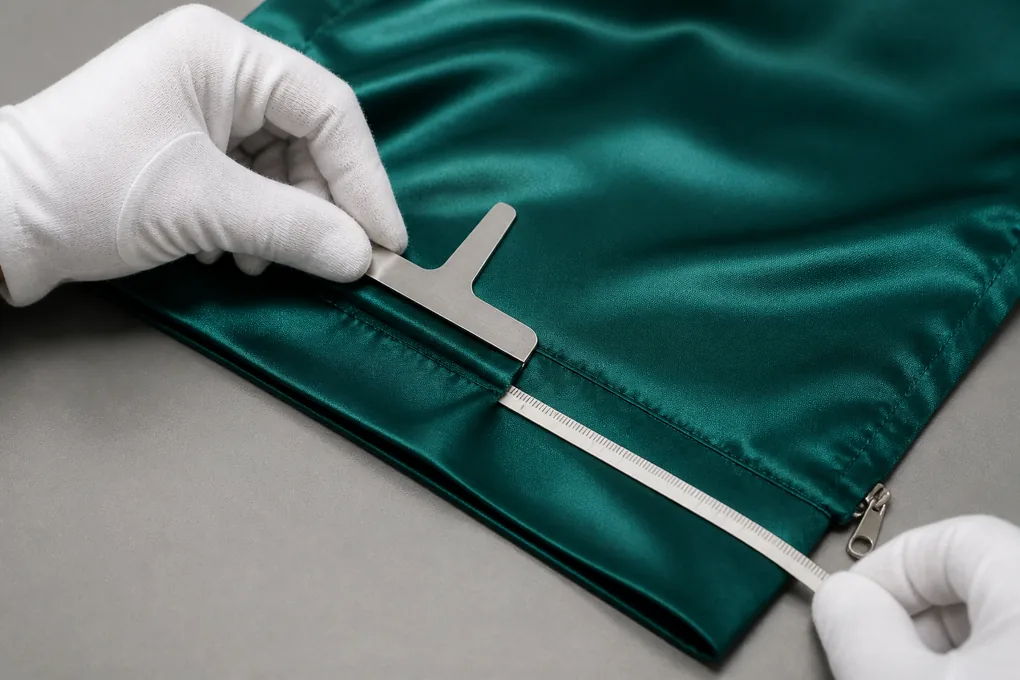
Product-material and construction decisions are clearer when they stay attached to the finished article. A question about fabric weight, weave, colour, finish, opening, elastic path, lining, trim, or label placement only has meaning once the buyer names the pillowcase, bedding component, mask, bonnet, scrunchie, or accessory involved. Explain the comparison and why it matters to the selling unit your team is developing. That stops a familiar textile term from replacing a proper product description. It also enables the buyer to show whether the concern involves a customer-facing surface, fit or shape, a part-to-part connection, a printed zone, a pack relationship, or the way several items should sit together in a range. A useful message identifies the visible component, its place in the completed article, and the precise point for discussion. This is more actionable than a broad request for a better silk product because it states the buyer’s intended focus. When an item combines a silk face with an edge, inner layer, opening, elastic, or trim, name the component that belongs to the present question. The conversation can stay precise even when adjacent parts need attention later. It also helps colleagues compare one concrete relationship instead of debating a textile term without a product context.
Connect a material question to the visible article
Momme, weave, finish, color, and print need product context
Do not treat one textile phrase as a complete specification
If you want to discuss a silk material direction, name the article first. A pillowcase contact surface, large bedding panel, sleep-mask face, bonnet body, and gathered scrunchie do not use fabric in the same way. Explain whether you are comparing a fabric reference, evaluating a visual surface, considering a color or print direction, or coordinating several articles. We can discuss the stated material question in relation to the named product while leaving final material, construction, and commercial details for written project confirmation.
A useful material question also identifies which visible or functional relationship the buyer is examining. The concern might be the way a face fabric sits with an edge, a lining, an elastic route, a trim, a printed panel, or another garment or bedding component. That detail keeps a textile discussion connected to the finished article instead of allowing a general fabric phrase to stand in for the product brief.
Identify the construction relationship that needs attention
Closures, seams, elastics, ties, trims, and linings change the discussion
State location and intended component function
Describe the component relationship your team is trying to resolve. For a pillowcase, it may be the opening, overlap, zipper concept, flange, or piping. For bedding, it may be a corner, duvet attachment, component list, or coordinated-set relationship. For a sleep mask, it may be a strap, contour, edge, or internal layer. For a bonnet, it may be crown, opening, tie, elastic, or lining. For a scrunchie, it may be the gathered body, elastic, width, or card presentation.
Explain the product-use consideration without claiming an outcome
Intended use defines the question but does not replace product review
Describe what the buyer wants to observe in the finished article
Explain the visible or use-related point your buyer is weighing in the completed item: a smooth pillowcase face, a bed-size relationship, a mask outline, a bonnet silhouette, a scrunchie volume, or an accessory presentation. Use practical language. We do not make universal comfort, beauty, sleep, hair, medical, durability, or performance claims through contact content. Intended use simply helps us understand the focus for a product, sample, visual-reference, or pack discussion.
Clarify Color, Print, Artwork, and Brand Assets Before They Become Assumptions
Color and artwork can be central to a silk program, yet they require more than a logo or screen image. Tell us whether you are discussing a solid color, printed pattern, placement, repeat, contrast trim, branded card, package graphic, or buyer-owned label. A clear asset question lets product, brand, packaging, and procurement colleagues see the same issue without confusing a visual direction with a complete product instruction. When one asset relates to more than one article, identify the item-by-item relationship rather than assuming a pillowcase graphic, bedding print, bonnet motif, or card layout automatically translates to every companion product. This creates a practical visual conversation without making unsupported claims about the finished article. Clarify which feature must remain visible when the article is folded, worn, grouped, or photographed for your intended selling channel. That lets the people reviewing an asset distinguish a motif, placement, colour relationship, and pack graphic rather than treating every visual element as interchangeable. If an artwork file includes several layers, cropped variations, or color directions, identify the selected version and the article surface it belongs to. We can then discuss the visible decision instead of making assumptions about unshown repeats or companion products. Say which visual option should be reviewed first.
State whether the direction is solid silk or print
Solid and printed articles create different visual questions
Name the visible area, color family, motif, or placement concern
A solid pillowcase may raise a color and surface relationship. A printed pillowcase adds motif scale, orientation, repeat, and placement after cutting. A bedding set may need coordinated components, while a mask, bonnet, or scrunchie may need a visible face, edge, gathered body, or trim identified. Tell us what the reference is intended to establish. We can discuss the product-specific visual question without treating a flat image as proof of how every article, size, or component will appear after construction.
If several colourways or prints belong to a range, identify the one that matters in the opening conversation and which colours or prints remain later options. This allows the buyer to keep the visual decision manageable. It also shows whether an artwork reference concerns one product surface, a coordinated set, or an early brand-direction discussion only.
Attach buyer-owned artwork with a clear purpose
A logo, pattern, card, or label file belongs to a named product layer
Explain placement and the buyer-side owner
When you attach artwork, identify the exact item and location it relates to. It may be a product print, package card, pouch mark, insert, sleeve, or buyer-controlled label field. Explain which surface, panel, fold, orientation, or pack layer is relevant. If the asset is a draft, identify it as a draft. We do not validate ownership rights, market acceptance, or legal wording through a general contact inquiry. Clear placement information prevents an asset from being applied to the wrong style or selling unit.
Ask for a visual review narrow enough to answer
A focused art or colour query should state its own visual boundary
State the feature, variation, and decision owner
You may need to consider whether a pattern belongs on a visible face, whether a colour relationship needs physical comparison, whether marked placement should stay clear of an opening, or whether a card and product make one selling unit. State the article, variation, reference, and buyer colleague who will take the next decision. A broad contact message is not approval of materials, construction, packaging, label content, or commercial terms. A tightly framed review keeps the visual discussion connected to the silk product.
Use Packaging and Label Questions to Define the Selling Unit
Begin a packaging inquiry by identifying the exact retail offer rather than using packout as a catch-all word. A pillowcase pair in a presentation sleeve has a different buyer question from a silk eye mask in a pouch, a folded bedding set, or a small hair-accessory card. State what the customer receives, the order in which it is seen, and the one presentation choice that needs review. Then separate the product itself from a band, insert, tissue layer, carton, or handling group. This distinction matters when a merchant is assessing product visibility while an operations colleague is considering a later outer layer. If one article appears as both a single purchase and a gift arrangement, describe the two offers independently. Explain whether the decision concerns product count, fold, opening sequence, card relationship, label position, or the visual hierarchy between several pieces. We can use that clear description to discuss the customer-facing unit without assuming details about packaging materials, logistics, retailer requirements, or commercial arrangements. A defined retail moment gives brand, product, and purchasing teams a common subject for the next conversation.
Name the customer-facing unit before outer layers
A product, pair, set, multipack, and gift configuration should not be mixed
State contents before cards, boxes, or cartons
Describe the finished customer offer in ordinary buying language. For example, identify a pair of pillowcases inside a sleeve, one eye mask beside a pouch, a duvet-cover set folded as a group, a bonnet on a card, or several scrunchies arranged as one assortment. Next, list the visible presentation pieces that are relevant to your question: perhaps a band, insert, wrap, small box, or outer shipper. This order keeps the silk article visible before the surrounding layers are discussed.
State the immediate presentation problem in a sentence. Your team may be weighing what appears first on opening, how a count is shown, whether an insert competes with the product, or how a card relates to an accessory. Assign each layer a practical purpose so the correct product, brand, purchasing, or operations colleague can review it. A precise description prevents an undifferentiated packaging request from concealing several unrelated decisions.
Keep buyer-owned wording and identifiers under buyer control
Text on labels, cards, inserts, and cartons needs a named owner
Identify location and purpose of each buyer-supplied field
When you include product text, a brand statement, care copy, barcode, retailer field, or carton mark, identify the intended surface and the business colleague responsible for approving it. A sewn label serves a different reader from a retail card, a pouch, a sleeve, or an outer carton. We can discuss how that layer sits with the selected silk item, including its visible order, intended shelf moment, and the point where it meets the customer offer. Your own legal, compliance, customer, and retailer-review teams remain responsible for deciding whether wording or identifiers are suitable for their purpose.
Describe the presentation issue holding the range back
A packaging question should identify a visible or practical decision
State the fold, order, count, or receiving question
The question may concern a pillowcase fold, gift-set order, sleep-mask pouch relationship, bonnet card, accessory count, color cue, buyer-controlled insert, or distinction between a customer-facing unit and outer handling level. A specific question gives us a usable starting point. We do not promise protection, transport, storage, shipping, or retailer performance based on a website inquiry. We discuss the named silk article and proposed pack hierarchy so the right teams can decide what needs project-specific confirmation.
Prepare a Sample or Physical Review Question That Buyers Can Use Confidently
A sample discussion is more useful when it names the article, variation, and feature to observe. A buyer may want to compare a pillowcase closure, bedding component relationship, mask shape, bonnet opening, scrunchie proportion, color direction, print placement, packaging fold, or another visible product point. Tell us what should be compared and which buyer decision the observation will support. This keeps a future sample conversation focused on the actual configuration. It also distinguishes a fabric or color reference from a finished article, and a product observation from a decision about unrelated commercial, market, delivery, or customer-program matters. The buyer can then keep each review proportionate to the feature that genuinely needs attention. Describe the reference in enough detail for a colleague who did not attend the earlier meeting to understand the comparison. A short note about the product face, opening, edge, fold, component relationship, or pack view can make the next discussion more efficient and less dependent on memory. If two references are being compared, name one visible difference and the buyer’s reason for reviewing it. That framing helps prevent a sample request from becoming an ambiguous request to approve every attribute at the same time. It also gives your product team a concrete observation to discuss after the review.
Choose the reference that matches the decision
A swatch, prototype, image, or assembled unit answers different questions
Use the reference that reveals the feature your buyer is weighing
Match the reference to the question your team is asking. A swatch can support a discussion about colour or surface character, while a finished article can show an opening, edge, silhouette, gathered area, panel relationship, or fold. A complete selling presentation may be most useful when the concern is the customer’s first view of the product. Identify which article variation appears in the reference and describe the one feature it helps your buyer evaluate. An image or sample should not be read as agreement on every unshown product detail.
Give the comparison a visible focus. Your buyer might be considering whether a printed face remains apparent after folding, whether the two pieces in a pair read clearly, where an opening falls, or how a component sits beside another part. This wording does not decide the result. It allows product and purchasing colleagues to discuss the same visible observation when they review the next response.
Describe what the buyer wants to compare or observe
Specific observations make a sample conversation more useful
Name the location, feature, and intended relationship
Describe the observation in the language of the selected article. A pillowcase inquiry can point to its sleeping face, edge treatment, opening, flange, piping, or artwork area. Bedding may require attention to a corner, component relationship, closure approach, or the way pieces look together. An eye mask, bonnet, or scrunchie can raise a question about a strap, gathered portion, tie placement, opening, elastic path, silhouette, or card presentation. Explain the exact feature being compared instead of requesting a general approval. That separates a buyer preference from technical, commercial, or market decisions that remain open.
Identify who will use the next product review
Procurement can coordinate while product and brand teams own their decisions
State the buyer-side owner and next action
Tell us who will use the next product or sample discussion. Procurement may coordinate, while a product manager, brand lead, packaging colleague, quality team, or customer-program owner may decide the next point. This does not require a complex approval system. It helps us understand whether the buyer needs a visual comparison, material question, packout conversation, document-scope clarification, or preparation for commercial review. We do not promise that a sample discussion settles unrelated choices.
Ask Document-Scope Questions About the Correct Silk Configuration Before a Buyer Review
Raise a document question by naming the silk article, the relevant component, and the buyer decision it supports. A certificate preview, material declaration, questionnaire, care-copy draft, test-related attachment, or customer request can have a narrow context; a familiar document name does not automatically answer every question about a finished item. Tell us the attachment type, any visible holder or date, the version if available, and the specific part of the product your team is assessing. That might be the silk surface, a closure, a lining relationship, a sewn label, or a packaging element. If your team needs an original document, state the purpose of that request in plain language. A preview can begin a conversation, while your own qualified colleagues decide what documentation is appropriate for their internal review. Where a retailer or customer has supplied wording, distinguish that request from the product feature it concerns. This helps product, purchasing, and quality teams avoid carrying an administrative question across an entire range without first identifying the exact configuration at issue.
Name the document type and product question
A document name does not reveal the buyer's actual scope
State article, component, holder, date, or visible scope detail
Identify the attachment in your own words and explain the narrow purchasing question it is intended to inform. You might mention a certificate image, supplier declaration, retailer questionnaire, care-copy file, or customer-provided request, but that name alone does not define the full inquiry. Identify the selected silk style and the part being considered: perhaps a pillowcase face, bedding panel, eye-mask exterior, bonnet tie, scrunchie outer fabric, sewn label, or presentation piece. Add a holder, date, version, or visible qualifier only when it distinguishes one item from another. An introductory message cannot replace your organisation’s legal, certification, or product assessment.
Explain why the information is being raised at this point. It may support an internal discussion, a customer question, a label decision, or a comparison among product options. That context keeps the request tied to the appropriate article and component. Your buyer-side team decides whether and how it will rely on any document in its own final process.
Separate silk fabric from other product components
Supporting parts can narrow the document question beyond the silk surface
State which finished-product parts are included
Use product names carefully so the word silk does not blur the rest of the configuration. A pillowcase question might relate to its opening or edge. An eye-mask question may focus on the strap, inner layer, perimeter, or filling area. A bonnet can involve a tie, elastic path, lining, or label; a scrunchie may include a gathered outer tube and enclosed elastic; a selling presentation can add a card, pouch, insert, or carton. State which element is in scope for the question and which are not. This keeps the inquiry precise without implying that an attachment covers every associated component.
Keep final buyer reliance with the appropriate team
Procurement, quality, legal, product, and customer teams can have different roles
Clarify scope without transferring the buyer's decision
State the decision the information is intended to inform and the buyer colleague who will consider it. Procurement may coordinate the inquiry, product may identify the active style, quality may lead an internal review, and legal or customer teams may apply their own requirements. We can respond to the selected product and document topic within the context you provide. China EverBen Silks does not make legal, regulatory, customer-acceptance, or final-reliance decisions for your business. Your organisation keeps those decisions within its own review process.
Identify the Right Buyer Contact for the Next Silk Decision and Review Across Product, Brand, Quality, and Commercial Teams
A B2B inquiry is easier to progress when the buyer identifies a person who can clarify the current product direction. That contact may be in procurement, product development, brand, packaging, quality, or commercial management. A large distribution list is unnecessary. Instead, explain who can answer the next question about the selected silk article and who should receive a follow-up. Naming the relevant role lets a buyer direct a colour topic to brand, a construction point to product, a selling-unit question to packaging, a document issue to its review team, and a commercial comparison to procurement. The first message stays practical without suggesting that one person has approved the whole programme. If another colleague needs to contribute, give their role and the narrow point they handle. This avoids a reply landing in a broad list with no decision owner, while supplying enough context to keep product, visual, quality, and commercial discussions aligned. You can also name an alternative recipient when the principal buyer is travelling or unavailable. That reduces avoidable delay without adding credentials, payment details, or unrelated personal information to an opening supplier inquiry. Use a work email or business telephone contact appropriate to the subject. A clear owner, a defined article, and one pending choice allow the response to reach the team able to act. That simplicity matters. It reduces needless message rerouting.
Name a contact who understands the product brief
The next buyer contact should recognize the article and direction
Provide a business role and question that person can clarify
Identify the buyer contact who can clarify the active product direction. That person may own the pillowcase category, bedding program, accessory range, drawing, artwork, packaging decision, quality question, or commercial comparison. Give their role and business contact details in the RFQ form or email when appropriate. A named owner reduces the chance that a reply sits with a colleague who cannot confirm the variation, reference, or customer-facing unit under discussion.
When several buyer teams participate, name the person who should receive the next question, then mention other roles only if they change the answer. This keeps the conversation from becoming a loose contact chain while preserving useful context. A design issue can stay with product, a visible graphic with brand, a pack point can be handled by packaging, and commercial comparison can remain with procurement.
Keep buyer roles proportionate to the decision
Product, brand, quality, packaging, and procurement may own different parts
Use one contact route without asking one person to approve everything
Procurement can coordinate while product identifies the article, brand owns a visual asset, packaging defines a selling-unit question, quality manages internal review, and a commercial owner decides how to proceed. Tell us which role is relevant to the present topic. This keeps color, packout, sample, or document questions with the right person without turning the first inquiry into a formal approval chain. We do not infer buyer authority from job titles.
Use business contact details suited to the inquiry
Keep the email and telephone route clear for B2B communication
Avoid sensitive information not needed for the product question
Use business contact details and share only information needed to explain the silk inquiry. The RFQ form can organise a product question, and email can introduce a focused topic or ask where a discussion belongs. Avoid unrelated personal data, confidential customer data, payment details, or credentials in an opening message. A concise inquiry with the article, buyer contact, current reference, and next decision works better than an unstructured attachment bundle.
Choose Email, Telephone, or the RFQ Form for the Question You Have
China EverBen Silks provides more than one way to begin a B2B silk conversation. Use the RFQ form when you can name a defined article and the specific buying choice your team wants to assess. Use email to introduce a focused product, packaging, sample, document, or website question. Telephone can help when a buyer needs to identify the right topic before preparing a fuller written brief. Select the route that fits the information available, then keep the first message concise: article, variation, reference, buyer context, and next choice. A direct route opens a conversation; final product, commercial, and delivery terms need their own project-specific written treatment. Use one route for the first issue instead of combining unrelated questions in a single message. Separate, well-labelled inquiries for a product matter and a document matter help your buying colleagues retain a clear path for each discussion. If a question has internal urgency, explain the buying choice it affects rather than asking for an unspecified fast response. That gives the message a concrete product purpose while keeping any later timing and commercial arrangements for a written exchange. Select the format that makes the buyer question most understandable, not merely the route that appears quickest. A defined inquiry is easier to carry across business roles.
Use the RFQ form for a structured product conversation
A defined article and clear question make the form more useful
Include product, buyer context, and decision needed
Use the RFQ form when your team can identify the silk article and the specific issue it needs to address. Include the pillowcase, bedding item, mask, bonnet, scrunchie, accessory, or set; the current variation; a relevant reference; sales or customer context; estimated quantity and destination where helpful; and the question the buyer wants to resolve. A form submission begins an inquiry, not confirmation of a quote, order, availability, price, minimum, timing, delivery, or other commercial term.
The form is especially helpful when product, packaging, visual, sample, and commercial context must remain together. It lets the buyer introduce a defined brief without compressing several unrelated topics into a short subject line. If a point is still an estimate or a question for another buyer team, identify it as such so the conversation can remain accurate and focused.
Use email for focused questions that need context first
Email silk@silkspillowcase.com for a concise B2B silk introduction
Put the article and question in the subject line or opening paragraph
Email silk@silkspillowcase.com when you want to introduce a defined question, ask where a topic belongs, or share limited context before preparing a fuller product brief. A useful opening can name a silk pillowcase packout question, printed bedding reference, sleep-mask construction comparison, bonnet opening discussion, accessory assortment direction, or document-scope topic. Add your company role and the buyer decision that is currently open. We do not promise mailbox delivery, response timing, quotation, order acceptance, or a completed commercial outcome through an email address alone.
Use telephone for an appropriate B2B contact route
Telephone 0086-0-13833124686 connects the buyer to China EverBen Silks
Prepare article name and question before calling
Telephone China EverBen Silks at 0086-0-13833124686 when a buyer wants to introduce the product topic and identify a suitable next written question. Prepare article name, current variation, business context, and decision your team needs to discuss. A short call can make sure a pillowcase, bedding, mask, bonnet, scrunchie, accessory, packaging, sample, or document topic is described clearly before it moves into a fuller B2B inquiry. Telephone contact does not replace written confirmation for products, specifications, commercial terms, documents, orders, or delivery arrangements.
Use the China EverBen Silks Contact Details for Your Clear B2B Inquiry and Supplier Contact Routing
Use the company details below when colleagues responsible for product direction, brand assets, packaging, quality, or commercial choices need to contact China EverBen Silks about a defined silk product matter. China EverBen Silks is registered under No. 91130102336249248K. In supplier-contact notes, keep the company identity beside the product brief: company name, business email or telephone, selected silk article, current reference, and the unresolved buying point they need to take forward. Use the full business address below when an internal supplier file or correspondence calls for it. Contact information supports a clear B2B introduction; it does not imply a product, factory, certification, commercial, or delivery claim. When a buyer links company identity to an article-specific question, product, purchasing, and quality colleagues can identify the right conversation later. Include your company name and role in the first message so we can understand the business setting without asking for unnecessary personal information. For a multi-brand group, identify the buying entity and the brand or product line involved. This keeps a legitimate contact route clear while product, pack, document, and commercial questions remain linked to the correct buyer programme. When adding contact details to a supplier file, keep them beside the selected article and buying choice rather than in a detached note. That makes later follow-up more useful to the people responsible for the range.
Contact China EverBen Silks by email
Email: silk@silkspillowcase.com
Use email for product, packaging, sample, or document-scope introductions
Send a focused B2B silk inquiry to silk@silkspillowcase.com. Name the silk article, variation, current reference, business context, and question your team needs to answer. Identify whether the immediate issue concerns visual direction, material, construction, packaging, samples, documents, or commercial comparison. Email begins a conversation; it does not establish a price, order, availability, minimum, timing, delivery arrangement, document conclusion, or other project term. Those points need a defined written discussion for the configuration.
A clear subject line can make the message easier to route: for example, silk pillowcase product question, bedding packout discussion, sleep-mask reference, bonnet construction topic, accessory range question, or document-scope inquiry. The opening paragraph can then identify the variation and the decision. This gives the recipient a practical product context without asking the buyer to submit more information than the question requires.
Contact China EverBen Silks by telephone and post
Telephone: 0086-0-13833124686
Address: 12-302 Sunac Urban Center, No. 10 XianMing Road, Chang'An District, Shijiazhuang, Hebei, China 050000
Telephone China EverBen Silks at 0086-0-13833124686. Our contact address is 12-302 Sunac Urban Center, No. 10 XianMing Road, Chang'An District, Shijiazhuang, Hebei, China 050000. Use these details for supplier-contact notes and business inquiry routing. The legal registration reference is 91130102336249248K. These facts identify the company behind this website; they do not make a product, manufacturing, certification, commercial, or delivery claim. Keep the silk article and buyer question together in the contact brief.
End the contact brief with one decision that moves the program forward
A defined next action makes the silk conversation useful to buyer and supplier
Use the RFQ form or email after article and question are clear
Before sending, check that the inquiry names the article, variation, business setting, relevant reference, and one next decision. You may need to compare a feature, discuss a sample direction, clarify a packaging relationship, raise a documentation inquiry, or move toward a later commercial review. Then choose the RFQ form or email route that suits the topic. Your organisation remains responsible for its own product, market, legal, commercial, and release decisions, while China EverBen Silks can keep the supplier conversation tied to the actual article rather than a broad request.
Questions Business Buyers Ask Before Contacting China EverBen Silks
What should I include in a first B2B silk inquiry?
Name the silk article, variation, current reference, sales context, quantity outlook and destination when known, then state the product or commercial question your team needs to resolve.
Can I use the contact form for packaging or document questions?
Yes. Identify the exact product configuration and explain whether your question concerns a selling unit, buyer-owned artwork, a packaging layer, or the scope of a document.
Where can I find China EverBen Silks contact details?
Email silk@silkspillowcase.com, telephone 0086-0-13833124686, or use the RFQ form for a structured product inquiry.