
P041
Silk Packaging and Labeling Checklist for B2B Buyers
China EverBen Silks frames silk packaging questions around the sale unit rather than a broad packaging idea. Begin with the item the customer will receive, then identify the fold, inner presentation, label placement, copy, artwork, colour, and outer-pack points still requiring review. A product image, one box concept, or a general carton note does not define every article in a range. Name the silk item, sale unit, and unresolved packaging point so the discussion stays attached to the product being developed.
Published by China EverBen Silks Reviewed by Mark Liu
Turn packout assumptions into visible unit, inner, and carton controls
Identify the product, protection need, label data, count logic, transport context, and decision owner.
Build the Customer-Unit Hierarchy Before Choosing a Silk Package
We start every packaging discussion with the unit your customer, guest or recipient will see and receive. A silk item may be offered as one article, a pair, a coordinated set or a gift grouping. That customer unit sits inside other layers, such as a sleeve, pouch, box or outer carton. When the hierarchy is clear, product, brand and procurement teams can discuss the right layer without asking one package image to explain the whole product programme.
Name the Sellable Unit Before You Describe the Outer Pack
A pillowcase, pair or gift grouping needs a distinct customer story
The package starts with what the customer actually receives
We ask buyers to name the sellable unit before they describe a sleeve, box or carton. A silk pillowcase can be offered as one article, a pair or part of a coordinated bedding offer. A sleep mask can be a stand-alone accessory or one piece of a welcome or gift unit. A scrunchie may be presented alone or in a set. These choices change what the customer expects to find when the package is opened. Start your brief with a simple statement: what is inside, how many of that article are included and whether another item belongs in the same customer unit. This does not require you to settle a commercial order. It gives product and brand colleagues a physical basis for discussing presentation. It also prevents a box designed for a pair from being described as though it introduces one item, or a gift pouch from being confused with the primary article. We can then discuss the packaging direction that fits the unit your business is exploring rather than a generic silk category.
Separate the Customer Unit From the Handling Layers Around It
An inner presentation and outer carton have different roles
Use a simple hierarchy so each team can discuss the correct layer
A useful packaging hierarchy often has several layers. The silk article is the item the customer uses. It may be folded, paired or grouped with another article. An inner pouch, sleeve, wrap or box can introduce that unit. An outer carton may be part of handling between businesses rather than part of the customer experience. We ask buyers to list the layers in order and state which one is under discussion. This prevents a handling question from being mistaken for a gift-presentation question, or a customer-facing sleeve from being described as though it were the textile article itself. A buyer may be focused on how a folded pillowcase looks in a retail box while another colleague needs to consider the outer handling layer. Both questions can be relevant, but they should not be merged. The hierarchy gives procurement, brand and product teams a common vocabulary and makes it easier to see where labels, cards and artwork belong.
Identify the Customer Moment That the Presentation Needs to Support
Retail display, gifting and hospitality may need different packaging questions
The use occasion helps your team choose the right degree of presentation
Packaging can introduce a silk article on a retail shelf, inside an online order, in a guest setting, or during a corporate-gifting moment. Describe the first impression your customer or recipient should have. A retail buyer may need a clean unit that sits within a bedding assortment. A beauty brand may be considering whether a sleep accessory uses a pouch or a card-led presentation. A corporate-gift team may be deciding how a message card relates to a folded textile item. The occasion does not choose the finished pack for you, but it supplies practical context. It distinguishes a protective layer from a branded presentation and helps the buyer identify which components deserve attention before artwork or copy is placed on the wrong layer.
Separate the Silk Article From Every Presentation Layer Around It
A well-organised packout brief keeps the textile item, its immediate presentation and any outer handling layer distinct. We encourage buyers to describe what belongs directly with the silk article, what introduces the customer unit and what is only relevant to business handling. This prevents a pouch, card, sleeve or carton from silently becoming part of the product description when it has a different purpose. Add a short article reference beside the presentation note, especially when several silk items share one overall collection concept.
Treat the Folded Textile Article as the Center of the Brief
The silk item should remain visible in the packaging conversation
Start with how the finished article is placed before you discuss graphics
The silk article sits at the centre of the sale unit. Describe how the textile is folded, arranged, or paired before moving to graphics or outer packaging. A pillowcase can be folded flat, stacked as a pair, or shown with an edge visible. An eye mask can be placed over a pouch or held in a box. A gathered accessory set may need a simple layout that makes the item count clear. These are product-presentation questions, not generic packaging questions. Starting with the textile keeps the customer experience connected to the actual item and lets brand and purchasing colleagues identify the visual detail and unit under review. A styled image does not settle every fold or arrangement; name the article and customer moment for a focused discussion.
Give Pouches, Sleeves and Boxes Their Own Job in the Unit
Each presentation layer should have a stated purpose
A protective wrap, brand introduction and gift box are not interchangeable
A pouch, sleeve or box can serve different customer-facing functions. A pouch may be part of the unboxing experience or a supporting textile layer. A sleeve can introduce a folded article and carry a limited amount of buyer-owned copy. A box can create a more defined gift or retail presentation. We ask you to state the role of the layer rather than assume that every silk product needs the same format. Is the layer protecting the fold, framing a colour story, carrying a card, helping a shopper identify the unit or creating a gift moment? A clear answer helps your team decide where artwork, labels and inserts belong. It also prevents a product description from suggesting that a presentation layer is part of the article when it is not. We can discuss the packaging component you name without treating it as a default for every pillowcase, bedding item or accessory in your range.
Keep Outer Carton Questions Separate From Customer Presentation
Business handling layers should not overwrite the retail or gift story
State whether a question concerns the customer unit or a handling unit
An outer carton may matter to a procurement or operations discussion, but it does not automatically belong in the customer-facing presentation. We ask buyers to identify whether a question is about the item a shopper receives or a layer used for business handling. That distinction becomes especially helpful when one team is considering shelf or gift presentation while another is collecting inputs about how units may be grouped. List the customer unit first, then describe any outer layer separately. If a carton question is open, state what your team needs to consider rather than assume dimensions, handling method, destination treatment or other unprovided detail. We do not make shipping or transit claims from a packaging image. A separate carton question lets your business discuss its own requirements without confusing them with the pouch, sleeve or box that introduces the silk article to a customer or recipient.
Count Every Single, Pair and Set Before You Write a Packout Note
Count language becomes clear when it follows the sale unit. Identify the individual article, the number within each sellable unit, and the presentation grouping around it. This may concern a single pillowcase, a two-piece offer, one bed-linen article, an eye-mask gift unit, or a gathered accessory assortment. Clear counting avoids a common problem: the visual concept looks right, yet the number of pieces it must contain has not been established.
Separate One Article From a Pair or Coordinated Set
A quantity word should always refer to a named finished item
The customer unit needs more detail than a number alone
A simple number can mean different things in a silk packaging brief. One may mean one pillowcase, one sleep mask, one bonnet or one pouch. Two may mean a pair of pillowcases, two separate accessories or two components in a gift arrangement. A set may include several named items that need to be listed. We ask buyers to describe the item and count together: a pair of pillowcases, a two-piece accessory set, a bedding unit containing named pieces, or a gift grouping with a silk article and support components. This keeps the package language connected to what the customer receives. It also helps a procurement team avoid copying a single-item reference into a paired product or applying a set-level visual to an incomplete unit. Counting is not a trivial administrative detail; it shapes the fold, package size, product copy, card placement and customer expectation. A clear unit description gives every later packaging question a more useful foundation.
Map the Count Across Article, Inner Presentation and Outer Grouping
The same number may describe different layers of a B2B packaging discussion
Keep customer count and business-handling count in separate lines
Several count layers may require attention at once. The sale unit might contain one eye mask or a pair of pillowcases. The inner presentation may hold one sale unit, while a handling grouping may contain several sale units. Put these counts on separate lines and link each to its layer. This makes a packout note easy to interpret and prevents a retail or gifting presentation from being confused with later business handling. Product and brand colleagues can then decide what must remain visible to a shopper or recipient. If a quantity mix is not selected, say so plainly; an exploratory count does not need to become a final purchase undertaking. A clear count map records the current item, presentation, and packaging questions.
Use a Count Check Before Artwork or Copy Is Placed on the Package
Customer wording should describe the unit your team intends to present
Counting first prevents the wrong package message from traveling across a range
Before your team places a product name, quantity phrase or buyer-owned copy on a sleeve, box or card, return to the customer-unit count. Is the package introducing one article, a pair, a mixed set or a larger collection? Are all of the named items included in the unit? Does the fold or arrangement make the count understandable? These questions help brand and procurement colleagues catch a mismatch before a broad product phrase becomes part of the presentation direction. We do not assume that a package concept used for one SKU should describe another. A product image may show several articles for styling purposes while the customer unit contains fewer items. By checking the count against the named article, you keep your customer message closer to the product your business plans to offer. We can discuss the relevant packout question without inferring a final quantity or commercial arrangement from the early brief.
Plan the Folded Presentation Before Designing the Silk Outer Wrap
The way a silk item is folded or arranged shapes what a shopper, guest, or recipient notices before touching the textile. Establish the product presentation before choosing how an outer wrap, sleeve, or box should look. A fold can reveal colour, a visible edge, a pair relationship, or a small brand element. Treat it as part of the sale-unit conversation, not as a last-minute graphic decision. Note the initial viewing angle in the brief when a particular fold or edge must remain visible to the recipient. Record the opening order in the buyer brief so that a later design review does not reverse the intended customer view.
Choose the First Visible Textile Detail in the Customer Unit
The fold can determine whether the article or graphics lead the experience
State what your customer should notice when the package opens
At opening, a customer may first see a folded textile surface, a colour edge, a paired arrangement, a pouch, a printed piece, or the inside of a box. Identify the first visible textile detail that needs review. A pillowcase pair might be arranged so its colour and fold lead the presentation. An eye mask could rest over a pouch with its front silhouette visible. A gathered accessory set may be grouped to make the article count clear. This gives packaging design a usable starting point and lets a brand colleague consider whether a logo, printed piece, or outer graphic appears before or after the silk item. No single fold suits every article. Name the sale unit, setting, and visual moment to keep the packaging layer connected to the textile at its centre.
Keep Protective Layers Proportionate to the Product You Are Presenting
A wrap or insert should support the article rather than hide the unit
Describe the role of each layer instead of adding packaging by habit
A folded silk article may need a wrap, insert, pouch, sleeve or box as part of the customer presentation. We encourage buyers to state what each layer is intended to do. Is it helping the product hold a fold, separating two pieces, introducing a gift message, showing a colour story or protecting a customer-facing surface from contact with another component? A clear purpose lets your team decide whether a layer is necessary to the unit it is designing. It also helps you avoid carrying a packaging convention from one category into another without considering the article. A pillowcase pair, a bedding component and a small accessory may need very different levels of presentation. We do not add unprovided packaging assumptions. We discuss the fold and layers your team identifies, keeping the customer unit, visual goal and open packaging choice visible throughout the B2B conversation.
Use Product Photography to Test the Presentation Question, Not to Define Every Layer
A styled image can show a fold without answering all packaging choices
Write down what the image clarifies and what your team still needs to decide
A product photograph can show a fold, colour relationship, article arrangement, or desired customer mood, but it cannot serve as the entire packaging brief. A photo may omit the inner wrap, a printed piece, the opening sequence, all items in a unit, or the outer handling layer. Explain which visible feature the image should clarify and what part of the presentation is still unresolved. For instance, a picture may show the preferred pillowcase fold while the sleeve and buyer copy remain open, or an eye-mask image may show the front arrangement while the pouch role awaits review. This gives each colleague a defined question and prevents a visual reference from being read as a final product or pack instruction.
Give Pouches, Sleeves, Boxes and Cartons Separate Roles in the Silk Brief
Pouches, sleeves, boxes and cartons can all appear in a silk product programme, but they do not answer the same customer or business question. We ask buyers to name the layer and explain what it is meant to accomplish. A pouch may support a gift article, a sleeve may introduce a folded retail unit, a box may frame an unboxing moment and a carton may be a separate handling input. Clear roles stop a broad packaging request from becoming a confusing list of objects.
Use a Pouch When the Textile Presentation Needs Its Own Supporting Layer
The pouch role should be distinct from the primary silk article
State whether it is part of gifting, storage or the first reveal
A drawstring pouch can create a quiet textile-led presentation around an eye mask, a gathered accessory group, a pillowcase pair, or another compact silk item. State why the pouch is being considered. It may shape the first reveal, support a gifting unit, or act as a separate layer that helps the customer understand the item inside. Give it a defined role rather than treating it as a default addition. Name the primary article, sale unit, and contribution expected from the pouch. This enables the buyer group to choose whether the pouch carries a label, a printed piece, a logo, or no added message. It also keeps the pouch from being confused with the textile item in product copy or online presentation. We can discuss the named component without assuming every silk product requires a pouch or that one pouch concept suits bed linen and small accessories alike.
Use a Sleeve or Box to Introduce a Named Customer Unit
Outer presentation should make the unit easier to understand
The format follows the product and customer moment, not a generic luxury cue
A presentation sleeve or rigid pack may suit a buyer seeking a defined retail or gifting format around a named unit. A sleeve can introduce a folded pillowcase pair while leaving the textile visible. A rigid pack can create a more deliberate opening moment for a sleep-related accessory or gifting arrangement. State what the chosen format should communicate: article count, collection relationship, colour direction, brand message, or another customer-facing purpose. This keeps the exchange attached to the unit rather than a vague premium concept. A format appropriate for corporate gifting may not suit a core retail pillowcase, and a sleeve suitable for a folded item may not work for a bonnet. Naming the unit and intended role gives product, brand, and purchasing colleagues a precise topic without presuming an unspecified format, print, or structure.
Raise Carton and Receiving Questions as Separate Buyer Inputs
Outer grouping belongs in a business-handling discussion, not a customer claim
State the question your team needs to explore without assuming an outcome
A buyer may have questions about an outer carton, grouping, receiving process or destination-specific handling. We ask you to raise those questions separately from the customer-facing pouch, sleeve or box. Begin with the sellable unit and inner presentation, then state the outer-layer issue your operations or procurement team needs to consider. You may be comparing how units are grouped, how a receiving team identifies them or how the outer layer relates to a particular destination. Keep the question at that level. We do not infer shipping method, transit result, carton dimensions, destination condition, lead time or other unprovided terms from a package image or a broad note. A separate input allows your business to discuss its own handling needs while preserving a clear distinction between the product presentation a customer sees and the outer layer used in business movement.
Place Sewn Labels, Hangtags, Cards and Inserts on Named Silk Components
Labels and printed components should be mapped to a physical place in the customer unit. We ask buyers to identify whether a phrase, logo or buyer-controlled message belongs on a sewn label, hangtag, card, insert, sleeve, pouch or box. That simple map makes it easier to discuss artwork, product language and customer presentation without treating every printed element as though it describes the whole silk article. A concise placement note helps preserve the distinction between a message layer and the textile product itself.
Map Sewn Labels to the Article and Location Your Team Intends
A sewn label belongs to a named product, not a general range idea
State the article and placement question before you discuss the visible wording
A sewn label is part of a finished silk article, so we ask buyers to name the item and location they are considering. A pillowcase, sleep mask, bonnet, scrunchie or bedding component may have a different practical relationship to a label. Tell us whether the label question concerns a visible edge, an interior area, a supporting component or another specified location. You do not need to treat an early label note as final. Explain what your team is trying to achieve: a product identifier, a brand element, a customer message or another purpose. This gives product and brand colleagues a clearer discussion than a broad instruction to add a label. It also keeps the customer-facing phrase tied to the actual article. We will not assume label content, placement or market wording that your business has not identified. A named component gives the B2B conversation a practical scope and makes it easier to see which decisions remain with the buyer.
Use Hangtags, Cards and Inserts for the Message They Are Intended to Carry
A separate printed piece can explain an occasion without crowding the textile
Choose the customer moment before you choose the printed component
A hangtag, printed card, or insert can carry information that does not belong on the textile article. A card may introduce a gifting moment, a hangtag may identify the sale unit, and an insert may offer buyer-controlled brand or care information. State the role of the printed item and when in the customer journey it is seen. This avoids placing a long message on a small silk surface or treating one printed item as if it defines every component in a set. A brand colleague can then decide whether the message appears before opening, beside the textile, or after it is revealed. Keep content buyer-controlled and tied to the named article or unit. We do not supply unstated claims, market language, or legal interpretation; we discuss the placement and packaging role identified by the buyer.
Keep Label, Card and Package Language in Separate Scopes
One phrase may not belong in every customer-facing location
Use a placement map to prevent broad copy from spreading across a range
A buyer may place a product name on one layer, a short brand line on another, and a customer message on a separate printed piece. List these locations before selecting the wording. A sewn label stays with an article, a hangtag may be removed before use, and an outer sleeve or box may appear first on shelf or at opening. Each position has a distinct customer function. Mapping language to locations keeps product, brand, and packaging choices clear and lowers the chance that a general phrase appears on a component where it no longer describes the sale unit. Bring the placement, article, and copy point into the B2B exchange. An image or broad pack idea does not establish approved wording, market position, or final customer message.
Set Artwork and Colour Hierarchy for the Packaging Layer Your Customer Sees
Artwork and colour affect how a customer reads a silk product before opening the presentation. Decide which layer should lead the visual experience: the folded textile, a colour band, a logo, a printed piece, a textile pouch, an outer wrapper, or a gifting container. This hierarchy lets buyer-owned artwork be placed deliberately instead of repeating the same treatment across every component without regard for the sale unit.
Decide Whether the Silk Article or the Outer Graphics Should Lead
A restrained package can let the textile remain central
State what a customer should notice first and what should appear second
A silk item can have a strong visual presence through colour, smoothness, fold and the way it sits inside a customer unit. Some buyers want the textile article to lead the experience, using packaging only to frame it. Others may need a more visible brand or gift message on an outer layer. We ask you to state the hierarchy your business is considering. Should the customer see the folded pillowcase first, then a card? Should a sleep mask be introduced through a pouch, then a sleeve? Should a gift box make the occasion clear before the textile item is revealed? These are presentation choices that belong to your brand and customer strategy. By naming the order, you make it easier to decide where artwork, colour and copy should sit. We do not assume a logo size, colour treatment or graphic placement from a general request. We discuss the visual layers your team identifies and the product unit they support.
Connect Artwork to a Named Surface or Printed Component
A logo or motif needs a physical location in the packout map
Avoid an unstructured instruction to add branding everywhere
When a buyer shares a logo, motif, colour reference, or other artwork, identify the physical component it should influence. The mark might appear on a textile panel, an exterior wrapper, a printed ticket, a removable tag, a gifting container, or a small textile area already named by the team. The location matters because a mark reads differently on a folded pillowcase, a compact eye-mask pouch, and an outer gift pack. State the intended surface and the job of the artwork: first brand signal, quiet detail, collection cue, or message discovered later. This gives product and brand colleagues a concrete way to discuss the customer experience without treating an attachment as a complete package instruction. Share only material your organisation may provide and explain its purpose. We stay with the article, presentation layer, and buyer point rather than infer broader use or ownership from an unlabelled image.
Keep Colour Decisions Linked to the Article and Customer Unit
A palette should support the product rather than obscure which item is inside
Use colour direction to organise a range without erasing unit differences
Colour can connect a silk bedding collection, beauty accessory range or corporate-gift presentation. We invite buyers to describe the colour role in the customer unit. A calm neutral sleeve may frame a folded pillowcase. A coordinated card may echo the colour of a sleep mask. A gift box may create a stronger occasion-led contrast around a smaller silk item. These choices can be discussed clearly when the article and pack layer are named. A colour reference alone does not tell us which component it applies to or how a customer should read it. We ask you to state what you want the palette to accomplish and which choices remain open. This helps product, procurement and brand colleagues compare ideas without applying one colour direction to unrelated articles. It also keeps packaging language and visual planning connected to the actual unit your business intends to present.
Keep Buyer-Controlled Product Copy Within the Scope of the Named Unit
Product names, brand language, occasion messages, and other customer-facing copy remain under your business’s control. We can discuss the appropriate location in the packaging hierarchy, but we do not create unstated product claims, market instructions, or legal conclusions. Bring the article, sale unit, copy location, and purpose into the exchange so the wording remains proportionate to the package’s role. This also helps keep a short product name from being confused with a longer message intended for a separate printed layer.
Write Product Names for the Article a Customer Will Receive
A name should identify the unit without promising unprovided details
Connect the product title to the specific silk item or set
A product name can help a shopper, recipient, or internal team understand the contents of a sale unit. Connect that name to the finished silk article instead of relying on a broad category label. A paired pillowcase offer, an individual bedding article, an eye mask, a hair accessory, a gathered accessory group, or a gifting unit may each require different title and presentation language. Keep the wording direct and identify the item your business intends to offer. Do not expect a short name to carry unstated material, performance, market, or commercial meaning. If product names are under comparison, explain the setting and placement—for instance, an exterior wrapper, a printed piece, a product listing, or another component. We can discuss the packaging relationship without taking ownership of buyer copy or treating an early phrase as final.
Separate Brand Story Copy From the Information That Identifies the Unit
A collection message and a product identifier have different jobs
Use separate spaces when the customer needs both kinds of information
A brand story may communicate mood, gifting intent, a collection theme or the place of silk within a wider product range. A unit identifier tells a customer what item or set is inside. We ask buyers to keep these two forms of copy distinct in the packaging brief. A card or insert may be an appropriate place for a longer occasion message, while a sleeve or label may need a simple product identifier. This distinction helps customers and internal teams understand the package without asking one phrase to do every job. It also keeps your brand voice under your own control. We do not infer the story your business wants to tell, nor do we decide how your customer should interpret it. Tell us which component carries the message and which article it supports. That gives the B2B packaging conversation a clear boundary and helps prevent broad collection language from being mistaken for a statement about every item in the unit.
Raise Market and Retailer Wording Questions as Buyer-Owned Inputs
Your organisation decides what external requirements it needs to consider
Do not treat a package concept as a substitute for your own review
A buyer may have market, retailer, channel or internal wording questions that affect how a package is developed. We ask you to identify those questions as buyer-owned inputs and to keep them separate from the visual packout idea. A sleeve, card or label image cannot by itself establish what your business must say, omit or consider for a particular market. If a phrase needs attention, state the article, location and reason your team is asking about it. We can understand the packaging component under discussion without making a regulatory, legal or market conclusion that has not been established in the project conversation. This protects the clarity of the brief: your business retains responsibility for its customer communication, while the B2B discussion stays focused on the physical silk unit and the placement question you want to address.
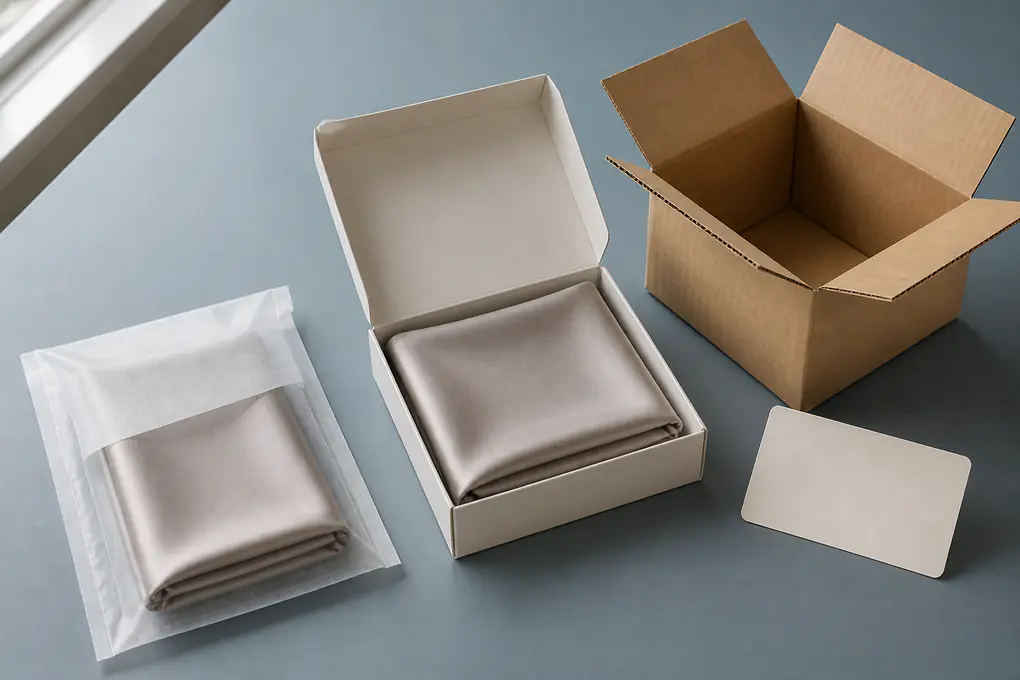
Map Item-Level Product Details From the Textile Article to the Outer Pack
A strong silk packaging brief lets every customer-facing layer point back to a named article and unit. We ask buyers to trace the product from the folded textile item to labels, cards, pouches, sleeves, boxes and any separate outer-handling input. This map does not need to be complicated. It needs to show which item each layer introduces and which words, artwork or count it is intended to support. A simple item map is especially useful when a collection shares a colour family but uses different customer-unit formats.
Create One Line for Each Article and Its Presentation Components
A simple item map keeps related products from sharing the wrong package detail
List the article before its pouch, card, sleeve or box
When your range includes several silk articles, create one line for each item before mapping presentation components around it. A paired pillowcase offer may use a sleeve and a sewn label. An eye mask may use a textile pouch and a printed card. A gathered accessory set may use an outer wrap. A bedding unit may contain several named pieces with one collection presentation. List the article, sale unit, and supporting layers under review, then connect each copy, artwork, or count question to the correct line. This prevents a packaging note created for one item from migrating into a different SKU simply because products share a colour or brand idea. Product, purchasing, and brand teams can then compare what is common and what is individual. We can discuss the item map supplied without assuming a universal packout for every silk category.
Identify Which Details a Customer Sees Before and After Opening
The presentation sequence can guide placement without changing the product scope
State whether a detail belongs on the exterior, inside layer or textile article
A customer may see an outer sleeve or box before they see the silk article, then encounter a card, pouch or folded item after opening. We ask buyers to map the sequence when it affects where copy, artwork or identification should appear. A product name may need to be visible before opening, while a gift message may make more sense inside the unit. A colour story may be introduced by the outer layer and then confirmed by the textile article. This sequence does not determine your final package. It gives your team a way to talk about the customer experience in practical steps. It also keeps labels, cards and presentation components from being placed at random. By identifying what is seen at each moment, product and brand colleagues can make clearer choices, while procurement can keep the supplier inquiry connected to the named item and package layer.
Keep an Open-Question List With the Relevant SKU and Pack Layer
Every unresolved packaging choice should have a product home
A short list can prevent packaging decisions from becoming circular
Packaging briefs change as a range develops. A buyer may still be deciding the pillowcase fold, the sleep-mask pouch role, the wording for a gift card or the way a set count appears on an outer sleeve. We encourage you to list the open question beside the SKU and presentation layer it concerns. This avoids a vague note such as “confirm packaging” that nobody can connect to a physical item. A simple line can state the article, customer unit, component and question. This is helpful for all B2B stakeholders because it separates a product decision from an artwork decision or an outer-handling question. We do not treat an initial packaging reference as a complete answer. A visible open question gives your team room to decide what belongs in the customer unit before product copy, artwork or broader range material is carried forward.
Frame Carton, Destination and Receiving Questions as Buyer Inputs
Some packaging conversations include outer cartons, destination preferences, receiving arrangements or internal warehouse questions. These subjects may be important to your business, but they are not the same as the customer-facing presentation. We ask buyers to raise them as distinct inputs after the customer unit is clear. That gives operations and procurement colleagues a place to discuss their own needs without turning a broad carton note into an implied shipping or performance statement. Keep these operational notes in a separate buyer attachment. This keeps a destination or receiving note from being mistaken for a customer-facing packaging instruction.
State the Customer Unit Before You State the Outer-Handling Question
The product unit gives the carton discussion a clear starting point
List what is being grouped before you describe the grouping question
If your team needs to raise an outer-carton or receiving question, begin by naming the customer unit it relates to. Is the unit a pillowcase pair, a bedding component, a sleep-mask gift item, a scrunchie set or another specified product? How is the customer unit presented before it reaches the outer layer? This context helps your operations and procurement colleagues discuss their own inputs without confusing them with the retail or gift experience. We do not infer carton dimensions, transit results, shipment method, delivery timing or other business conditions from an early packaging note. Instead, tell us what your team needs to consider and why it relates to the named unit. A separate question keeps the discussion useful and avoids asking a customer-facing sleeve or box to carry an outer-handling meaning it was never designed to communicate.
Describe Destination Differences Without Assuming a Universal Packout
Different buyer contexts may need separate questions
Use your own destination and receiving requirements as the basis for discussion
A buyer may have different questions depending on the destination, receiving environment, retail channel or internal handling process connected to a silk programme. We invite you to state the context that matters to your team and identify the product unit involved. Do not assume that one outer-layer idea applies to every destination or that a general package image answers a receiving question. A retail programme, hospitality order and corporate-gift arrangement may each raise different buyer inputs. By keeping the destination or receiving concern in a separate line, your business can compare its options without confusing those requirements with the article and presentation a customer sees. We do not make shipping, transit, market or operational conclusions from your context. We use it to understand the question your procurement or operations colleagues want to discuss alongside the named silk unit.
Keep Outer-Handling Language Away From Customer-Facing Copy
A carton question should not become a claim on a sleeve or card
Separate the operations conversation from the product story
Customer-facing packaging and business-handling layers serve different audiences. A sleeve, pouch, box or card speaks to a shopper, recipient or guest. An outer-carton question belongs to the buyer’s operations or procurement context. We ask teams to keep these two streams distinct in their brief. This helps a brand colleague create a clear product story while another colleague raises questions about grouping or receiving. It also prevents operational shorthand from appearing in a place where a customer would see it without context. Name the layer, audience and open question for each note. We can then discuss the B2B input you provide without making assumptions about the conditions or outcome of a business-handling process. Clear separation is the simplest way to keep the silk article and its customer presentation at the centre of the packaging conversation.
Assign Product, Brand and Procurement Ownership Before Packaging Work Expands
Silk packaging can involve several buyer-side decisions at the same time. Product teams may define the article and customer unit. Brand teams may own visual hierarchy and buyer-controlled copy. Procurement may organise the supplier question. Operations may raise outer-handling inputs. We ask buyers to name the open decision and the team considering it so a packaging discussion does not turn into a set of circular comments with no connection to a physical item. Note the buyer contact responsible for the next response so product, brand, and receiving topics remain assigned to the right person.
Give the Product Team the Article and Unit Questions
The finished item and customer count need a clear buyer owner
A product decision should be visible before artwork is applied
A product team may be deciding which silk article belongs in a range, whether it is offered alone or as a pair, what pieces belong in a bedding unit or how an accessory set is grouped. We encourage buyers to state those article and unit questions clearly. That gives the packaging conversation a stable physical basis without pretending every choice is already settled. A brand or procurement colleague can then see which aspects depend on the product decision. It also prevents a visual presentation idea from moving ahead while the actual customer unit remains unclear. We do not assign internal roles for your business. We simply ask that the brief identify who is considering the question and what the question is. This makes a B2B silk packaging inquiry more useful because China EverBen Silks can understand the article, unit and open decision rather than infer them from a picture or general request.
Give the Brand Team the Visual and Buyer-Copy Questions
Artwork, colour hierarchy and messaging remain buyer-controlled
State which package layer the brand question affects
Brand teams may be exploring the customer moment, colour direction, logo placement, collection story, printed card or package phrase around a silk article. We ask buyers to describe the layer where each visual or copy question belongs. A brand message may be intended for a card, a sleeve, a pouch or an outer box. A colour may support the folded textile article without being printed across every component. These are buyer-owned decisions, and the purpose of a B2B packaging conversation is to understand how they relate to the named product unit. We do not assume artwork rights, final copy, market position or a complete package concept from a logo file or mood board. By keeping brand questions attached to a physical layer, your team can discuss presentation without obscuring the product, count or material scope of the article inside.
Give Procurement the Supplier Question and the Open Decision
A focused inquiry helps each buyer team contribute without duplication
State the article, pack layer and point that needs a response
Procurement can make a packaging discussion more efficient by collecting product, brand, and operations inputs into one concise question. Start with the finished silk article, sale unit, and presentation layer, then identify the label, artwork, copy, or outer-handling point still requiring review. This prevents unrelated details from being placed in a single unstructured request. A procurement manager need not settle every creative or product choice before contacting us; it is enough to record what is selected and what still requires exploration. This gives China EverBen Silks a clear basis for the exchange and leaves internal colleagues with a direct record of the SKU and pack layer involved. The goal is a B2B discussion about a named silk unit, not a broad packaging request that silently presumes every choice is complete.
Prepare a Focused Silk Packaging and Labeling RFQ for the Next Buyer Decision
The best packaging RFQ gives your team a simple way to move from a visual idea to a business discussion. We do not need an overloaded folder or a long unstructured message. We need the silk article, customer unit, product count, fold or presentation direction, label or printed component, buyer-owned artwork or copy context and the decision that is preventing progress. That information keeps the inquiry practical for procurement, product and brand colleagues. It also makes later comparison conversations easier. A buyer can add a revision name when that detail helps separate two packaging directions for the same silk item. Include a short purpose statement for each attachment, making clear whether it shows the article, an artwork direction, or a presentation layer.
Open With the Article, Customer Unit and Presentation Layer
The first lines should make the packout easy to picture
Name the product before you describe graphics, carton or handling questions
Begin the RFQ with the silk article and sale unit under consideration. State whether the buyer is reviewing one pillowcase, a two-piece offer, an individual bed-linen article, an eye mask, a hair accessory, a gathered set, a gift item supported by a pouch, or another defined unit. Then describe the fold or presentation layer needing review, such as an outer wrapper, textile pouch, rigid pack, printed card, or another component. This opening helps every reader understand the customer offer before artwork or outer layers are discussed. It also lets internal teams compare the message with the actual product. A detailed packaging specification is unnecessary at the outset; a direct description of the item and open choice provides enough context for a focused B2B packaging conversation.
List Label, Artwork and Copy Questions by Their Physical Location
A clear placement list prevents buyer wording from drifting across components
Tell us which article, card, sleeve or box each question concerns
After naming the unit, list the customer-facing components that require discussion. Identify whether the issue concerns a sewn label, removable tag, printed card, insert, textile pouch, exterior wrapper, rigid pack, or another named layer. If buyer-owned artwork, product copy, or colour direction is shared, state which component it should support and identify the unresolved placement point. A team might be reviewing whether a product name belongs on an exterior wrapper while an occasion message sits on an insert, or comparing a pouch-logo placement with a card-led presentation. A visual reference does not establish customer wording, artwork use, or market position. A placement list keeps the exchange grounded in the actual sale unit and lets the involved teams see exactly what is under review.
Separate the Product Presentation Question From Any Outer-Handling Input
Keep retail or gift layers distinct from business movement questions
A focused RFQ lets your team discuss both without mixing their audiences
If your team also has a carton, receiving or destination question, add it as a separate line after you describe the customer-facing unit. State the silk article, customer unit and the business input you need to consider. Do not treat a package image as a shipping instruction or a general outer-layer note as a customer claim. This separation helps every stakeholder: product and brand colleagues can focus on the customer presentation, while procurement and operations can keep their own questions visible. It also allows China EverBen Silks to understand which part of the request concerns the article and which part concerns the buyer’s handling context. A well-structured RFQ does not need to contain every answer. It needs to identify the right item, layer and unresolved decision so the next B2B discussion can begin with clarity.
Silk packaging and labeling buyer questions
Why should a buyer separate the silk article from its outer presentation?
The textile article, a pouch or sleeve, a box and an outer carton serve different customer or handling roles. Naming each layer keeps the packaging brief connected to the correct component.
What should be included in a packaging RFQ for silk products?
Name the sale unit, intended presentation, item count, and the packaging point that still requires buyer review.
Does a packaging image establish shipping or market requirements?
No. An image can clarify visual presentation, but handling, destination and market questions need to be raised as specific buyer inputs in the written project discussion.