
P038
B2B Silk and Satin Material-Identity Briefing
Use this briefing to turn an uncertain silk or satin phrase into a concrete product question. Identify the finished article first, then distinguish the fiber term, weave or surface term, visible part, pack reference and customer wording your team is weighing. A photograph, category heading or marketplace listing cannot settle an unseen material detail. Name the article and the component at issue so the conversation starts with the decision affecting your range.
Published by China EverBen Silks Reviewed by Mark Liu
Frame a silk-versus-satin question around evidence, not appearance alone
State the article, material concern, reference condition, record request, and buyer decision.
Start With a Written Fiber Identity Question for the Finished Silk Item
A material question becomes useful when it begins with the article your customer will receive. Name the finished item before comparing fiber words, fabric terms or surface descriptions. A pillowcase, fitted sheet, duvet shell, eye covering, hair cap, elastic hair tie, drawstring sleeve, or presentation bundle can each involve different visible parts and customer messages. State what you are developing, where the wording may appear, and the specific decision still awaiting a product answer.
Name the Finished Product Before You Name the Material
The article gives a fiber question a practical boundary
A category word alone cannot describe the item your customer handles
Start with the finished article because that tells us where a material question belongs. A silk pillowcase requires a different conversation from a duvet enclosure, eye cover, hair cap, elastic hair loop, or drawstring sleeve. Each has a distinct customer use, exposed area, and supporting construction. If you buy for retail, say whether the item is a core assortment addition, beauty accessory, bedding coordinate, or presentation-ready unit. For hospitality or corporate gifting, explain the setting in which it will be presented. Then identify the material phrase under review. That avoids a familiar problem: a broad silk or satin request later reveals that merchandising, development, and purchasing colleagues pictured different articles. A named item gives the discussion a physical focus. It helps distinguish a customer-facing surface from a hidden part, label, insert, or outer pack. It also makes the next written review clearer for colleagues who were absent when the idea was first raised.
State the Customer Unit Your Business Intends to Offer
One product image may conceal several possible selling units
A defined retail unit changes which material wording belongs beside it
The customer unit matters because it identifies what the buyer is describing. One pillowcase, a matched two-piece pillowcase offer, a sheet article, a coordinated bed ensemble, or an eye-covering presentation may call for different listing, label, and pack discussions. The same distinction applies to hair accessories. An elastic hair tie displayed on its own and the same style presented with companions may sit under a shared category, yet its outward message and surrounding pack context differ. State the unit your business is exploring without presenting that choice as a settled commercial term. Explain whether the article is viewed alone, grouped with another silk piece, placed in a collection, or held in a presentation format. This keeps visible material wording attached to the customer encounter. It also stops one component from being treated as the description of an entire assortment. A well-defined unit gives product managers, marketers, and buyers a stable reference before they decide what language belongs on the article or around it.
Identify the Decision That Makes Material Language Important Now
A specific buyer question is better than a generic request for confirmation
Tell us whether the open issue concerns a label, listing, package or product brief
Material wording matters for different reasons at different stages of a B2B product conversation. Your team may be deciding how to describe a visible pillowcase surface in a retail listing, how to separate a silk-facing panel from another component in a sleep mask, or how to keep an outer package from overstating what it contains. A product manager may need language that lets internal colleagues compare variants. A brand team may be trying to keep a visual concept consistent with the actual article. A procurement team may want to make sure the question it sends is about the correct component. Tell us which decision is holding up your progress. You do not need to have all the language settled before you contact us. In fact, a useful inquiry can state that one phrase is under discussion and explain what the team wants it to accomplish. We will focus on the article and component you name rather than assume that a material word means the same thing across every silk product or selling unit.
Separate Fiber Names From Weave and Surface Terms Before You Compare Materials
Many buyer briefs use silk and satin as though they answer the same question. They do not necessarily do that work in a product description. We ask your team to separate the fiber term from the weave or surface term, then connect each one to the component you are discussing. That simple discipline makes a pillowcase, bedding, accessory or package conversation easier to read and reduces the chance that one attractive word carries more meaning than your team intends.
Use a Fiber Term to Address the Material Question It Actually Answers
Keep the fiber description connected to a named product component
Do not let a broad product title stand in for component language
A fiber word belongs in a material discussion when your team is considering the material identity of a defined component. Begin by naming that component. In a pillowcase, you may be discussing the main visible surface, the reverse, a trim or an attached label. In a sleep mask, you may need to separate the front, reverse, binding, strap or packaging element. In bedding, a set may include more than one piece, each with its own position in the customer unit. We do not ask buyers to turn a general category word into a complete material statement. Instead, tell us which element needs wording and why. This lets you discuss the article in a way that product, quality and brand colleagues can follow. It also prevents a buyer from carrying a phrase from one item into another simply because both items sit under a broad silk category. A careful fiber question begins with the physical part of the finished product that the buyer wants to describe.
Use a Weave or Surface Term for the Visual and Textile Question It Raises
A surface word should not silently replace a fiber discussion
State what your team is trying to describe about the finished article
A weave or surface term can help a buyer describe the visual or tactile direction they want to discuss, but it should not be used as a shortcut for every other material detail. Tell us what your team means when it uses the word. You may be looking at a smooth-looking surface, a particular light reflection, a fluid fold, a quieter presentation or a contrast between visible components. Connect that observation to the article and surface in front of you. A photograph can provide a useful visual reference, yet it cannot replace a written conversation about the component language your business needs. We invite buyers to state the intended customer experience in ordinary language and then identify which surface term they are considering. This keeps the discussion practical. A retail brand can talk about how an item should sit in a collection, a hospitality buyer can describe the desired room or guest impression, and a gift team can explain the role of a folded article in a presentation moment. The material terms remain connected to the specific visual question rather than becoming interchangeable marketing labels.
Keep Fiber, Weave and Finish Questions in Separate Lines of the Brief
Separate questions create a clearer comparison for product teams
Your team can see what is known, what is preferred and what still needs discussion
A practical material brief gives each question its own line. One line can name the finished article. Another can identify the component. Another can state the fiber language being considered. A further line can describe the weave or surface term, and a final line can explain the customer-facing phrase or open question. This is not unnecessary paperwork. It is a simple way to keep a pillowcase, bedding set or accessory from being described by one broad phrase that nobody interprets in the same way. It also helps when a product range includes related articles that need different wording. A buyer may want a shared visual direction without treating every component as identical. By separating the questions, you make it easier for procurement, product and brand colleagues to point to the exact item they need to discuss. We can then respond to the material language your business is actually trying to use, rather than infer details from a general phrase or a photo.
Map Material Language to the Component a Customer Will See
A finished silk item can contain a visible textile surface, a reverse, an edge, a closure, a strap, elastic, a label and outer presentation. We ask buyers to identify the component before they apply material language to it. That prevents a claim about a main surface from spilling into a component that your team has not discussed, and it gives your customer-facing copy a clearer relationship to the physical article.
Distinguish the Main Visible Surface From Supporting Parts
The customer-facing textile area is not the entire finished item
Name the surface your material question is intended to cover
When a buyer describes a silk article, the main exposed textile area often comes to mind first. Yet a finished item can include support parts that need separate treatment. A pillowcase may have a principal face, opening treatment, decorative edge, and sewn label. An eye cover may have a front, reverse, perimeter binding, and retention detail. A hair cap may include a crown, band, and inner area. A presentation unit can add a drawstring sleeve, card, or carton. State whether material wording applies to the principal exposed textile area or another named part. This stops a product sentence from being read too broadly. It also helps a team decide what shoppers or recipients actually see when encountering the item. A practical component map names the part, its customer-facing role, and the material question. That is more useful than assuming a category word covers every sewn or packaged element.
Match Label Language to the Finished Product Rather Than a Mood Board
A visual concept should not decide words for an unseen component
Use the physical item as the anchor for customer-facing language
A mood board, lifestyle image or brand palette can be helpful when it explains the kind of customer experience your team is building. It does not by itself determine the material wording that belongs with a specific component. We ask buyers to return from the visual concept to the physical item. Which textile area is visible? Which part is being named? Which phrase will a customer encounter in a product listing, label, insert or package? Those questions keep a creative discussion grounded in the article. A beauty-focused silk pillowcase can have one visual story, while a travel sleep mask or corporate gift may need another. The material language should follow the named component and customer message, not a general mood. By mapping the words to the product, your marketing and procurement teams can keep their roles clear: one team can describe the desired presentation, while another can make sure the material discussion stays connected to the actual item.
Separate a Component Description From a Whole-Set Description
One piece of a coordinated set should not silently define every other piece
A set becomes clearer when each material question has a home
Coordinated silk sets can be attractive to buyers because they create a complete customer or guest experience. They can also create confusion when one component description is used for the whole set without naming what it covers. A bedding collection may include sheet pieces, pillowcases and a duvet cover. A gift presentation may include a sleep mask, pouch and printed card. A beauty set may combine a pillowcase with another accessory. We ask you to state which piece the material question concerns and whether the wording is intended for the entire unit or only one article within it. This makes range planning easier because each line in the brief has a defined scope. It also makes customer-facing language easier to review. A buyer can keep a shared collection story while acknowledging that individual components need individual descriptions. We can discuss the part you name without assuming that every neighbouring item carries the same material statement.
Build a Variant Material Matrix Without Borrowing Terms Across SKUs
A range may share colours, customer positioning or package style while still containing different articles and components. We help buyers keep material language at the SKU level. Instead of copying one phrase across pillowcases, bedding pieces and accessories, list each article, customer unit, visible component and open wording question. A simple matrix reveals where a shared term is useful and where it would create confusion.
Give Each SKU Its Own Article and Component Line
A product matrix begins with physical distinctions rather than colour names
Separate related products before you look for wording they can share
When a B2B silk range includes several articles, give each SKU its own line before deciding whether material language can travel between them. A pillowcase, fitted bed layer, duvet enclosure, eye cover, hair cap, elastic hair loop, and drawstring sleeve can belong to one collection yet differ in shape, exposed surface, supporting parts, and customer use. Record the article, selling unit, and component requiring wording. Then compare the material question line by line. Some language may coordinate where the component and customer message are genuinely comparable; another phrase may belong to only one article. This keeps range planning clear without forcing every product into a uniform description. It is particularly helpful when teams work from colour boards or early imagery, because visual similarity can make unlike articles seem more alike than they are. The matrix returns the discussion to the finished item the customer will receive.
Track Which Words Belong to the Article and Which Belong to Presentation
Product wording and package wording often need separate buyer decisions
A sleeve or carton can carry a different customer message from the textile itself
A product range usually has several communication layers. The article may carry a product name or sewn label; an online listing may add detail; a sleeve, drawstring bag, insert, or carton may introduce the item differently. List these layers separately when material wording is under review. A phrase suitable for a collection story may not be exact enough for an exposed component. A label may need context different from a gift card or online description. Naming the layer shows where each word will appear and who must decide it. That prevents pack language from quietly becoming a construction statement, or a textile phrase from migrating to a place where it no longer describes the actual item. A clear matrix enables merchandising, development, and purchasing colleagues to compare language while keeping the customer unit and physical component in view.
Mark Open Variant Choices Before They Become Range Copy
Keep proposals distinct from wording your team has selected
A visible open question can prevent repeated revisions later
Range development often includes alternatives. You may be comparing a single pillowcase to a pair, two package approaches, several colours or two accessory shapes. If a material phrase is still under discussion for one variant, mark it as open rather than carry it into the range copy as though it were settled. That helps your team understand which words are being explored and which belong to the current direction. It also keeps a preliminary customer message from being copied to an article that has changed. We do not assume that an early product image, category name or buyer comment resolves every variant question. Instead, tell us which SKU is being considered, what the visible component is and what language needs a clearer basis. This gives us a focused B2B question and gives your team a more usable way to compare alternatives without losing track of the material scope for each item.
Review Pillowcase Fiber Wording Across Face, Reverse, Trim, and Pack
Silk pillowcases are often described with one short phrase, yet a B2B buyer may need a more exact conversation about the customer-facing face, reverse, visible edge, opening, attached label and retail or gift pack. We invite you to break the pillowcase into the parts your team needs to describe. This keeps product language closer to the article and helps you avoid applying a main-surface phrase to parts that have not been discussed. That article-by-article review prevents a label from drifting between the face, back, and opening treatment during merchandising review.
Start With the Pillowcase Surface Your Customer Notices First
The face of the article gives the product story a visible anchor
State whether your material question concerns the main sleeping surface
A pillowcase buyer may begin with the surface a customer sees on a bed or touches when using the item. Say whether that main surface is the component under review. Then explain the product setting: a beauty-led retail item, premium bedding coordinate, gift article, or another B2B use. This context clarifies what the phrase must communicate. It also separates the visible face from the rest of the sewn article. A product image can illustrate folding, colour, and styling, but it cannot define every component. Identifying the main surface creates a separate reference for the commercial, creative, and buying workstreams. They can then decide whether customer wording belongs on the article, a label, or an outer pack. We focus on the named component instead of treating a broad silk or satin phrase as a definition of the complete pillowcase.
Keep Reverse, Opening and Edge Questions in Their Own Discussion
Supporting areas can matter to the customer experience without sharing one description
Name the detail your team wants to consider rather than treating it as invisible
A pillowcase is more than a flat visible panel. The reverse, opening, inner edge, decorative trim, and sewn label each have a place in the finished article. A buyer may be deciding how a product should look when folded, how an opening appears in a retail image, or whether an edge detail supports the range mood. These are real product questions, yet they do not automatically take the same material wording as the main face. Name the part and explain its relevance to the shopper or the product team. That gives a construction or presentation question its own space rather than forcing it into a broad category phrase. It also helps when a buyer is comparing several pillowcase variants. The team can see which details are shared, which differ, and which remain under discussion. A component-level view makes the pillowcase brief more useful for everyone who needs to understand the article before customer-facing wording is developed.
Connect the Pillowcase Article to Its Retail or Gift Packaging Layer
The outer presentation should identify the customer unit it introduces
Keep package language aligned with the article rather than a generic category
A pillowcase may reach buyers individually, as a matched duo, within a bedding collection, or in a presentation-ready configuration. The outer sleeve, insert, or carton helps a customer understand that offering. Describe the presentation separately from the textile article. State what the pack introduces, which pillowcase configuration sits inside, and which material phrase your team is weighing for that moment. This prevents a pack statement from being read as if it described hidden parts or every item in a wider collection. It also lets retail and brand teams keep customer language aligned across a shelf, online listing, and unboxing moment. We can discuss the pillowcase and presentation you identify without treating one image or broad silk term as a definition of every feature in the completed unit.
Trace Bedding Material Statements Through Each Piece of a Set
Bedding deserves a piece-by-piece material conversation. A plain top sheet, fitted bed layer, duvet shell, pillowcase, and coordinated presentation may sit under one collection, yet each reaches the customer in a different way. Keep material identity, exposed surfaces, and pack wording connected to the piece under review rather than allowing one set phrase to obscure every element. A matrix recording exposed face, reverse, edge treatment, and included count lets a bedding buyer compare configurations without compressing distinct pieces into a vague specification. It also flags where a packaging statement should name the configuration rather than the broader collection.
List the Bedding Pieces Before You Write a Set-Level Description
A complete set can contain articles with different visible roles
The product list keeps material review connected to the real customer unit
Open a bedding review by naming the articles in scope: perhaps a flat upper layer, a fitted base layer, a duvet enclosure, a pillowcase, or another defined piece. Articles displayed together do not need identical customer wording. A duvet enclosure may dominate a bedroom image, while a pillowcase is the surface a shopper notices first. A sheet may appear in a pack description without being displayed like a folded cover. Naming the pieces gives every material question a physical home. It lets a product manager match statements to the correct article and lets a buyer explain the range clearly to colleagues. It also prevents a general bedding label from being repeated where it no longer describes the relevant part. Use that list to organise the buying discussion around the exact configuration your business is exploring.
Separate Shared Collection Language From Piece-Specific Material Wording
A range story can be coordinated without treating every component as the same
Use one line for the collection and separate lines for the articles within it
A bedding collection may need a coherent visual and commercial story. Your brand team may work from a colour direction, a room mood, or a defined customer occasion that brings the pieces together. Keep that context separate from material wording for each article. A collection title can explain how the offering hangs together; a component-specific phrase tells shoppers and internal teams which textile article is under discussion. The distinction matters when a set combines articles with different customer roles, folds, and exposed surfaces. It also allows a buyer to revise one line without rewriting language for the whole collection. Identify the words meant for the overarching bedding story and those that relate to one named piece. This keeps a material discussion clear without asking a set phrase to carry details it was never intended to define.
Map Package and Listing Language to the Pieces Included in the Unit
A package should make clear what the customer is receiving
Do not let a bedding image decide what the material statement covers
Bedding may be offered in several customer units. Your business could be considering an individual sheet article, a pillowcase duo, a duvet-cover package, or a larger bed arrangement. Discuss the listing and outer pack against the pieces that genuinely sit inside that unit. Identify contents before deciding how material wording should appear around them. A styled bed photograph can display numerous articles together, but it cannot establish which pieces belong in a purchase unit or which words apply to each. A component list gives product copy, outer packaging, and category navigation a clearer basis. It also lets us address one bedding piece without guessing whether a broader arrangement is involved. That clarity matters to procurement, product, and brand teams because the customer message remains attached to what the business intends to sell or present.
Verify Accessory Material Language at the Article Rather Than Category Level
Silk accessories may be small, but their material and customer-message questions are specific. An eye cover, hair cap, elastic hair loop, drawstring sleeve, or presentation add-on has its own shape, exposed areas, supporting elements, and role at handover. Describe the actual article rather than borrowing language from a pillowcase or bedding category. That gives your team a better view of the product a customer or recipient will encounter. Keeping a component sketch beside the article name helps purchasing, design, and packaging roles recognise when an accessory requires its own wording route.
Describe Sleep Masks by Their Visible and Supporting Components
Front, reverse, binding, strap and presentation can create separate questions
Name the component your material wording is intended to address
An eye cover is a finished accessory with a front panel, reverse side, perimeter finish, retaining strap or elastic detail, and sometimes a drawstring sleeve or presentation card. A buyer may review how the visible front supports a beauty, travel, or gift direction while another colleague checks how the unit appears in a pack. Name the component before applying material language. That prevents a statement about the exposed textile surface from being read as though it described the strap, inner side, or outer presentation. It also allows brand and product teams to speak about the same physical item. If you have a reference image, explain whether it shows silhouette, fold, colour mood, pack concept, or another particular feature. A clear component question keeps the discussion on the article your business is considering instead of importing assumptions from a different silk category.
Treat Bonnets and Scrunchies as Distinct Product Forms
Their shape and customer use require their own material conversation
Do not apply bedding language to an accessory without naming the relevant surface
A hair cap and an elastic hair loop may sit in one hair-accessory collection, but they are not interchangeable forms. A cap has a crown, band, and interior relationship that a buyer may want to discuss in relation to fit, appearance, and handover. An elastic loop has a gathered exterior and may be offered individually or with companion pieces. Start the material-language question with that product reality. Say whether the discussion concerns the exposed exterior, a label, an insert, the presentation grouping, or another identified part. A phrase used for a pillowcase or a bedding arrangement is not automatically suitable for an accessory. Treating each article on its own terms helps a team develop customer-facing language that follows the product rather than a broad silk category. It also makes an RFQ easier to interpret when a buyer is evaluating several accessory routes.
Keep Gift Pouches and Textile Add-Ons in the Same Unit Map
A pouch may support an article without becoming the article itself
State whether the material question concerns the accessory or its presentation
A drawstring sleeve, folded card, presentation band, or textile add-on can shape a gift or retail handover. It can also muddle a material brief when support pieces are not separated from the primary article. Identify which part the customer will use and which part supports the unboxing or gifting moment. An eye cover may be the principal article while a sleeve introduces it. A hair-loop grouping may use an outer band that carries a collection message. A bedding presentation can include a card that explains the occasion. Each layer can appear in the brief without treating one material phrase as a description of all parts. This keeps customer-facing language precise and helps internal teams locate where a visual concept belongs. We can address the component you identify, whether it is the accessory itself or the presentation around it.
Ask What a Swatch, Image, or Textile Note Can Actually Clarify
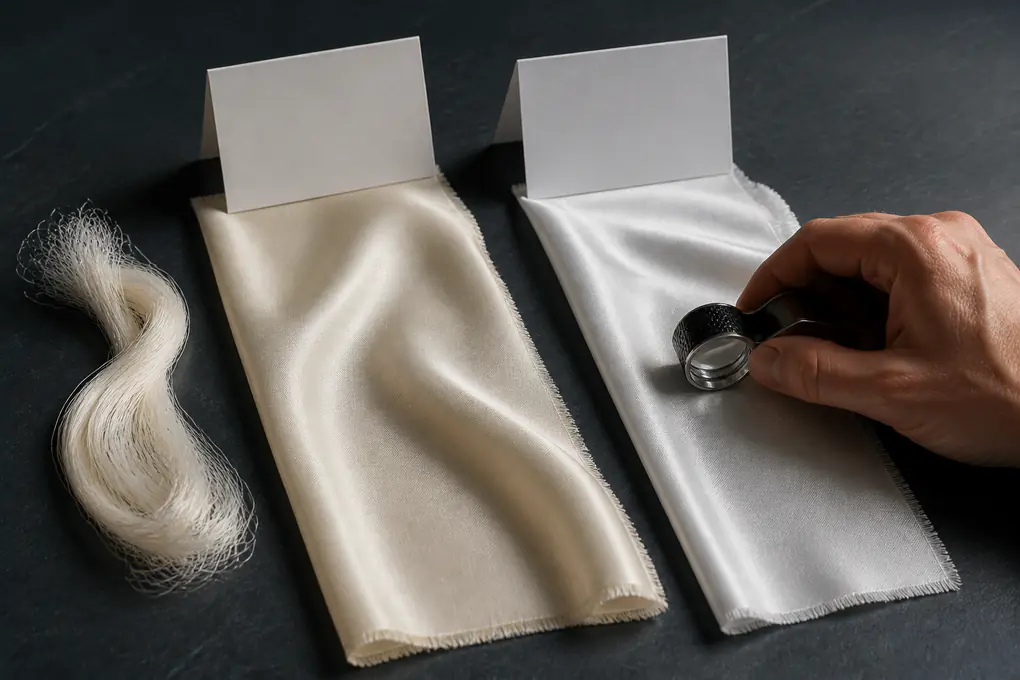
A swatch, photograph, competitor image, product sample, or textile note can help a buyer explain a material point. Give the reference a single stated job: clarify a colour direction, exposed surface, fold, article shape, component placement, or customer presentation. A reference becomes valuable when it answers one defined question instead of quietly becoming the whole product brief. Record the intended comparison beside the file name so later reviewers know which visual issue the reference was selected to illuminate.
Evaluate a Swatch Against a Specific Textile Question
Tell us the exact visual feature your team is comparing
Keep the comparison connected to a named article and component
A swatch is useful when it gives a product or brand team a physical comparison point. It may help explain a colour family, surface appearance, hand-feel direction, or how a textile appears beside another part. State which feature the swatch is intended to illuminate and which article it concerns. A swatch cannot define a whole finished product, pack, or customer message in isolation. It may not reveal how fabric will read at a pillowcase opening, around an eye-covering edge, across a folded bed layer, or in a gathered hair-accessory form. Giving the swatch one purpose keeps attention on the relevant material question. It also prevents a small textile cutting from being mistaken for the completed article. A focused note, such as “compare this against the front pillowcase panel; pack wording is undecided,” gives the discussion a sensible limit.
Use Images to Identify Visible Features, Not to Fill in Unseen Details
A photograph can guide a visual conversation without defining every component
State what you notice and what still needs written discussion
A product image can show a silk article in a styled setting, folded on a bed, held in a hand or placed inside a gift presentation. That can help your team identify a colour, silhouette, surface impression, package relationship or customer mood. It cannot provide every detail your material brief may need. A photo may not show the reverse, interior, label, closure, exact customer unit or the wording your business wants to use. We encourage buyers to describe the visible feature that matters, then state the open question. You might say that an image illustrates the calm neutral presentation you seek for a pillowcase range, while the material language for the label needs discussion. This is more useful than asking an image to settle every part of the product. It keeps the visual reference in its proper place and lets us begin with the component-level question your team wants answered.
Use Textile Notes to Preserve the Buyer’s Own Question
A short written note can keep a reference from being misread
Explain what your team wants to carry forward and what remains open
A textile note can be as simple as a few buyer-written lines attached to a swatch, image or file. State the article, component, visible feature and decision you want the material to inform. You may be using a reference to discuss a color family, a surface mood, a package layer or a product shape. You may also need to state what the reference is not meant to define. This protects your team from turning a general visual idea into an assumed construction or customer statement. It also helps procurement and brand colleagues review the same reference with different responsibilities. One team can consider the look; another can keep the product wording connected to the actual article. We welcome focused reference material because it makes a silk discussion easier to understand. We simply ask that every reference come with the buyer question it is intended to support.
Separate Material Identity Questions From Visual Styling and Care Expectations
A buyer may need to discuss material language, visual styling, care communication and customer expectations within one product programme. These subjects relate to each other, but they should not be merged into one broad statement. We help you separate the material identity question from the appearance you want, the way the article is presented and the information your own business plans to provide to customers. That keeps each discussion direct and avoids implied product promises. A disciplined split also lets a merchandising meeting resolve presentation choices without accidentally turning them into textile declarations.
Describe Appearance as a Styling Direction Rather Than a Material Conclusion
Sheen, fold, colour and drape can guide a conversation without resolving composition
Use visual language to define the intended customer impression
A silk product may be chosen for a particular visual impression: quiet lustre, fluid fold, soft-looking surface, a neutral bedroom story, a beauty-led accent, or a refined gift moment. These are meaningful styling directions, not substitutes for a component-level material discussion. State which article and exposed surface the styling observation concerns, then keep material wording on a separate line in the brief. This lets creative and product teams work in parallel. A brand colleague can describe the customer impression while a buying or development colleague keeps the material question tied to a named component. A photograph can illustrate styling direction without carrying hidden technical meaning. That separation gives the team stronger control over language eventually placed beside the finished article.
Keep Care Communication With the Customer Information Your Business Chooses
Care questions deserve their own customer-facing discussion
Do not let a broad material phrase imply care or performance language
A buyer may be thinking about how a customer will use a pillowcase, bedding piece, sleep accessory or other silk article after purchase. That can lead to questions about care communication, product handling and the customer experience. We ask you to keep those questions separate from the basic material identity wording. A fiber or surface term does not automatically answer what your own business wants to communicate about use and care. State the article and customer setting, then identify the specific information your team needs to discuss. This allows a product manager to consider customer clarity while a brand or procurement team keeps the material description precise. It also prevents a short product phrase from being read as a broad statement about performance or handling. We do not make those assumptions from a category label. A focused discussion is the best way to keep each piece of customer information connected to the real article and the decisions your business controls.
Keep Customer Expectations Tied to the Article You Actually Plan to Offer
A category visual must not define promises beyond the named article
Use the buyer brief to distinguish product direction from customer messaging
Customer expectations grow from the finished item, the parts a shopper sees, its presentation, and the words your business chooses to place around it. Keep that expectation attached to the real article rather than an abstract silk or satin category. Someone choosing a pillowcase can meet a different product narrative from a recipient opening an eye cover or a buyer selecting bedding. When considering customer-facing language, identify the article, component, and intended product role before deciding what expectation the wording should address. We can examine the material-language question without assuming performance, availability, commercial conditions, or any other unprovided detail. That separation makes customer communication more intentional. It also lets procurement and product colleagues see which questions belong in the material brief and which remain brand, retail, or care communication decisions.
Plan Labels, Product Copy, and Packaging Language Around the Same Material Scope
A B2B silk article may appear in more than one customer-facing place: a sewn label, product listing, hang tag, card, sleeve, pouch or carton. These are different communication layers, but they should refer back to the same finished article and named component. We help buyers map the wording across those layers without allowing a package phrase, image caption or broad category title to overtake the product-level material discussion. A location-by-location checklist makes it easier to spot when one phrase has moved beyond the part it was meant to describe. That review can occur before artwork moves into production.
List Every Customer-Facing Location Where the Material Wording May Appear
A label, listing and outer package may each have a different purpose
Knowing the location helps your team choose language with the right scope
Begin by listing the places where your business expects customers to encounter material wording. A sewn label may attach to the article; an online listing may introduce it in more detail; a card may explain a gift concept; and a sleeve, pouch, or carton may present the customer unit before opening. Each location has a different job and should connect to the article it describes. Identify the item, component, and customer message for every location. This does not require a completed marketing plan. The location map reveals whether a phrase is travelling from one layer to another without enough context. It assigns distinct responsibilities to brand and purchasing roles: one considers customer presentation while the other retains the material question with the correct product.
Keep Collection Story Language Separate From Article-Level Wording
A collection theme can sit above several products without defining all components
Use the product name and component detail when a phrase needs precision
A retail or hospitality collection may have a shared story that describes mood, colour, customer occasion or the role of silk within a range. That story can be useful in a lookbook, campaign or category introduction. It should not take the place of article-level wording when a buyer needs to clarify a material question. We encourage teams to maintain two distinct lines: one for the collection story and one for the finished product and component. This helps when related pillowcases, bedding items and accessories have different shapes or presentation layers. A customer may see the collection message first, then need a clear description of the particular item they are considering. By keeping those functions separate, your business can coordinate its range without treating a broad theme as though it were a component description. We can discuss the specific material language your team needs for the article rather than infer it from a category or campaign phrase.
Check Whether the Package Describes the Unit It Actually Contains
Outer presentation should identify the customer unit without adding hidden assumptions
Match package language to the articles and components inside
Packaging can be the first customer contact with a silk product, especially on a retail shelf, in a beauty assortment, hotel presentation, or corporate-gift setting. Identify the unit inside before deciding what material phrase belongs outside. Is the pack introducing one pillowcase, a matched duo, an eye cover, a hair-loop grouping, or a coordinated bedding configuration? Which component does the wording describe? A clear answer prevents an outer pack from making a broad statement that customers may apply to unseen elements. It also helps a product team compare packaging routes while retaining the article-level material discussion. One pack format or category term is not automatically right for every article. Name the unit and the customer moment under consideration, then bring the relevant wording into the B2B discussion.
Assign Buyer Decisions Before Material Wording Reaches a Range Brief
Material language often crosses product, procurement, brand and quality responsibilities. A B2B buyer gets a clearer result when the brief identifies who is considering the article, who owns the customer message and which wording remains open. We do not assume that an informal comment, a visual reference or an early product list resolves the decision. Make the owner and question visible so your team can discuss the right silk component at the right time. Set one named review point for every unresolved phrase, rather than leaving it to travel informally between assortment meetings.
Assign Distinct Material Questions Across the Buying Team
Each team can contribute without taking ownership of every material decision
A named question keeps the discussion practical and avoids circular comments
A product colleague may define the finished silk article and its visible parts. A brand colleague may own the collection narrative, image direction, or customer language. A procurement colleague may keep the supplier inquiry linked to the right SKU and commercial setting. A quality colleague may ask about information supporting the product brief. These responsibilities need not collapse into one material conversation. State which team is considering which question. For example, product may be deciding the component map while brand evaluates where a customer phrase will appear. Procurement can ask China EverBen Silks about the named article and the wording still being considered without presenting internal debate as a final instruction. This makes the conversation easier to follow and keeps customer-facing language connected to the physical product rather than a category assumption.
Mark Unresolved Wording So It Does Not Travel Into the Next Draft
An open label or product-copy question should remain visible to the team
Clear open items reduce the chance of a wrong phrase becoming habitual
When a material phrase remains under discussion, state that it is open and name the question it needs to answer. You may be comparing two ways to describe a pillowcase surface, deciding whether a package phrase needs a component qualifier or separating a bedding collection message from the wording for one piece. Do not let an early phrase travel into product copy, packaging notes or a supplier question simply because no one marked it as unresolved. A short open-item list can be enough: name the article, component, phrase and team that needs to consider it. We use that context to understand which part of the material discussion belongs in the B2B conversation. This is not about creating an elaborate workflow. It is about keeping a busy team from mistaking a preliminary note for a finished product decision. Visible open questions are easier to discuss, revise and communicate accurately.
Keep Buyer-Owned Brand Language Under Your Team’s Control
Your organisation decides its own product naming and customer message
We can discuss the article without taking ownership of buyer wording
Your company’s brand language, product naming, packaging voice, and customer communication remain choices for your business. A logo, campaign phrase, retailer style, or competitor listing does not define those choices. When contacting us about material wording, identify the precise question and the elements your business retains. A focused reference or draft phrase can help explain that question, provided its purpose remains clear. This allows us to understand how the article, component, and customer message relate without turning an early creative direction into a finished instruction. It also protects internal work: product and brand teams can explore options while procurement keeps the supplier conversation attached to the named silk item. Clear ownership strengthens the material brief because everyone can see which decisions stay with the buyer and which details require direct discussion.
Send a Component-Level Silk Material Question That a B2B Team Can Use
A useful material inquiry is concise, specific, and linked to a buying decision. Avoid a long unstructured message. Include the finished article, customer unit, named component, fiber or surface wording being considered, relevant reference context, and the decision awaiting clarification. China EverBen Silks can use that foundation to relate the discussion to the product brief in progress. It also enables a buying team to compare the reply against a named article and component instead of revisiting the whole collection. Include a preferred review sequence when several wording decisions are open, so the first reply addresses the question blocking your next range meeting.
Write the Article, Component and Customer Use in the First Lines
A clear opening prevents a broad material word from taking over the inquiry
Tell us what the customer will receive and where the question belongs
Open your message with the product. Name the article, whether it is offered as an individual piece, matched duo, grouped selection, or presentation unit, and the business setting in which it will appear. Then identify the component at the centre of the material question. You might be reviewing a front pillowcase panel for a beauty-led retail range, an eye-covering face for a travel presentation, or a defined bedding layer in a coordinated collection. That opening gives the conversation physical and commercial context. It is more useful than starting only with silk, satin, or a broad product category. We can then see what the material language must describe and which team decision it affects. Use plain English; specialised terminology is not needed before you make contact. A direct buyer description is enough to begin a productive B2B discussion.
State the Material Phrase You Are Considering and Why It Needs Clarification
A focused wording question gives the team a clearer point for review
Explain whether the issue concerns a label, listing, pack, or product brief
After naming the article and component, state the fiber, weave, surface, or product phrase your team is weighing. Explain where those words may appear and why the decision is difficult. You may be trying to align an outer pack with a pillowcase unit, distinguish an eye-covering face from its supporting parts, or make a bedding description clear across several pieces. A short statement of the buyer objective is enough. An early phrase does not need to be treated as final, and no information outside the purpose of the initial inquiry is required. The key is to show material wording in product context. That lets us address the specific component and customer message rather than speculate about a broad word. It also gives merchandising, development, and purchasing colleagues a defined issue to revisit when comparing options later.
Include Useful Reference Context Without Letting It Replace Your Brief
A swatch, photo or link is most useful when paired with a written purpose
Explain what the reference illustrates and which choice remains open
If you share a swatch, photograph, image link, product photograph, or packaging idea, add a short note explaining its relevance. Say whether it illustrates colour, surface mood, article shape, fold, component placement, or presentation direction. Then state what it cannot decide for you. Visual material can illuminate a product question, but it cannot become the complete product brief or a substitute for customer-facing language. Keep the article and component in the written inquiry so the material discussion has a clear scope. This method suits B2B buyers because it combines the speed of visual context with the clarity of a product-specific question. It also reduces the risk of a reference image being read as though it defined an article, component, or customer unit different from the one your business is evaluating.
Silk and satin material identity questions
Why should a buyer separate silk and satin in a product discussion?
They answer different kinds of material questions. A clear brief identifies the finished article, component, fiber language and weave or surface language instead of using one broad term for every feature.
Can a product photograph settle a material statement?
No. A photograph can show styling, colour, fold or surface appearance, but it cannot replace a component-level written material discussion.
What should a wholesale buyer include in a material question?
Name the article, component, intended customer use, wording under discussion, any useful visual reference, and the buyer choice awaiting clarification.