
P038
Silk vs. Satin: A Material Verification Guide for Buyers
“Silk” and “satin” answer different questions: one usually concerns fiber, while the other describes a weave or surface effect that can be made from more than one fiber.
Separate Fiber From Weave
A buyer can ask more precise questions by treating “silk” and “satin” as different parts of a material description.
Use fiber language for fiber
A fiber statement identifies the material content a buyer or brand is describing. If a product has more than one component, identify which component the statement applies to. Do not infer fiber content from a glossy surface, a product title, or a photograph. The relevant supporting information should be connected to the actual fabric or component being considered.
Use satin for a construction description
Satin commonly describes a weave structure or surface appearance, not a single fiber. Fabrics made from different fibers can be described as satin. A buyer should ask what fiber or fiber blend is used, what component it is used for, and how the product wording will distinguish the fiber statement from the weave or finish description. This removes a common source of misleading product copy.
Write both fields in the brief
For every relevant component, record fiber wording, weave or surface direction, color or finish, and the product feature it affects. A pillowcase, mask, bonnet, or gift set can then be discussed with more precision than a broad phrase such as “silky satin.” The brief should reveal what needs supporting information and who will approve the final customer-facing wording.
Read Product Descriptions Critically
Consumer listings and marketplace copy can signal what customers ask about, but they are not a substitute for product-specific material records.
Treat titles as starting points
A title may use terms such as silk, satin, mulberry, premium, or cooling without explaining the component, construction, or evidence behind each word. Turn those terms into questions: which surface, what fiber, what weave, what label wording, and what supporting document applies? That is a better procurement habit than assuming the most appealing phrase is a complete material specification.
Check the component boundary
A product can have a silk face, a different reverse, an elastic or trim component, a printed panel, and a packaging claim. Ask where the material statement belongs and whether the same language appears consistently in the product brief, label, packaging, and marketing copy. A single broad claim can create confusion if it is not tied to the correct component.
Keep benefits separate from material facts
A material description is different from a claim about comfort, sleep, hair, skin, or performance. If your brand intends to make a customer-outcome claim, send it through the appropriate substantiation and market review. This guide helps organize the material question; it does not validate benefits or approve a marketing statement.
Build a Verification Path
Verification should follow the risk and claim at issue, using records that can be connected to the product.
Start with supplier and product records
Ask for the current product specification, component map, material declaration, relevant document, and any label or customer requirement. Identify the material sample or product version they relate to. A document that supports another fabric, other holder, or different product should be treated as an item to clarify, not as proof that it applies automatically.
Use safe screening only for its purpose
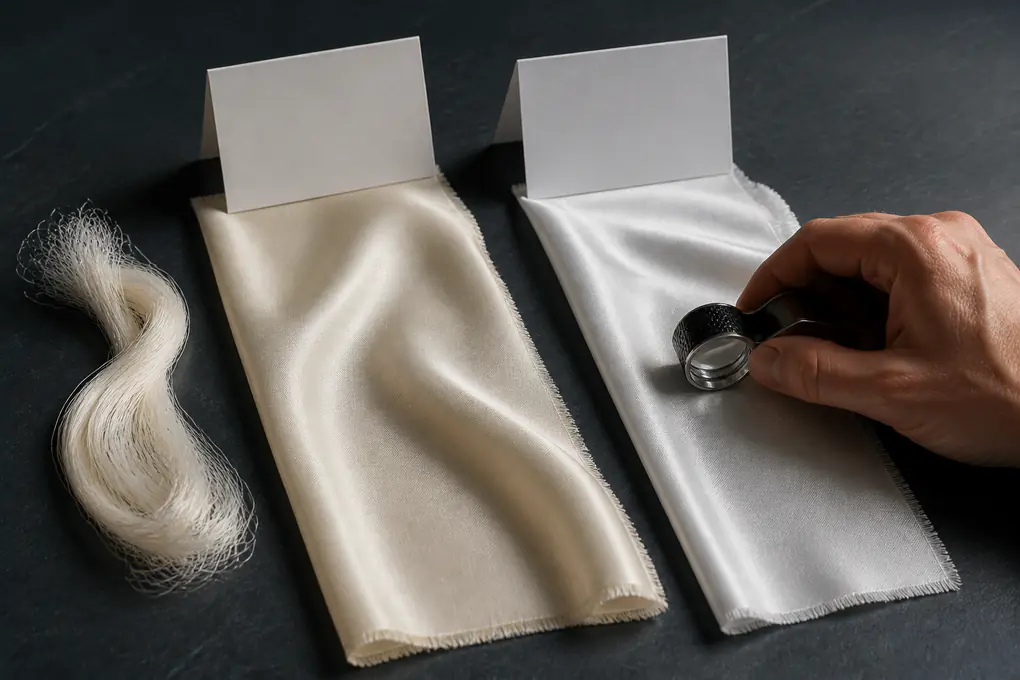
Visual, hand-feel, or simple observation can help a buyer recognize that a question needs follow-up, but it cannot reliably determine fiber composition or validate a market claim. Avoid destructive tests on samples you do not own or have not been authorized to alter. When a definitive composition answer is needed, decide with qualified specialists what laboratory or documentary route is appropriate.
Keep chain of custody practical
If a sample is sent for review or testing, identify its product, component, source, date, and handling. This helps the buyer understand what the resulting record represents. A generic test result without a clear sample identity may not answer the question for the finished item or later order.
Review Labels and Market Claims
The final wording should be reviewed for the destination and channel where the product will be sold.
Map the proposed wording
List the fiber statement, weave or satin description, care wording, origin statement, and any performance or environmental claim that will appear on the product, pack, or listing. Link each statement to the component and approval owner. This gives a brand or compliance team a clear starting point for checking whether the wording is accurate, consistent, and appropriate for the market.
Use qualified review where required
Textile labeling, advertising, product safety, and retailer requirements can vary by market. The buyer should ask the responsible legal, compliance, retailer, or qualified adviser team to review final claims. This guide does not provide legal advice or confirm that a particular label will meet every jurisdiction’s requirements.
Update claims when the product changes
A new fabric, reverse, lining, trim, color route, or product supplier may change what a material statement applies to. Keep the current product version and supporting records together. This prevents a label or marketing description from outliving the component it was written to describe.
Ask a Product-Specific Material Question
The clearest inquiry identifies the component, phrase, evidence, and decision under review.
Provide the exact wording
Send the proposed product phrase, the product or SKU, component map, fabric or sample reference, destination, and the question your team needs to answer. You may be asking how to distinguish a fiber statement from a satin description, what record to request, or what needs qualified market review. A specific wording question is much easier to evaluate than a general request to “confirm silk.”
Identify the desired outcome
Decide whether you need a sourcing clarification, sample comparison, document request, label review, or a planned test discussion. Those outcomes require different inputs and owners. Naming the outcome prevents a simple visual observation from being treated as a definitive verification result.
Start with the RFQ form
Use the RFQ form to submit the component and material question for review.
Silk vs. Satin: A Material Verification Guide for Buyers — Buyer Input Checklist
- Product component. Name the face, reverse, lining, trim, label, or other component.
- Fiber wording. Record the exact proposed or declared fiber statement.
- Weave or surface description. State the satin, weave, finish, or surface term separately.
- Supporting record. Identify the current specification, declaration, document, or sample reference.
- Market claim question. Describe whether the question concerns sourcing, label, marketplace, or retailer wording.
- Decision owner. Name the quality, compliance, legal, product, or brand owner for the next decision.
Buyer questions
Is satin always silk?
No. Satin generally describes a weave or surface construction and can be made from different fibers.
Can appearance prove fiber content?
No. A glossy or smooth appearance can indicate that a material question needs follow-up, but definitive fiber conclusions require appropriate product records or qualified verification.
Why map statements to components?
A product may use different materials in its face, reverse, lining, trim, or pack. Component mapping makes customer-facing wording more precise.
Bring the material question to a defined product review
Use the RFQ form to submit the component and the decision your team needs next.