
P030
Request a B2B Quote for Custom Silk Products
A useful bulk silk RFQ gives your purchasing team a defined article, an honest quantity context, and one clear decision to discuss. Use this form to start a B2B conversation about silk pillowcases, bedding, sleep accessories, gift units, colours, construction, packaging, or buyer-owned product direction. We do not show retail prices: we focus on the product information a wholesale buyer needs before a project-specific commercial discussion.
Published by China EverBen Silks Reviewed by Mark Liu
Project inquiry details
Provide only the business details needed to describe the product question. Do not include sensitive personal information.
Name the Finished Silk Article Before Requesting a B2B Quote
We can discuss a more useful B2B quote basis when the buyer names the finished silk article instead of sending only a category or inspiration image. A bed pillow cover, fitted bed layer, duvet-related piece, eye covering, head covering, gathered hair article, drawstring pouch, or gift grouping each creates a different customer unit, visible surface, component list, and presentation relationship. Start with the article you want to buy in bulk, then identify the variant and the one physical or commercial decision your team needs to compare. This keeps your RFQ focused on a real product rather than a vague “silk item” that different reviewers may interpret in different ways.
Identify the Article, Variant, and Customer-Facing Unit
Tell us what one customer, guest, or retail account receives
A single item, pair, set, and multipack are different B2B configurations
Begin with the exact article your team is considering: an individual pillowcase, a coordinated pair, a fitted or flat bed layer, a duvet-facing item, an eye accessory, a head covering, a gathered hair piece, a pouch, or a defined gift unit. Add the visible variant information that matters to the discussion, such as the buyer’s size reference, colour direction, print, closure concept, edge treatment, or selected accessory component. Then state what one person receives. One pillowcase is not the same as a matching pair; a pair is not the same as a bedding set; an eye covering presented with a pouch is distinct from an individual eye covering. This lets product, procurement, and brand colleagues assess the same customer-facing unit.
Before adding business context, write one direct sentence that identifies the product: “Our team is reviewing a matched silk pillowcase unit with an envelope-style opening and tonal edge,” or “Our team is reviewing an eye mask and pouch; the outstanding choice concerns its visible binding.” This does not finalise every detail. It gives the RFQ a recognizable article and separates the intended customer unit from the outer packaging, carton, or display materials that may be discussed later. A clear article identity prevents a buyer from comparing one response about a single item with another response about a pair, bundle, or unrelated gift assortment.
Describe the Visible Silk Face, Components, and Product Detail Under Review
Keep the RFQ attached to the part of the article that matters
A colour reference does not decide a closure, set count, or presentation layer
A silk RFQ becomes easier to understand when the buyer identifies the visible or physical detail it is asking about. For a pillowcase, the question could concern its front textile, reverse treatment, envelope-style opening, another closure approach, finished edge, or trim. On a sleep mask, it may be the front shape, binding, strap concept, pouch relationship, or the way the article is folded. On a bonnet, it may be the crown, band, tie or elastic route, and the selected label location. These details can remain open for a project-specific discussion, but they should be attached to the named article so a purchasing team knows what it is comparing.
A reference image or swatch is most useful when the buyer explains its purpose. It may show a colour family, a print position, a surface impression, a product silhouette, or a gift presentation. It might not show the reverse side, closure, component count, or the finished customer unit. Tell us which feature the reference should guide and which decision is still unresolved. This keeps an RFQ from turning a beautiful retail image into an unexamined product instruction. It also gives the buyer’s product and brand colleagues a practical way to add information without forcing them to write a complete technical specification before the first B2B discussion.
State the One Product Decision Your Buying Team Needs Next
A focused question makes a bulk silk RFQ easier to compare
Start with the decision that is preventing a meaningful next step
A bulk buyer does not need every answer before opening an RFQ. It does need to say what decision is holding the team back. For example, “We need to compare an envelope opening with a concealed closure for a silk pillowcase pair,” or “We need to decide whether our sleep-mask unit includes a pouch.” A bedding buyer may need to organise its selected pieces before discussing a colour route. A gift buyer may need to choose between a single hero article and a small coordinated unit. Those are concrete decisions that product, procurement, and brand teams can understand and discuss without treating an early inquiry as a purchase order or a finished agreement.
When several issues exist, put the most important one first and list the rest as supporting context. This helps prevent an RFQ from becoming a collection of unrelated questions about material, packaging, destination, artwork, and timing. A direct request might say: “We are considering an ivory silk mask with a matching pouch for a B2B gift programme. The first decision is the visible binding; the buyer’s presentation image is only a colour reference.” We can then respond to the defined product question. The buyer maintains control of its own brand assets, market decisions, and commercial planning while we keep the silk article and the next choice at the centre of the conversation.
Map the Silk Components That Change the B2B Quote Basis
A silk product image can communicate colour or styling, but it rarely shows every component a bulk buyer needs to consider. We help you separate the silk face, reverse, edge, closure, trim, elastic, tie, label position, pouch, sleeve, and other relevant elements. The aim is not to add unnecessary complexity. It is to give your purchasing team a clear way to identify which parts belong to the selected article and which one component is still open for discussion. That produces a more meaningful RFQ than a broad request to copy an image or “make it premium.”
Separate the Visible Silk Face From the Reverse and Supporting Materials
Describe the surface a customer sees and the components behind it
One product photograph does not show every layer of the article
We start with the part of the article the recipient or customer will notice. For a pillowcase, the visible silk face may be the colour, print, or smooth untrimmed panel that frames the bed. The buyer can then identify whether the reverse side, opening, edge, or any inner layer remains an active question. For a sleep mask, the visible face may be the shaped front; the reverse, perimeter binding, strap, and pouch are separate components. For a bonnet, the outer crown, band, tie or elastic route, and label position should not be collapsed into a single phrase such as “silk bonnet.” Naming the visible product face makes it easier to protect the buyer’s intended look while discussing the rest of the article realistically.
This component view is valuable when a product is offered in several variants. A classic pillowcase, a printed pillowcase pair, and a coordinating bedding set may share a colour family but have different closures, edge treatments, pack units, and supporting components. An eye mask and a pouch may share a surface direction but have different shapes and functions. In an RFQ, list the silk article first, then the components that are relevant to the buying decision. If a detail is not yet selected, say so directly. That is more useful than assuming that a reference photograph supplies an answer that it cannot actually show.
Describe Closures, Edges, Trim, and Hardware in Plain Product Language
Turn a visual preference into an article-level choice
Small construction details can change the customer-facing product
A clear RFQ names the construction feature the buyer wants to compare. A pillowcase buyer may be considering an envelope overlap, a concealed opening, a clean open end, a self-fabric edge, a narrow contrasting border, or a visible piping line. A sleep-mask buyer may be comparing a binding direction, a strap placement, or an adjustment concept. A bonnet buyer may be looking at a tie, an elastic band, the relationship between the crown and band, or the appearance of a label. Use ordinary product words and attach them to the named article. This lets us understand what the buyer means without assuming that a term like “luxury finishing” has the same meaning for every silk product.
We also recommend separating a visual preference from a component choice. “We want a quiet, tonal presentation” describes an impression. “We are comparing a self-fabric edge with a narrow contrast edge on the pillowcase pair” identifies the physical choice behind that impression. “We want the sleep mask to look refined” is a concept; “we need to choose between a matching binding and a contrast binding” gives the product team a usable question. A bulk buyer does not have to decide every component immediately. It does need to say which element is under discussion, which elements are known, and whether the intended customer unit changes with the selected route.
Keep Packaging and Buyer-Owned Information Separate From the Silk Construction
Discuss pouches, sleeves, cards, and labels as their own layers
The product remains clear when every layer has a role
A pouch, sleeve, card, tissue layer, tag, or insert may be part of a buyer’s selected selling unit, but it should not be confused with the silk article itself. A pillowcase pair may be folded inside a sleeve; a sleep mask may sit in a pouch; a bonnet may be paired with a buyer-selected card. State which piece is the finished silk product, which is a presentation component, and what one recipient or customer receives. This makes it easier to discuss the visual opening moment, item count, and any buyer-owned information without suggesting that a card, label, or outer material is part of the silk construction.
Buyer-owned brand content should also remain distinct from the physical components. A buyer can tell us where a selected label, card, or sleeve artwork may be placed, but we do not invent brand claims, retail copy, legal text, or market requirements. Put the current product detail first, then explain the supporting presentation question. For instance: “The silk mask is the customer unit; we are considering a pouch and need to decide which side of the mask is visible at opening.” This gives the RFQ a clear article hierarchy. It allows product, brand, and procurement teams to discuss the same configuration without blurring construction, presentation, and buyer-owned information.
Break Down Quantity by Silk Article, Variant, and Selling Unit
Quantity context is essential for a B2B silk RFQ, but a single total is often not enough. We invite buyers to show how the intended quantity is divided among articles, colours, prints, sizes, customer units, or gift configurations. That does not require a final purchase order. It gives procurement a way to explain the actual mix under discussion and helps product colleagues avoid applying the details of one silk variant to another. A clear quantity breakdown turns a broad “bulk order” request into a more meaningful starting point for a project-specific quote conversation.
Split the Quantity When Product Variants Are Not Interchangeable
Keep sizes, colours, prints, and article types visible to the buyer team
A pillowcase pair and a mask unit should not disappear inside one total
We recommend that a buyer list each variant that changes the product or customer unit. A pillowcase pair in one colour is not necessarily the same RFQ line as a printed pair or a different size reference. An eye covering offered with a pouch should be treated separately from an individual eye covering. A bonnet, scrunchie grouping, sheet, or duvet cover should have its own line when it is part of the proposed purchase mix. This does not mean that every early estimate must be exact. It means the buyer should show the current mix clearly enough for a procurement team to recognise where its planned quantity belongs.
A simple format works well: name the article; state the distinguishing feature; state what one customer receives; then give the quantity context for that configuration. For example, “silk pillowcase pair, ivory, tonal edge, two cases per unit,” followed by the buyer’s estimated quantity, is clearer than a single line for “ivory silk goods.” Apply the same discipline to an eye covering supplied beside a pouch, a bonnet with a chosen band treatment, or a bedding configuration with several named pieces. It lets your team add or revise a variant without accidentally changing the description of every other article in the RFQ.
Distinguish the Selling Unit From Inner Packs and Outer Cartons
Keep customer-facing counts separate from handling and shipping layers
The recipient unit is the foundation of a sensible count discussion
Quantity becomes confusing when a team mixes the item a customer receives with inner grouping or outer cartons. Start with the customer-facing selling unit: one pillowcase, a pair, one mask, a mask-and-pouch unit, a bonnet, or a defined set. If the buyer is considering a grouping for handling, say that it is a separate layer. If an outer carton question exists, describe it as an operational subject rather than treating it as the definition of the product. This makes the RFQ easier to read because every count has a purpose and no one has to infer whether a number refers to single articles, pairs, gift sets, inner groups, or cartons.
A buyer can keep an early estimate honest by identifying the level it belongs to. “Two pillowcases per selling unit; quantity estimate under review” is clearer than a total that hides the unit count. “One mask and one pouch per gift unit; presentation layer still being selected” lets the buyer discuss a product configuration without implying final carton or distribution details. We do not assume that a preliminary count settles packaging, pricing, timing, availability, or delivery. We use it to understand the current product mix and to help the buyer ask a more coherent question about a defined silk programme.
Show Which Quantity Assumptions Are Still Being Reviewed
Keep an early estimate useful without presenting it as a final order
A transparent buying range is better than an unexplained single number
We understand that a product team may still be deciding its range when it opens an RFQ. If the quantity is an estimate, say so in direct language and attach it to the article and unit it describes. If a colour split is undecided, identify the product line and the buyer colleague who will settle the split. If an accessory may be optional, keep it on a separate line rather than adding it silently to the core quantity. This gives us a more useful view of the buyer’s actual decision without pretending that a preliminary table is already a confirmed order or a binding commercial instruction.
Use the RFQ to explain the first quantity question that matters to you. You might say: “We are examining an ivory silk pillowcase duo across two colour directions and want the proposed allocation reviewed by recipient unit,” or “We are evaluating a mask-and-pouch gift unit; the base quantity is being reviewed against a single-mask alternative.” This language lets procurement, product, and brand teams keep their working assumptions visible while we discuss the named silk article. It is more helpful than hiding multiple variants behind one total and expecting a quote discussion to resolve an unspecified product mix.
Explain the Buyer’s Market Context Without Assuming Product Approval
A destination market, channel, or customer group can change the way a buyer frames a silk product enquiry. It may affect which product variant, customer unit, buyer-owned wording, or presentation detail the team wants to discuss. State that context in straightforward business language and keep it distinct from any customer-facing product assertion. The RFQ form is a place to introduce the buying situation and the next decision, not a place to declare that a silk article is approved, compliant, available, or suitable for an unspecified market or retail account.
State the Market, Channel, or Customer Context That Shapes the Product Brief
Give procurement the background that changes the selected silk unit
Context is useful when it is connected to an actual buying decision
Tell us the market, channel, or customer context only to the degree that it changes your product question. A buyer may be planning a wholesale range for its own retail account, a client gift for a defined business audience, a hospitality-oriented assortment, or an online product collection. That context can help explain why a pillowcase pair needs a particular customer unit, why a sleep mask needs a certain presentation route, or why a sheet and duvet cover should be considered as a coordinated set. It does not require the buyer to disclose confidential customer information, and it does not turn a general destination into an automatic product requirement.
A helpful RFQ links the background to a visible decision. For example, “This pillowcase pair is being considered for a premium home-textile range; the open question is whether the customer unit is a pair in a sleeve or a pair with a pouch,” is specific. “This mask concept is for a buyer-owned gift programme; the open question is card placement,” is equally clear. We can then discuss the selected silk article and presentation layer. The buyer keeps responsibility for its own customer relationships, channel plans, market language, and commercial strategy.
Keep Buyer-Owned Brand Copy, Labels, and Market Statements With Their Owners
Discuss physical placement without writing the buyer’s claims
A product enquiry does not replace brand, legal, or market approval
A buyer may have brand wording, care language, product names, artwork, barcode data, retailer fields, or other market-facing materials associated with the proposed silk unit. Those remain buyer-owned decisions. We can discuss where a selected label, card, sleeve, pouch insert, or visual element fits within the customer unit, but we do not create the buyer’s claims or decide what a market, retailer, or adviser requires. This separation keeps the product conversation honest. The buyer can bring a defined silk article and ask about the physical place for an approved asset without asking a supplier website to certify or approve the asset itself.
When a field is still being reviewed by the buyer, it is better to say so directly than to fill the RFQ with a guessed statement. A product manager may know the pillowcase configuration while a brand colleague is still choosing the customer-facing card. A procurement team may have a quantity context while another team retains the data needed for a particular retail channel. We can keep the product basis and the buyer-owned information in the same enquiry without treating them as the same responsibility. That makes the request easier to read and less likely to turn a preliminary note into an unintended public or commercial promise.
Use Context to Ask a More Relevant Silk RFQ Question
Let the market background clarify the next product choice
The strongest request separates product facts from business assumptions
Use the context field to explain why a product detail matters, not to make a broad claim about the product. A buyer can write: “Our customer unit is a pillowcase pair for a premium retail setting; we need to compare a clean edge with a contrast border,” or “We are considering a silk mask gift for a corporate audience; we need to decide how the pouch and buyer-selected card relate.” These statements give the product team a meaningful question and show the commercial setting that led to it. They do not imply that the product has been accepted by a retailer, approved for a market, or committed for delivery.
This discipline is especially useful when several internal teams contribute to an RFQ. Brand can provide the buyer-owned visual direction. Product can define the silk article and components. Procurement can list the quantity context and the commercial question. Market or channel colleagues can explain the context that affects the presentation or information layer. We can then discuss a B2B silk product with the right level of detail while each buyer-side owner keeps responsibility for the decision it controls. The result is a clearer RFQ and a more focused next conversation.
Use References That Clarify the Exact Silk Product Question
A useful reference can save a B2B silk quote discussion from becoming a guessing exercise. Bring the drawing, marked photograph, swatch, product link, sample image, artwork file, or written note that pinpoints one active buyer question. Say whether it relates to a pillowcase face, opening, flange, piping, sheet panel, duvet component, sleep-mask edge, bonnet opening, scrunchie body, or selling-unit presentation. We read the buyer's reference as a guide to the active product direction, not as a complete specification inferred from a compelling image. A reference should help your team compare a visible choice, construction relationship, or pack layer while leaving unconfirmed material, dimension, pricing, quantity, timing, and delivery points for a defined written project discussion. Mark the reference so the recipient can see the precise area that matters. For a pillowcase, draw an arrow to the face, opening, or edge rather than sending an unlabelled lifestyle image. For bedding, identify the panel or finished corner; for a mask or bonnet, point to the visible panel, tie, or strap relationship; for a pack, show the layer that changes the customer’s first impression. Add one sentence that says what comparison the reference should support. This gives the RFQ a disciplined visual starting point and helps prevent a mood image from being read as approval of every unseen detail.
Choose the reference that answers the immediate product question
A marked image is more useful than a large unlabelled file collection
Show the feature, variation, and purpose of the reference
Start with the reference that best explains the open product point. A close-up can show a pillowcase opening, piping, flange, printed panel, mask contour, bonnet tie, gathered scrunchie, or package fold. A bed or lifestyle image may show overall presentation but may not explain the construction under discussion. Explain the precise feature the image helps your team examine and identify the variation it represents. If a detail is important, mark the location or describe it in plain language. This lets us focus on the selected silk article rather than treating every feature in a photograph as a buyer instruction. It also makes the next conversation easier for product, purchasing, brand, and packaging colleagues to follow.
Separate visual direction from measurements and construction
One reference rarely establishes every product attribute
State which points remain for project-specific clarification
A product image can be valuable without becoming a complete technical brief. A pillowcase photograph may show a desirable edge or visible face, yet it may not identify size, fold, closure depth, seam allowance, or selected cloth. A bonnet image may show a silhouette but not explain crown volume, opening route, tie length, or lining relationship. A scrunchie reference may show proportion but not establish circumference, gathered fullness, or elastic choice. Say which feature your team wants to use as a discussion starting point and which information is still open. We can then keep the quote conversation honest and avoid converting an inspiration image into a product claim or commercial promise.
Keep each file tied to the right article and variation
Similar silk products can require different references
Name the style, color, print, component count, and selling unit
When several products look related, attach the reference to a precise article and variation. A solid pillowcase pair is different from a printed pair, a bedding set, or a mask-and-pouch unit. A color image may relate to one surface, while a drawing may relate to a different construction. State whether the reference is current, illustrative, or superseded by a newer buyer direction. This does not require a complicated file system; a clear sentence beside each reference is enough. It protects procurement from comparing a quote basis for one silk configuration with an attachment intended for another. It also helps the buyer explain whether a product question belongs to the article, the visual range, or a proposed selling unit.
State the Product Fields Your Team Still Needs to Clarify
A quote request does not need to pretend that every product field is complete. It is more useful to state what your team has already chosen and what still needs an article-level discussion. An open point might concern pillowcase closure, bedding component count, fabric direction, print placement, mask strap, bonnet opening, scrunchie proportion, trim, label location, or packaging relationship. Put the open point beside the exact silk article and describe its consequence for the recipient-facing unit. This creates a practical B2B conversation without inventing a material, specification, price, minimum, availability, lead time, delivery arrangement, certification, or market result. Your buyer team keeps ownership of its decisions while we can focus on the product question that remains. Put each unresolved point in a short, separate line so different buyer functions can review it without losing the product context. For example, distinguish an artwork position from a closure question, or a pack-card issue from a quantity scenario. Explain whether the point affects what the customer sees, handles, or receives in a set. This helps us understand the order in which questions should be addressed. It does not require the buyer to guess a finished answer before the relevant product, brand, or procurement owner has discussed it.
Name the open feature instead of filling it with a guess
An honest product question is better than a convenient placeholder
Identify the article, component location, and desired comparison
Say exactly which product field is open. A buyer may need to compare an envelope and zipper direction for a pillowcase, decide how bedding components should be grouped, examine whether a mask should use one visual edge route or another, describe a bonnet opening, or establish the visible proportion of a scrunchie. Name the article, variation, component, and the reason the point matters. We do not need your team to make a guess simply to complete an RFQ. A defined unresolved question gives us a more credible starting point than a speculative value that later appears to be a settled requirement.
Show the relationship between one open field and the rest of the product
A component choice can affect a visible product or selling-unit decision
Explain what the buyer needs to keep consistent
Describe the relationship that makes the field important. A pillowcase closure can change the visible edge and how a finished item sits in a customer unit. A bedding count changes the meaning of a set and the way components are identified. A mask strap or bonnet tie affects the selected construction conversation. A scrunchie size affects how the article reads as an individual item or assortment. A packaging layer may influence what a customer sees first without changing the silk article itself. When your team makes these links visible, we can discuss the appropriate product question without suggesting that all connected points are already confirmed.
Identify the buyer role that will decide the next point
Product, brand, packaging, and procurement may own different questions
Give the inquiry a practical next decision
A useful RFQ says who on the buyer side will use the next discussion. The enquiry may be coordinated by procurement while product considers construction, brand considers appearance, packaging considers the customer unit, and commercial colleagues decide when comparison is appropriate. You do not need to name a complete approval chain. Simply name the colleague who will read the reply and state the choice it should inform. This keeps the request focused on a real B2B purpose. It also avoids asking a supplier conversation to substitute for the buyer's internal product, market, commercial, or release decisions.
Frame a Physical Sample Question Around One Silk Feature
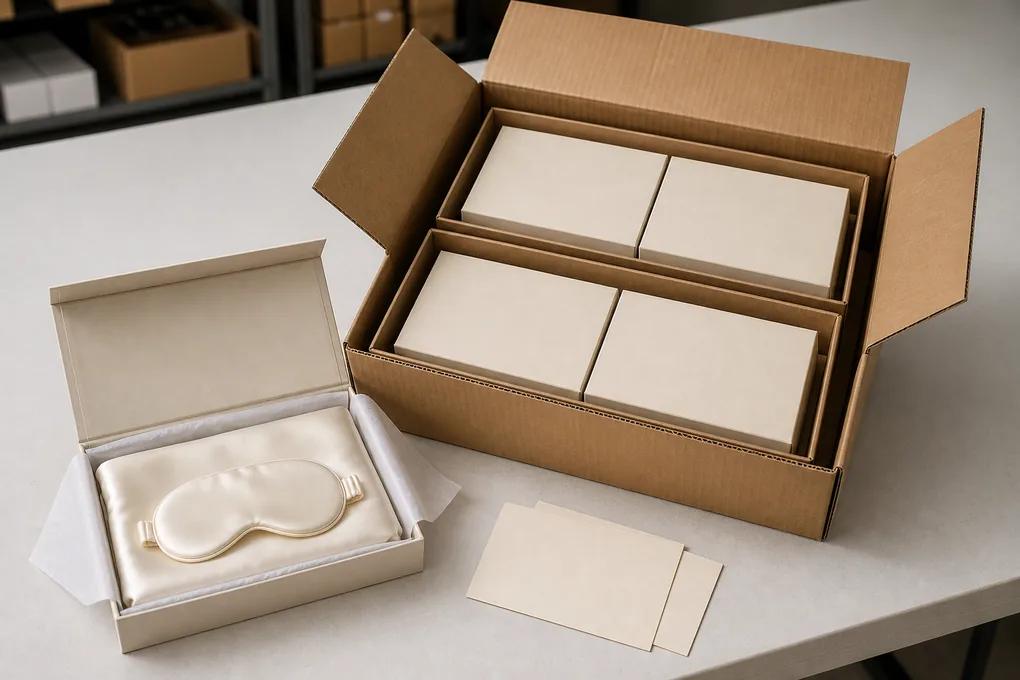
Samples are most helpful when a buyer states the article, variation, and feature that the review is intended to observe. A swatch can help with a material or color conversation; a finished pillowcase can show its edge, closure, print placement, and fold; a bedding component can show size relationship and coordinated appearance; an accessory can show the selected construction and customer-facing presentation. At China EverBen Silks, we encourage buyers to make one practical question visible rather than request an undefined approval. Describe the feature, the reference, the buyer context, and the decision the observation should support. A sample or image does not by itself settle unrelated pricing, quantities, timing, delivery, document, market, or commercial matters. Choose the sample question according to the decision, not merely the product category. A buyer considering print scale can identify a visible panel; a team reviewing a packaged mask can point to the product reveal; a bedding buyer can describe the made-bed view that needs comparison. Tell us what the customer-facing observation would help the team decide after review. Keep any broader questions about material scope, formal testing, commercial terms, or release outside that one sample question unless your team has chosen to raise them separately. That keeps the RFQ focused and readable for everyone involved.
Choose a sample type that matches the question
A swatch, finished article, and assembled unit show different things
Select the physical or visual reference deliberately
Choose the reference because it can show the feature your team wants to evaluate. A textile swatch can clarify a palette family, print mood, or visible-surface direction. It cannot show how a pillowcase opening, bedding component, mask edge, bonnet opening, or scrunchie body will appear after construction. A finished item can clarify shape, fold, component order, or the relationship between the silk article and a proposed presentation layer. An assembled unit can help when the question concerns a pouch, card, sleeve, or count. State what the reference should demonstrate and which variation it represents, so the review remains tied to the defined article.
Describe the observation in product language
A location and feature are more useful than a general preference
Tell us what the buyer wants to compare
Describe the point your team wants to look at. For a pillowcase, this could be the face panel, opening, edge, print placement, flange, piping, or paired arrangement. For bedding, it might be a component relationship, fold, closure direction, or coordinated set appearance. For a mask, bonnet, or scrunchie, it may be a strap, tie, opening, gathered body, trim, or visible silhouette. Explain the relationship that matters to your team and avoid broad phrases such as make it better. A defined observation gives product and purchasing colleagues a concrete basis for discussion without claiming a universal performance outcome.
Keep the sample question separate from a commercial conclusion
A physical review can inform a later buyer decision
State what remains outside the current observation
Tell us what the sample or physical reference is not intended to answer. A color discussion is different from a finished construction discussion. A visible product observation is different from a price, volume, delivery, or market decision. A presentation question is different from a claim about protection or retail acceptance. Keeping those distinctions clear helps a buyer use a sample efficiently and stops a narrow observation from later being treated as confirmation of the whole project. We can discuss the named article and feature in context while your team decides which additional product, commercial, or customer inputs are needed before it moves to the next stage.
Describe the Pack Inputs That Shape the Customer-Facing Silk Unit
A silk quote discussion becomes clearer when the buyer identifies what one customer or account is meant to receive. A pillowcase pair, bedding configuration, sleep mask, bonnet, scrunchie card, accessory set, or gift unit may need a different fold, component order, label location, card, pouch, sleeve, insert, or outer grouping. Start by naming the finished silk article, then explain the pack layer under consideration. This helps us distinguish a customer-facing unit from a later handling group or carton question. It does not assume a finished packaging material, protection result, shipping method, quantity, price, minimum, availability, timing, or delivery term. A defined pack input simply makes the buyer's product and presentation question easier to understand. Use the pack description to explain the customer story, not simply the outer shape. A gift-led pair may need an immediate count cue, while an accessory selection may require the colour order or card relationship to be clear before the shopper handles the item. Identify whether a pouch, insert, sleeve, or card is intended to frame the article, identify it, or explain the set. This gives product and brand colleagues useful details for a quote discussion without transforming a proposed presentation into an assumed packaging specification or logistical commitment.
State what one customer-facing silk unit contains
A pair, set, single article, and multipack are different product questions
List the article and count before describing outer layers
Start with what is inside one customer-facing unit. It could be an individual pillowcase, a matched pair, a bed-linen combination, a multi-piece bedding offer, an eye covering, an eye covering plus pouch, a head covering, a carded hair item, or a coordinated accessory grouping. Then state whether the buyer is considering an inner card, pouch, sleeve, insert, wrap, box, or another presentation layer. This prevents a loose use of the word packaging from obscuring the article or count. It also keeps brand, product, pack, and purchasing reviewers aligned around one selling unit before later handling or commercial subjects are raised.
Describe the visible pack relationship that needs discussion
Fold, opening order, card position, and product orientation can matter
Connect the pack feature to the named silk article
Explain the visible relationship that has raised the question. A coordinated pillowcase unit may require a specific fold or a selected visible face. A bedding set may need a component order that lets the buyer distinguish contents. A sleep mask may sit beside a pouch or card. A bonnet may need a presentation direction that keeps its opening and ties understandable. A scrunchie assortment may need a count or color cue. State the exact point your team wants to discuss. We do not transform this into a promise about packaging performance or distribution. We use it to understand the proposed customer-facing unit and the product relationship that needs further attention.
Keep buyer-owned copy and identifiers with the buyer
Labels, cards, barcodes, and market text are not the same as pack geometry
Name the layer and owner without assuming approval
If a proposed unit includes brand copy, care text, a barcode, retailer field, customer message, or carton mark, state its planned location and identify the buyer-side owner of that content. A textile label, card, insert, pouch, sleeve, and carton have different purposes and audiences. We can examine how a buyer-owned field relates physically to the named silk unit, but we do not create the buyer's claims or decide market, legal, retailer, or customer approval. This keeps the packout conversation focused on the product and prevents a draft field from being mistaken for final language across every item in a range.
Share Timing Context Without Turning It Into a Delivery Promise
A buyer may have a launch, range review, sample meeting, customer conversation, or internal decision date that helps explain why an RFQ is being raised now. Share that context when it helps your team organize the next product question, but keep it separate from a promised production, dispatch, or delivery date. At China EverBen Silks, we use a buyer's timing context to understand the order of decisions: article definition, reference review, sample question, packaging direction, buyer-owned content, commercial comparison, and any later written project confirmation. State what your team is working toward and what must be decided before that point. This gives procurement and product colleagues a usable planning conversation without presenting an unconfirmed schedule as a commitment. A buyer can state the decision sequence without asking us to infer a deadline. For example, the team may need to compare artwork direction before it discusses a pack concept, or settle the selling-unit view before it introduces commercial context. Say which meeting, range event, or internal choice makes the current question relevant, and name the element that must be clarified first. This gives the conversation a sensible order. It does not create a production calendar, dispatch assurance, or delivery obligation, all of which need a later project-specific written basis.
Name the buyer milestone that makes the question urgent
A decision date is useful context when tied to an article-level need
Explain whether the milestone concerns range planning, review, or launch preparation
Describe the milestone in business terms. Your team may be preparing for a product review, a buyer meeting, a seasonal range discussion, a brand presentation, a sample comparison, or a later commercial assessment. Name the silk article and decision that must be addressed before that milestone. For example, a pillowcase project may need a closure direction clarified, a bedding range may need its set composition defined, or an accessory program may need its customer-facing unit discussed. The timing context tells us why the question matters now. It does not establish a production date, dispatch date, delivery date, or other operational promise.
Separate the buyer's target from supplier commitments
A planning window is not a quoted lead time
Keep unconfirmed schedule assumptions visible
State the timing context as a buyer target, estimate, or internal planning point. Do not assume that a requested date means a product, material, price, availability, minimum, production, shipment, or delivery arrangement has been confirmed. A defined RFQ can expose the choices the buyer must settle before a later commercial conversation. It can also show when a reference, drawing, visual direction, pack input, or document question needs buyer attention. This protects the inquiry from carrying a hidden promise and allows the discussion to remain truthful about what is known, what is being considered, and what will need written project-specific treatment.
Show which decision must happen before the next milestone
A clear sequence can prevent a late product surprise
Put the next product, sample, pack, or commercial question first
Identify the decision that should be addressed first. It may be a material direction, product feature, visual reference, sample question, selling-unit issue, buyer-owned label field, document-scope question, or commercial comparison. Identify the buyer function that will consider the next reply and the choice it needs to make. We do not claim that a website inquiry can resolve every part of a timing plan. A clear sequence simply helps the buyer avoid treating a later milestone as if it could be met without first defining the silk article and the choices that genuinely affect the next conversation.
Ask Document Questions About the Relevant Silk Article and Components for Defined Buyer Component Scope Review
When an RFQ includes a document question, explain the one buyer decision it supports and attach it to a named silk customer unit. The item may be a pictured paper, supplier declaration, material wording, buyer questionnaire, care-copy draft, or a customer-requested form; its role changes with the article and component being discussed. Identify the product configuration, visible details that help your team locate the same version, and the practical question you need answered. A document image should guide a limited conversation, not become a statement for every item, component, or customer market. We can discuss the scope you describe. Your buyer team remains responsible for legal interpretation, retailer requirements, acceptance decisions, certificate use, and formal reliance. Explain whether the question concerns a visible face, a supporting part, a label, or a presentation element so the response stays tied to the right piece of the project. Bring only the context that changes this particular question: the finished item, its customer-facing part, the document’s limited purpose, and the buyer decision that follows. If the question depends on a specific printed panel, closure, label, pouch, or card, say so rather than referring to the entire product family. This detail helps avoid a broad interpretation and gives the supplier a clear way to respond to the defined request. It also allows the buyer to keep unrelated qualification and business matters inside its own review process.
Name the document and the article-level question
A document title alone does not identify the product it concerns
Include visible date, holder, revision, component, or intended use where useful
Call out the document by the question it will answer, then attach it to one finished silk article. For example, a buyer can ask about an image of a paper relating to the outer face of a printed pillowcase, the customer-facing label of a travel mask, or a presentation card accompanying a gift set. Include visible identifying details only if they help the buyer locate the same item: a displayed date, issuer name, version notation, or article description. Explain what the buyer wants to determine from it. This enables a narrow supplier response while making clear that a photograph or preview is not a complete statement for every product in the collection.
Separate the silk surface from other finished-product components
Closures, elastics, ties, linings, labels, and packs may need separate attention
Say which parts belong inside the buyer's question
Map the finished article before asking a document question about it. A mask can combine a show face, a contact-side layer, edge finishing, a strap, and a presentation pouch; a pillowcase can introduce an opening and a label; a hair item can combine an exterior gathering and an internal stretch element. Identify the precise visible or supporting part your buyer team is considering. If the question applies only to one element, say so plainly. This avoids accidentally extending a statement about one surface across closures, support pieces, packaging, or other parts that the document does not identify.
Keep the buyer's final reliance decision on the buyer side
Procurement can coordinate while relevant teams make their own determinations
Use the RFQ to clarify scope rather than transfer responsibility
State the commercial reason for the question in buyer language. Your procurement lead may be gathering context for an internal review, product may be comparing a component choice, and the brand team may be trying to understand a customer-facing label issue. Say which functional question needs information and who will interpret it. We can respond to the described article and request. Decisions about legal meaning, retailer rules, certification scope, customer acceptance, or market release remain with the people your organization has assigned to those decisions, after they consider the relevant original materials and requirements.
Request the Specific B2B Response Your Team Needs Next Before Buyer Product, Packaging, and Commercial Decisions Are Final
The final part of an RFQ should say what your team needs from the next supplier conversation. You might need to clarify a product feature, compare defined directions, organize a sample question, discuss a selling unit, identify missing buyer inputs, ask a document-scope question, or prepare for a commercial comparison. State the named silk article and the one decision a useful response should help your team make. That is more practical than requesting a general quote without a product basis. It also helps China EverBen Silks keep the conversation focused on the actual B2B buying question while the buyer retains ownership of commercial decisions, quantities, prices, minimums, timing, delivery, customer commitments, and other project terms that require specific written confirmation. Phrase the expected response as a decision aid. You may want us to respond to one construction relationship, explain how a stated reference relates to the current article, identify information that still needs buyer input, or prepare the scope for a later commercial exchange. Let us know whether the next reader will be a product manager, buyer, brand colleague, or procurement lead. This helps us write back to the active question instead of filling the response with generic category information. It keeps the RFQ practical while the buyer controls formal price, quantity, timing, and commitment decisions. The result is a response request that can be read and acted on without inventing commercial certainty.
Ask for the product conversation that matches the current need
Clarification, comparison, sample planning, and commercial review are different requests
Choose the response type that helps the buyer make one next decision
Say whether your team needs a product clarification, a comparison of two defined directions, a sample-related question, a packaging conversation, a document-scope discussion, or preparation for a later commercial review. Give the article, variation, reference, and buyer context that make the request meaningful. A clear response type prevents an RFQ from becoming a loose collection of product, brand, market, and commercial topics. We can then focus on the question your team needs to advance, rather than assuming that a general request for a quote includes every possible material, construction, packout, and business decision.
Keep commercial questions tied to a defined configuration
A commercial comparison is stronger when the article and selling unit are clear
Provide estimates as context rather than presenting them as settled terms
When your inquiry is preparing for commercial comparison, keep quantity, destination, channel, and timing context attached to the exact item and selling unit. Say whether the figure is an estimate, a range-planning context, or an active buyer assumption. Do not treat the RFQ as confirmation of a price, minimum, availability, lead time, production allocation, shipment, or delivery arrangement. This distinction gives procurement a more reliable basis for the next conversation, because product and commercial context remain visible without being presented as terms that have already been agreed.
Identify the buyer owner of the next decision
A response is useful when the right person can act on it
Name the role, not a full internal approval process
Name the buyer function that will use the next discussion, such as procurement, product, brand, packaging, quality, operations, or commercial leadership. The named role can clarify the desired product direction, confirm the appropriate reference, decide a selling-unit question, or determine what further information is needed. This is not a request for a full internal workflow. It is a way to make an RFQ practical. A clear buyer owner helps prevent a reply from becoming detached from the person who can make the next decision about the defined silk item.
Review the RFQ Before You Send a Defined Silk Buying Brief
Before sending an RFQ, make sure the opening identifies the silk customer unit, its active variation, the buyer purpose, the relevant reference, and the response question that matters now. A bedding article, eye accessory, head covering, hair item, or gift configuration becomes easier to review when product details, visible features, components, presentation, quantity context, destination context, and document questions are explained rather than mixed together. We do not require a finished specification to begin a discussion. We need enough product clarity to understand which point should be addressed first. Remove attachments that do not illuminate that point, and keep the image, sketch, link, or note that does. Name the buyer-side role that will read the reply. A concise RFQ prevents conflicting interpretations across purchasing, product, and brand workstreams while leaving material, price, quantity, timing, delivery, and formal commercial terms for project-specific written discussion. Use the closing check to make the intended response unmistakable. State whether your team needs a construction clarification, a comparison between two visual directions, a defined sample question, a customer-unit discussion, or preparation for a later commercial conversation. Keep the focus on the named article and the choice that follows. This gives China EverBen Silks enough context to respond usefully, while your team retains responsibility for any subsequent technical, commercial, customer, or approval decisions.
Check that the product and selling unit are easy to identify
A buyer should be able to recognize the item without reading between the lines
Name article, variation, count, and component relationship
Read the first two sentences as someone who has never seen the project. They should identify the finished article, the version or colour direction, and the customer unit without relying on filenames or background knowledge. Instead of an abbreviated category name, specify whether the request concerns a matched pillowcase set, a particular bedding component, a strap-style mask, a bonnet that ties, or a counted hair-accessory offering. Include the visible feature that makes the question urgent. This short orientation prevents a new reader from applying the RFQ to an adjacent style, previous image, or unrelated silk category.
Check that references and open questions have a clear purpose
Each attachment or note should answer one part of the buyer's question
Keep visible direction, sample questions, pack inputs, and documents distinct
Give every attachment a job before adding it to the RFQ. A marked photograph can focus attention on a closure view; a colour swatch can signal a palette discussion; a pack layout can explain the order in which the customer sees the items; a document image can identify a separate buyer question. In the message, state what each attachment helps the team examine and what it does not decide. Then place the most important open question at the end of the reference list. This turns a collection of files into a coherent B2B request rather than an invitation to infer product details from unlabelled material.
Check that the next decision is written in direct business language
A clear RFQ gives product and procurement teams a useful next action
Finish with one question and the buyer role that will use the response
Close with a plain question that leads to one useful next exchange. You may ask how a chosen image relates to a selected customer unit, what further buyer input would define a presentation detail, or what information is needed before discussing a commercial scenario. Name the function that will review the reply and mention only the contextual facts that make the question intelligible. This leaves price, production allocation, delivery, and formal commitment outside the request until they are addressed through the buyer’s own project process. It gives both teams a practical starting point for a specific silk buying discussion.
Request a B2B Quote for a Silk Product questions
What makes a quote request comparable?
The same product and component basis, quantity by SKU, destination, pack context and open decision for every response.
Can I submit before every detail is final?
Yes. Mark the undecided fields and ask for the next project-specific decision instead of treating assumptions as final specifications.