
P009
Classic Silk Pillowcase Development Brief
A classic silk pillowcase is often treated as the easiest item in a bedding range. It is not. A case that looks right on a flat photograph can sag on the intended insert, expose a closure, twist at the corners, show mixed surface direction, or arrive in a selling unit that damages the first customer impression. Use this brief to decide the product before asking suppliers to price it. Start with the actual pillow, then choose the opening, visible face, finished dimensions, edge route, color reference, labels, presentation, and the evidence a sample must provide. The result is a specific private-label or wholesale pillowcase request that a buying, quality, merchandising, and packaging team can read the same way.
Published by China EverBen Silks Reviewed by Mark Liu
Anchor a classic pillowcase to the right opening and edge controls
Set the insert, finished measurement, closure, seam, and selling-unit question before sourcing.

Set the Selling Unit Before You Compare Silk Pillowcase Fabric
A fabric conversation becomes misleading when the customer receives a finished pillowcase rather than a loose cloth sample. Decide what the buyer will list, what the customer will open, and whether the offer is a single case, a matched pair, a set component, or a replenishment SKU. That decision affects dimensions, closure, labeling, packaging, quantity planning, photography, and quote structure.
Name the Exact Item the Customer Will Receive
Define count, pillow format, intended sales channel, and variant identity
Prevent a single-product quotation from hiding a pair, set, or presentation requirement
Start from the finished pillowcase offer rather than the raw fabric. One pillowcase, a coordinated pair, and a bedding-set pillowcase component can use similar silk and similar colors while representing different commercial objects. State the count, whether the product is open-stock or paired, the planned pillow category, and the sales channel that drives presentation. A marketplace image, a specialty-bedding shelf, a hotel program, and a gift-oriented store do not ask the same questions of the selling unit. This starting point keeps material discussion attached to the item being purchased instead of a generic category label.
Separate compulsory elements from options. If a pair is essential, show two pieces in the unit rather than leaving quantity implied. If a pillowcase may later become part of a set, keep that as a distinct route with its own pack and count questions. If selected solid colors are intended for repeat purchase, name the variant structure early. This prevents a quotation for a single folded case being compared with a boxed pair. It also lets merchandising, operations, and product teams decide whether the SKU needs a premium presentation, a concise ecommerce pack, or a core replenishment role.
Connect the Sales Role to the Physical Pillowcase
Use the consumer setting to select practical development questions
Keep product decisions tied to a customer moment rather than broad silk language
A classic pillowcase can be positioned as core bedding, a beauty-adjacent accessory, a travel companion, a housewarming gift, or a complement to an existing sheet program. Those positions do not create wellness or performance claims; they explain why a buyer needs a particular configuration. A core SKU may need disciplined color naming, dependable size references, and simple repeat ordering. A gift route may place more weight on the unboxing sequence and visual coordination. A hospitality discussion may emphasize the insert format, the buyer's own laundering procedure, and identification needs. Name the intended role so teams ask focused questions rather than scattering every possible feature into one inquiry.
Use the role to decide what needs physical review. If the customer meets the package first, assess the pack with the actual folded case. If the buyer expects understated bedding, review the case on the intended insert under normal display light. If it complements another silk product, compare color, surface direction, and pack hierarchy across the articles. The word silk cannot approve all of those choices. A disciplined role statement makes the brief readable and gives every department a reason to resolve only the fields that influence its decision.
Keep SKU Identity Stable as the Brief Develops
Create a clear name for each configuration before sampling begins
Avoid mixing an envelope option, zipper option, and color option into one untraceable sample
Assign a working identity to each configuration before samples, quotations, and artwork files circulate. It can be simple: a classic solid-color case, a named insert reference, an envelope opening, a selected edge treatment, and a defined selling-unit count. It does not require invented style names. Its purpose is to keep a material review, sewing review, and packaging review attached to the same object. When a buyer asks for a zipper comparison, create a separate configuration rather than changing the opening on an existing sample without recording the difference. That makes feedback useful.
Stable identity protects commercial comparison. A supplier should not be asked to infer whether a color option, closure alternative, and packaging idea are one SKU or three possible routes. A quality reviewer should not have to guess whether a dimension belongs to the single case or paired pack. Keep a short revision history stating what changed and why: perhaps the insert reference changed, the envelope overlap needs review, or the card insert was removed. The record preserves the buyer's ability to decide which version deserves a production discussion.
Match Finished Dimensions to the Actual Pillow Insert
Nominal pillow names do not establish a finished pillowcase pattern. Inserts vary in thickness, fill level, loft, corner shape, and regional size convention. Silk also drapes differently from a rigid sample material, so a case that matches a flat measurement can look loose or strained once filled. Build the brief around the physical insert or a clear finished-size reference, then make the desired fit visible in sample review.
Separate Insert Measurements From Pillowcase Measurements
Record the reference object, measuring condition, and desired finished appearance
Avoid treating a familiar bed-size name as complete pattern information
State whether the team is working from a real insert, a buyer-approved insert specification, or a target finished pillowcase dimension. Those are not interchangeable inputs. A filled insert has thickness and corner volume; a flat measurement sheet does not. If an insert is available, identify its labelled size, actual measured width and length, approximate thickness in the review condition, and the amount of fill that creates the intended appearance. If only a target case size is known, say that openly and identify the insert category it is expected to fit. Precise input makes it easier to discuss a real prototype rather than pretend a regional term answers every question.
The intended appearance deserves equal attention. Some bedding brands prefer relaxed drape, while others want a neater, more filled-looking presentation. Neither route should be assumed from a product image. Ask how corners should sit, whether excess fabric is acceptable, how much room is needed for insertion, and whether the case will be used over a protector. These observations guide pattern decisions without creating an unverified universal tolerance. They also help the buying team explain why two cases with similar stated dimensions may not be interchangeable.
Use the Chosen Opening When You Judge Fit
Review insertion, removal, and corner fill with the actual closure route
Recognize that a case can fit after filling yet still be awkward to use
The opening changes how a customer handles the pillow and how the case settles after it is filled. An envelope route needs enough overlap and access to receive the intended insert without forcing the fabric or leaving the reverse visually insecure. A concealed zipper needs clearance for the insert and a position that does not create an obtrusive profile. Review fit by inserting and removing the named pillow, not by placing a flat case over a display form. Observe corner fill, opening behavior, and whether the closure changes the apparent dimensions of the finished case.
Make the test repeatable. Use the same insert for every comparison sample, note whether the product was washed or conditioned before fitting, and retain relevant review photos if that fits the buyer's process. The aim is not to create a dramatic test protocol; it is to stop a conclusion being based on a different pillow every time. If the buyer has several intended inserts, identify which is the primary reference and which need a secondary check. The outcome can then be clear: selected fit route, alternative still under review, or a pattern question needing another sample.
Plan Size Variants as Separate Product Decisions
Map standard, queen, king, regional, and custom formats without assuming equivalence
Protect range clarity when one color is offered in more than one size
If the program includes several pillow sizes, create a size map instead of copying one dimension across the assortment. Regional names can describe different measurements, and one retailer's standard may not match another's. For every format, state the buyer's reference, selling-unit identity, expected insert, and whether color, opening, pack, or label changes with size. A pair in one format should not silently become a mixed-size assortment through unclear files. This matters when web listings, barcodes, fulfillment cartons, and customer-service records depend on the same size wording.
Size planning also changes sample priority. One primary format may settle material direction, visible face, and general construction, followed by a separate pattern check for another format. Do not assume a corner, opening, or pack fold behaves identically after proportions change. Decide which sizes need a complete physical review and which need a limited confirmation based on the differences that matter. This keeps the range controlled while avoiding a claim that every possible size has already been validated.
Choose an Envelope or Concealed-Zipper Opening for the Intended Customer
Opening construction is a product decision, not a line item to leave for the end of a quote. An envelope and a concealed zipper can serve the same pillow size while changing the pattern pieces, access, visible profile, pack fold, and customer experience. Choose the route from intended use and presentation, then review it on a filled sample before it becomes part of a product claim or purchase comparison.
Evaluate Envelope Construction as a Complete Back-Panel System
Consider overlap, access, panel placement, and reverse-side appearance
Prevent an opening from gaping when the named insert is in use
An envelope opening is more than a folded flap. Its overlap, panel depth, seam placement, and access point determine whether the insert can be placed comfortably and whether the reverse side stays composed. Decide whether the envelope should be hidden during display, whether the product will be photographed from both sides, and whether the insert reference creates enough tension for the overlap to remain orderly. Put the opening direction and expected back-panel appearance in the brief so sampling addresses the right issue rather than just the broad look of a classic style.
Review the envelope with the filled insert in several positions: on a bed, lifted from a corner, opened for removal, and folded for packing. Notice whether the overlap shifts, whether an edge turns outward, and whether the case becomes difficult to remove after normal handling. A product may look clean on a flat table but behave differently once it has a filled center. If two overlap routes are being compared, label them separately and state what will determine selection: access, reverse-side appearance, pack compatibility, or another named customer concern.
Assess a Concealed Zipper as a Component and Placement Choice
Specify zipper position, pull treatment, seam protection, and insertion clearance
Avoid calling a zipper hidden when it remains intrusive in use or presentation
A concealed zipper introduces a component needing its own review. Identify where it sits, whether the pull is intended to be covered or recessed, how the surrounding seam is expected to look, and what insertion clearance the intended pillow requires. These decisions affect pattern, handling, and packing. A zipper should not be selected merely because it sounds more secure in a quote. The route needs to work on the chosen size and fit reference, and the brief should distinguish a zipper comparison from an envelope configuration rather than treating both as alternate wording for one SKU.
Inspect a finished sample at normal touchpoints. Open and close the zipper within the buyer's agreed review, insert the intended pillow, look for visible distortion, and observe the component when the case is folded. If the product is intended for a box or flat sleeve, determine whether the zipper profile needs a fold orientation or protective layer. Record concerns by location and condition, such as a corner pull, seam puckering, access restriction, or a component visible in display. That feedback is actionable and clearer than a general opinion about quality.
Keep Closure Choice Aligned With the Retail Promise
Match product language, pack imagery, and sample approval to the selected route
Do not show one opening while shipping another under the same product identity
Once the opening is selected, align the product record. Images, ecommerce bullets, label wording, instructions, package artwork, and quote descriptions should describe the same closure route. An envelope should not appear in imagery while the production request refers only to a zipper, and a concealed-zipper SKU should not rely on generic pillowcase wording that gives the customer no clue. Consumer materials can remain concise, but internal and supplier documents need to identify construction clearly enough to prevent a mix-up.
If a sample moves from envelope to zipper, treat that as a configuration change and ask what else needs review: dimensions, back-panel appearance, pack fold, care copy, labels, imagery, or quote scope. A small closure shift can affect all of them. Recording it early is not administrative theater. It protects against late rework when different teams have approved different versions of what they believe is the same classic silk pillowcase.

Specify the Silk Face and Panel Direction on Every Visible Surface
Silk surface language becomes inaccurate when it treats a weave term, a fiber statement, and the visible face as the same thing. A classic pillowcase brief should identify the selected material route, which surface is intended to face outward, how panels are oriented, and whether both sides are expected to provide the same touch and appearance. This helps prevent a case that looks inconsistent even when its color and nominal dimensions are correct.
Distinguish Fiber, Fabric Construction, and the Usable Face
Describe the material route without turning surface appearance into a universal claim
Give product, legal, and merchandising teams a precise starting point
Use separate language for fiber content, fabric construction, and the face a customer sees. A smooth, lustrous surface may be part of the selected visual direction, but it does not establish every component's composition or prove a particular outcome. State what material information is selected, what remains subject to confirmation, and which face is intended to be visible on the completed case. If both sides matter to the offer, say so. If one surface is primary and the reverse is handled differently, include that distinction in the product brief and customer-content review.
This separation improves supplier comparison. A proposal can be assessed against the same requested material route rather than vague words such as satin or luxury. It also helps a brand avoid publishing claims that exceed the finished specification. When a buyer supplies a swatch, photo, or prior item, treat it as a direction to assess, not proof that unseen construction details are identical. The outcome should be a named material and surface decision that travels from sample review to labels, photography, and purchasing documents without being reinterpreted by every team.
Mark Panel Orientation Before Cutting and Sewing Are Discussed
Keep luster, grain direction, and visual consistency controlled across front and back panels
Avoid mixed orientation that becomes obvious under ordinary display light
The product discussion should state the required panel orientation for visible surfaces. Silk can show light differently as direction changes, so a shade that seems uniform on a small swatch may look uneven when adjacent panels are not oriented consistently. A buyer does not need to dictate an unverified production method, but should ask how the selected face and direction will be communicated in a pattern or sewing reference. This is especially important for solid colors, where a difference in reflected light can be more noticeable than it would be in a dense print.
Sample review should include ordinary viewing, not only a highly controlled studio shot. Place the filled case under diffuse daylight or the buyer's agreed display light, turn it through several angles, and look for unexpected differences between front, back, flap, edge, or piping. If multiple colors are planned, choose representative shades that reveal surface direction clearly. Record which visual condition was reviewed and which configuration it applies to. That is useful for later discussion without claiming every color or future lot has been assessed.
Decide How the Chosen Surface Relates to Seams and Edges
Review shine, turning, and seam appearance at points customers inspect closely
Make finished construction support the selected textile direction
A pillowcase surface is judged at its edges as well as its center. The selected face may behave differently when turned at a corner, pressed along an edge, or joined beside a closure. Include the visual expectation for those areas in the sample brief: whether the edge should look clean and restrained, whether a flange or piping is under consideration, and which side of the material should remain visible around the product. These are practical product questions. They help prevent approval based on broad color and drape while a highly visible edge remains unresolved.
Ask a reviewer to observe specific locations rather than give a general surface impression. Check four corners, the opening region, any flange or piping line, and the fold used in the selling unit. If a difference appears, describe the viewing angle, product condition, and component. A note such as surface direction differs at the envelope flap is more useful than a request to improve the finish. It lets the buyer decide whether a construction adjustment, different material route, or revised display expectation is needed.
Engineer Corners, Seams, and Edge Treatments for a Finished Pillowcase
A classic silhouette exposes workmanship. Corners need to fill smoothly, seams need to lie cleanly under normal handling, and any edge treatment needs to sit consistently around the product. Those outcomes depend on dimensions, fabric behavior, opening, and decorative route. Name the edge concept and customer-facing priorities before a sample is treated as representative.
Choose a Clean Edge, Flange, or Piping as a Product Route
Connect decorative treatment to the intended market position and pillow format
Do not add trim language after core pattern decisions are made
A plain turned edge, a flange, and a piped outline create different products. Each changes visual character, sewing sequence, corner behavior, packaging fold, and commercial comparison. Choose the route based on the intended assortment and customer expectation, then describe it plainly in the record. If a buyer is comparing a restrained core case with a more defined decorative edge, keep those as separate alternatives. Treating edge treatment as an afterthought can lead to a sample never reviewed on the actual insert or in its intended selling unit.
The decision should include where the treatment appears and where it does not. A flange may run around the perimeter while an envelope back needs a separate approach. Piping may change the way corners look and feel, while a clean edge may suit simple folded presentation. These distinctions are practical for purchasing, design, and quality review. They do not require unsupported statements about durability. They require an agreed route and a sample that shows it under normal use and display conditions.
Review Corners on a Filled Pillow Instead of a Flat Table
Assess fill, turning, bulk, and symmetry where shape is most visible
Catch distorted points before product images and packaging are approved
Corners deserve a filled-product check. On a flat table, an uneven turn or excess bulk may be almost invisible; on a filled pillow, the same area can pull, round unevenly, or create a distracting point. Fit the intended insert, smooth the case as a customer would, and view each corner from front and reverse. Check whether the chosen edge route changes the shape, whether seams lie evenly, and whether the case remains balanced after normal repositioning. This is a product review, not an instruction to apply one arbitrary tolerance to every configuration.
Document what matters to the buying decision. If a tailored profile is central to the range, state it and request a focused sample review. If softer drape is acceptable, avoid wording that demands a rigid look inconsistent with the textile. Use photographs or a retained physical reference according to the buyer's process, and identify which SKU, size, color, and opening were reviewed. That gives later teams a concrete reference when they assess a repeat order, a new size, or a color change.
Inspect Sewing Lines Where Customer Handling Concentrates Stress
Look at opening ends, corners, edge joins, and fold points as part of the completed item
Turn vague workmanship feedback into a location-specific decision
A pillowcase has predictable handling points: the opening is pulled during insertion, corners are stretched over the insert, edges are pressed during folding, and any zipper or flap is repeatedly moved. Direct the sample check to those locations. Observe whether seams remain visually neat after filling and removal, whether opening ends stay orderly, and whether the product folds into its intended presentation without a seam or trim line becoming awkward. Do not reduce review to a loose request that all stitching be good; a buyer needs to see how the chosen construction performs on the completed SKU.
When feedback is required, record the exact issue and context. A comment about opening-end bulk, a corner turn, a flange interruption, or a visible join can be discussed with a sample. A statement that the product feels unfinished cannot. This specificity lets the buyer judge whether a concern affects all units, one color, the presentation route, or only a trial configuration. It supports a disciplined decision to revise construction, retain the route, or seek another evidence point before commercial terms are discussed.
Control Solid Color and Surface Appearance With the Right Approval Reference
A solid-color silk pillowcase leaves little room for visual inconsistency. Small differences in surface direction, display lighting, neighboring components, or the reference used by each team can make one colorway appear mismatched. Treat color selection as a product-specific question. Identify the reference, the portion of the product it applies to, the viewing conditions that matter, and the variants requiring their own review.
Choose the Color Reference Your Team Can Actually Use
Differentiate a physical standard, approved swatch, artwork file, prior item, and screen image
Avoid presenting an inspiration image as a production instruction
State what kind of color reference is supplied. A physical standard, approved swatch, digital artwork file, prior product, and screen image answer different questions. A screen image can communicate direction, but may not define an exact shade under another display or light. A prior item can help, but the buyer should say whether it is a color reference, surface reference, construction reference, or simply inspiration. Clear labeling stops a mixed folder of files being treated as one authoritative instruction.
The brief should also say which component the reference governs. A color may apply to visible silk, piping, a label, a pack card, or a group of products in a set. Do not assume one reference automatically applies to every component. If several shades are being considered, give each a working identity and decision status. This lets merchandising compare variants without approving one configuration by discussing another. It also protects the buyer from a supplier comparison using different shade assumptions behind the same product name.
Review Surface Appearance Under Relevant Display Conditions
Look beyond a flat swatch to luster, reflected light, folds, and product shape
Assess the color customers will see on the filled and packaged pillowcase
Silk is viewed as a surface in space, not as a color chip alone. A filled pillowcase creates broad areas, curved corners, folds near the opening, and reflections that affect how a shade appears. Review selected color on a sewn sample under conditions relevant to the channel: diffuse daylight, a retail display environment, a studio setup, or another buyer reference. The aim is not to promise identical appearance everywhere. It is to understand whether the product carries the intended direction where customers will see it most often.
Compare neighboring elements too. A dark piping line can change apparent shade depth. A paper card may make pale silk read warmer or cooler. A zipper, envelope flap, or label can introduce a visual break. Bring actual selected elements into review where possible and note concerns by area. If a buyer requests another size or selling-unit format, decide whether the surface needs another check. That is more reliable than assuming a swatch approval settles every future configuration.
Keep Color Names, Images, and Variant Codes Aligned
Build a usable link from creative direction to ecommerce and fulfillment identity
Prevent customers and warehouse teams from receiving the wrong variant
Every selected color should have a working name or code consistent across the product sheet, image folder, packaging artwork, barcode plan, and supplier request. The naming system belongs to the brand; the important point is that it distinguishes one variant without relying on memory or loose filenames. A short customer-facing color name can sit beside a more detailed internal code. Keep them connected in the brief so a sample, product image, and carton label are not referring to different things.
Before release, check that visual files show the same configuration described in the commercial record. A customer should not see an envelope case in one shade while receiving a zipper case under the same title, and a retailer should not receive an unlabeled pack that cannot be matched to the selling-unit record. This coordination check does not promise an outcome. It ensures color direction remains meaningful from sample review through product content and logistics preparation. Before handoff, compare the image filename, product code, color name, and pack mark in one short review. That simple four-point check catches many wrong-variant mistakes before content and cartons are released.

Turn the Product Concept Into Measurable Finished Specifications
A strong buying brief is specific without inventing data. It gives every measurement a location, condition, and product purpose, then marks values still awaiting a buyer decision. For a classic silk pillowcase, that usually includes finished length and width, opening dimensions, selected edge width, label position, pack size, and the relationship between case and named insert. This creates shared language for samples, quotes, quality review, and product records.
List Finished Measurements by Point and Product Condition
Identify where dimensions are taken and whether the case is flat, filled, folded, or packed
Make every measurement meaningful enough to review consistently
A number is useful only when its location and condition are clear. If the buyer specifies finished length, say whether the case is measured flat and which edges define the point. If opening length or envelope overlap matters, identify that feature separately. If a flange width is selected, state where it is read and whether corners are included. For packing, distinguish a folded product measurement from an outer selling-unit size. These details do not require a guessed universal tolerance. They make a requirement understandable and prevent a sample being judged against an unstated method.
Keep product condition visible. A filled pillowcase will not measure or present like a flat case, and a case folded into a sleeve needs a different review point from an unfolded sample. Where a value remains open, record that it needs selection rather than entering a plausible figure. Supplier comparison becomes more trustworthy when every party can see which measurements are mandatory, which are sample goals, and which remain buyer decisions. That reduces late disagreement caused by a number with no product context.
Use a Drawing or Measurement Table Alongside the Written Brief
Make dimensions visible to product, quality, packaging, and sourcing teams
Avoid burying critical points in paragraphs or email chains
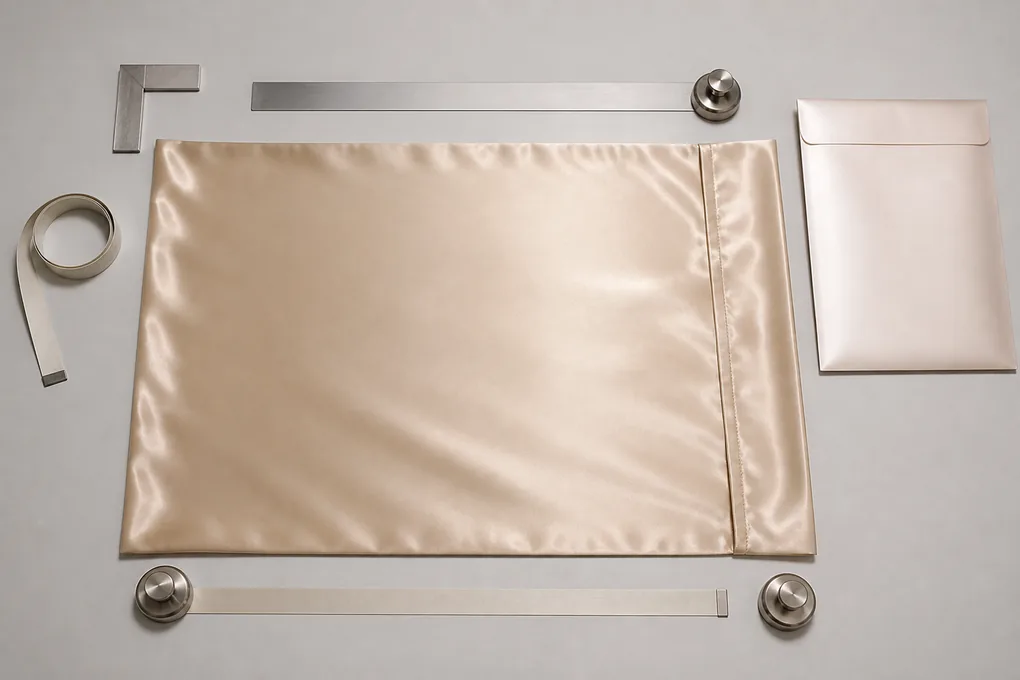
A concise drawing or table can support the brief when it identifies front, back, opening, corners, edge route, and points needing measurement. Use the same configuration identity as the quotation and sample request. A technical image does not replace physical review, but prevents ambiguity about which side is being discussed. For an envelope case, show where overlap and access are assessed. For a zipper option, show component location and surrounding edge. For a flanged style, show the perimeter treatment. This gives every team a shared visual reference without turning an early concept into an unsupported final specification.
Version the drawing with the product brief. If a measurement changes, replace the older sheet rather than adding unexplained annotations across files. If a buyer supplies an existing pattern or competitor reference, distinguish it from the selected project route. The aim is not to copy another product; it is to make the intended finished object clear enough for an internal team and a legitimate supplier to evaluate. A well-marked sheet is valuable when several sizes, colors, or opening alternatives are under consideration.
Tie Every Open Field to a Next Decision
Separate selected requirements, buyer options, and questions requiring evidence
Keep an incomplete brief honest while still making it commercially useful
Not every field needs to be final before first discussion. A buyer may want help comparing openings, may still be selecting a color, or may need a sample to decide fit around a particular insert. Mark those fields as open and state what evidence will settle them. An insert fitting check can settle a size route; a sewn corner can help choose an edge; a packed sample can clarify presentation. This is stronger than filling every box with an assumption simply to make a form seem complete.
An open-field list also protects timelines. It shows whether a quote can proceed with options, whether a sample must come first, or whether a legal, product, or packaging decision belongs to the buyer's own team. When selection is made, update the record and inform the people using it. A sourcing manager can compare routes, a product manager can see remaining work, and a quality reviewer knows which version a sample represents. The brief stays specific without overstating what has been confirmed.
Plan Labels and Product Information Without Overstating the Silk Product
A pillowcase label, care insert, online listing, and package card need to describe the same selected item. Decide which information belongs on the sewn article, which belongs on packaging, and which needs review by the brand's legal or compliance team. This avoids broad marketing language being approved early while material route, component scope, care procedure, or selling-unit content remains unsettled.
Assign Product Identity to the Right Physical Location
Separate sewn labels, hangtags, cards, exterior packs, and digital product content
Keep essential information readable without crowding the silk surface
List the information expected to accompany the item: brand identity, size or variant, confirmed fiber or component statement, care wording, country-of-origin information where applicable, barcode space, and buyer-supplied text. Then decide where each belongs. A sewn label may suit permanent information; a card or sleeve may carry product story and barcode; an ecommerce listing can provide longer guidance. A classic pillowcase is a soft visible product, so forcing every message onto one surface can compromise presentation without helping the customer.
Placement should respect the selected configuration. A pair can need a different exterior identification route than a single case. An envelope product and zipper product may require different handling wording only if completed components justify it. Do not imply a material statement covers parts outside its scope. Where legal or compliance approval is needed, mark text as pending rather than treating a draft sentence as final. This keeps sourcing, packaging, and marketing aligned with the product actually selected.
Develop Care Information From the Assembled Product
Review the intended care route against fabric, closure, trim, print, and pack choices
Avoid generic silk care text that conflicts with the SKU
Care language should follow the completed construction and buyer-approved approach, not a generic category paragraph. Selected fabric route, opening, any zipper or trim, printed surface, labels, and packaging instructions can affect what needs to be communicated. If a buyer has a preferred format or regional requirement, include it in the brief. If care conditions need product testing or internal approval, identify that stage rather than promising a result. Concise accurate information is more useful than long claims about how an item will behave.
Review care communication as part of the selling unit. Can the customer locate it? Does it use the same product identity and variant system as the pack? Does it avoid applying a statement for one component to a mixed construction? Does wording conflict with closure or presentation shown in images? These questions help prevent service issues without claiming an outcome. The record should identify the buyer's final wording approval process and any open language review before product content is published.
Coordinate Listing Content With the Selected Product Version
Make photographs, product bullets, and package text describe the same pillowcase
Prevent an engaging listing from promising an unselected configuration
Product content should be written from the selected sample and product record. Before an ecommerce team creates imagery or feature bullets, confirm opening, size reference, visible face, edge route, count per unit, and color identity. These details can be described plainly and help customers understand the item. They should not be replaced by unsupported claims about sleep, skin, hair, medical outcomes, certifications, or universal performance. Strong product content can explain actual configuration, intended setting, and care information approved for the SKU.
Keep versions traceable. If the buyer changes from a single case to a pair, updates the opening, or adds a flange, ask which assets and statements must change before launch. A product image of a zipper configuration should not accompany description of an envelope case; a pair card should not be assigned to a single-SKU fulfillment record. This closing check makes customer experience more accurate and gives the buying team a direct link back to the approved sample and brief. It also gives customer-support teams a reliable reference when a shopper asks which configuration was ordered. Require the current product code in the creative review file so asset upload cannot silently mix variants.
Use Samples to Answer the Decisions That a Swatch Cannot Settle
A swatch can support a surface and color discussion, but it cannot show insert fit, envelope overlap, zipper handling, turned corners, folded presentation, or how a filled case appears in ordinary use. Request a sample for a named decision. That focus makes feedback faster, reduces vague revision cycles, and helps a buyer decide whether another sample is necessary before commercial comparison.
Write a Sample Request Around One Defined Configuration
State product identity, selected inputs, and the question the sample must resolve
Avoid sending a reference item with no decision framework
A useful sample request names the configuration: pillow reference, finished-size route, selected opening, edge treatment, visible surface direction, color reference, and selling-unit concept. It then states the question the sample must answer. Perhaps the buyer needs to evaluate envelope access with a particular insert, compare zipper placement, inspect a corner treatment, or decide whether the folded case fits a planned sleeve. A physical reference can help discussion, yet should not be treated as complete technical instruction unless the buyer identifies what is being referenced.
Keep alternatives separate. If two openings are being compared, create two named routes. If color is not final, state which shade is for construction review and which later needs its own approval. If packaging is not selected, avoid treating a temporary presentation as a retail-ready instruction. This makes it possible to learn from one sample without approving every unselected field. It gives product and sourcing teams a clear basis for deciding whether the next step is revision, quotation, further evidence, or internal sign-off.
Review a Filled Case Through the Customer Handling Sequence
Insert, remove, smooth, display, fold, and open the product in intended order
Observe the moments where a flat sample hides product problems
Review the sewn case in a sequence resembling customer handling. Insert the intended pillow, smooth visible surfaces, inspect corners and opening, move the pillow as it would be moved on a bed, remove the insert, then fold or pack the case. This reveals whether dimensions, closure, seams, and edge route work together. It places attention on details a customer notices: access, neatness, surface direction, filled-corner appearance, and first impression after unpacking. A review limited to a flat table cannot answer all those questions.
Use structured feedback. Note configuration name, review date, sample condition, insert reference, exact observation, and requested action. If photos are used internally, show the relevant feature rather than creating general beauty imagery. A conclusion might be that fit is selected while the edge remains open, or that opening needs another check before any pack artwork proceeds. This divides what the sample genuinely demonstrated from what still needs a decision and avoids a commercial go-ahead based on incomplete evidence.
Carry Sample Feedback Into the Next Commercial Decision
Translate observations into selected changes, held options, and confirmed references
Prevent a revised sample from losing the reason the first one existed
After a review, convert feedback into a decision list. State which feature is selected, which needs revision, which option remains commercially relevant, and which evidence point is missing. Link that list to the configuration name and current drawing or measurement sheet. A request such as adjust the case can become a defined question about corner fill, opening access, envelope overlap, surface direction, or pack fold. This is more useful than a broad revision request and recognizes that several product choices may be moving at once.
Carry forward only what the sample supports. A successful fitting check on one size does not automatically approve another. A favorable surface review in one shade does not settle every colorway. A pack trial can inform presentation without proving final shipping performance. Keeping these boundaries clear protects buying decisions and lets the team decide where another sample, document review, or quote comparison is worth effort. The record becomes a useful handoff to sourcing, quality, product content, and internal approval owners. Make the next reviewer read the original question before evaluating a revised sample, so a change does not solve the wrong product problem.
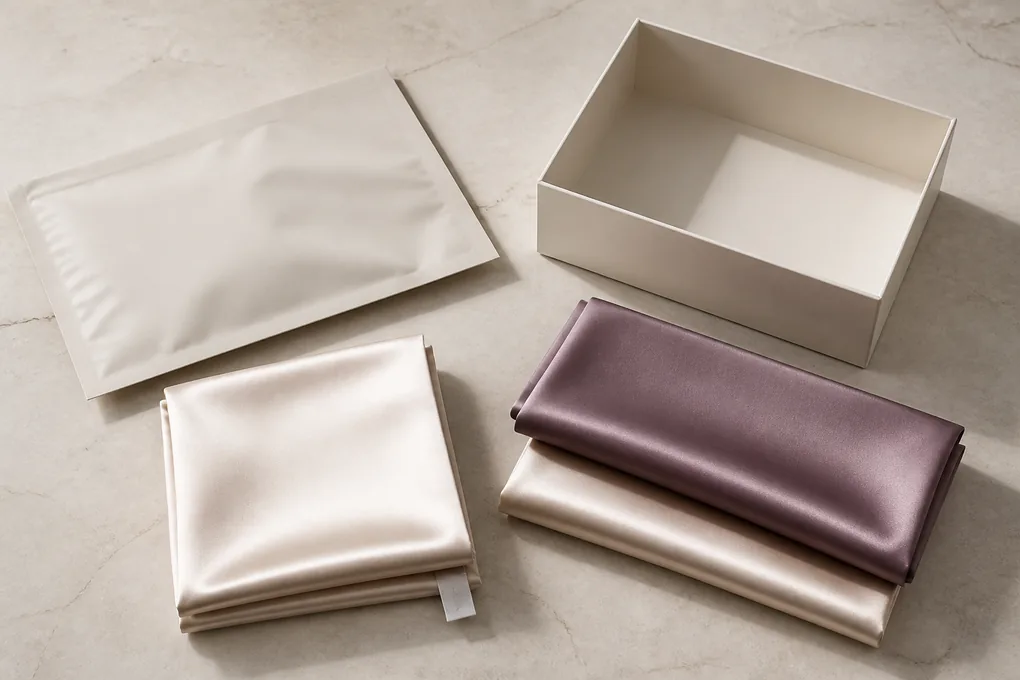
Compare Supplier Quotations on Like-for-Like Classic Pillowcase Scope
A low price is not a useful purchasing signal when every supplier has interpreted the product differently. Use a common configuration, a visible list of selected and open fields, and a way to expose differences in opening, material route, components, size, pack count, labeling, sampling, and logistics. Commercial conversation can then focus on trade-offs the team wants to make instead of hidden assumptions found after a quote is accepted.
Give Every Supplier the Same Core Product Record
Use one configuration name, material direction, size reference, opening, and selling-unit definition
Make omissions and alternatives easy to recognize
Prepare a concise record that each prospective supplier receives: configuration name, intended insert or finished size, closure route, visible-face direction, edge treatment, color or artwork reference, count per selling unit, label and pack needs, quantity by variant, destination, and target decision timing. The record does not have to pretend every field is confirmed. Where a choice remains open, identify it as an option and state whether it needs a quote, a sample, or buyer approval. This creates a fairer starting point for a classic silk pillowcase comparison.
Ask suppliers to identify assumptions rather than bury them in a generic proposal. If one route uses a different closure, surface, pack component, or size interpretation, it should be visible before commercial values are evaluated. A buyer can decide whether the alternative is acceptable, needs a separate line, or requires return to the requested configuration. The objective is not to force identical solutions. It is to make the difference clear enough for procurement to compare the intended product purposefully.
Separate Product Cost Drivers From Unsupported Sales Claims
Discuss selected components, work content, pack route, quantity, and destination as transparent variables
Keep commercial review grounded in the actual scope being priced
A pillowcase quotation can change when selected material route, size, opening, edge treatment, pack count, labeling, quantity, destination, or sample needs change. Discuss those inputs openly. If alternate options are needed, ask for distinct configurations rather than assuming every variation is included. Do not use broad terms such as premium, luxury, or best quality to explain commercial difference. Those phrases hide the facts a procurement manager needs. A scope comparison should show which product and presentation features drive a proposal and which questions remain unresolved.
Avoid treating a supplier's statement about capacity, certifications, delivery, testing, or performance as a substitute for project-specific evidence. If a point matters to the buying decision, request relevant information through the buyer's approved process and keep it separate from the pillowcase product specification. This protects commercial comparison from being distorted by sales language. It lets the buyer assess whether a difference is connected to a selected feature, packaging route, unselected assumption, or an external commercial condition.
Use Quote Review to Decide the Next Product Action
Choose whether to select, revise, sample, or clarify instead of treating every proposal as final
Keep supplier comparison connected to the approval path
When quotes arrive, review them against the common record before ranking them. Ask which fully address selected configuration, which state alternatives, and which leave key fields unresolved. A proposal may be useful for early planning even when it cannot support a purchase decision. It may show that the buyer must select envelope depth, clarify selling-unit count, or review a packed sample. Treat that as useful information rather than forcing a premature selection from incomparable options.
The review output should identify a next action for each route: proceed with a sample, revise the specification, request a clear alternative, obtain internal approval, or hold the option. This keeps commercial evaluation tied to product logic used for fit, appearance, and packaging. It also makes selection easier to explain to colleagues absent from the first supplier conversation. The decision trail stays attached to a configuration, not a vague impression of a catalogue or sales message. It should also record the date and version of the common brief used for commercial comparison, plus any supplier assumption that remains unaccepted.
Prepare Care, Product, and Pack Information for the Final Selling Unit
The selling unit is where a product decision becomes visible to a customer, retailer, warehouse, and support team. Fold direction, protective materials, color identity, pack count, labels, cards, barcode space, and buyer-approved care content must match the selected configuration. Review the real product in planned presentation so an elegant surface is not compromised by creasing, abrasion, wrong-variant identification, or a card describing another version.
Choose a Fold and Protective Route for the Selected Surface
Review tissue, sleeve, pouch, box, card, or wrap against the completed pillowcase
Protect customer-facing appearance without concealing product identity
Start with the finished case and decide how it should be folded, protected, and presented. A smooth silk surface can be affected by pressure, rough neighboring components, and awkward fold lines, so presentation needs review with the selected closure and edge. A sleeve, card-supported fold, pouch, or box can be appropriate depending on channel and objectives. The brief should state which components are under consideration and what the pack must achieve: identify the variant, protect the surface, communicate selling-unit count, and fit the intended distribution method.
Review the packed item as a customer would receive it. Open it, remove the case, inspect the visible surface, refold it if relevant, and check whether labels or cards transfer color or leave marks. Do not assume a concept seen with another textile behaves the same way with silk. If more than one route is under consideration, test or quote them separately. The outcome should state which presentation supports the chosen product and which details still need buyer approval, not make a broad claim that all packaging is protective.
Make Variant and Count Identification Unmistakable
Align color names, size references, SKU codes, and pieces per unit across every pack component
Reduce the risk of wrong-item fulfillment and retail confusion
The pack needs to tell a warehouse, retailer, and customer which product is inside. Align selected color identity, size reference, opening configuration where relevant, count per unit, internal SKU, and customer-facing name across the product record, card, barcode plan, and carton grouping. A pair should not be labelled as one case, and an envelope version should not inherit the code or photograph of a zipper version. These controls often fail when pack design begins before product configuration is stable.
Build a final check into the approval sequence. Compare the packed physical item with its variant record and visible materials. Ask whether the right size and color are present, whether count is accurate, whether the card describes the same closure and edge, and whether barcode space corresponds with selling-unit identity. If information comes from the buyer's internal system, identify the owner responsible for supplying or confirming it. This turns packaging review into an accurate handoff rather than a late graphic exercise disconnected from sourcing and fulfillment.
Keep Care and Consumer Information Within Approved Scope
Use the final configuration as the source for product and pack wording
Prevent a generic insert from overstating materials, care, or performance
Consumer information should be taken from the buyer's approved record and required legal or compliance review. Selected fabric route, components, closure, and pack count determine what can accurately be described. A general silk card may be a starting point for internal discussion, but should not become final text if the assembled SKU has features that need different handling or wording has not been approved. Use plain useful information and avoid claims about health, hair, skin, sleep, certifications, or long-term performance that have not been substantiated for the product.
Check the complete selling unit together: sewn labels, pack card, insert, exterior copy, online assets, and carton marks. If one item changes, decide whether others need revision. A new color name, changed closure, or shift from one case to a pair can affect several materials. This coordination does not create a legal opinion or guarantee. It helps the buyer preserve accuracy as the item moves from development into a channel-ready configuration.
Inspect the Finished Pillowcase Around the Customer Experience and Purchase Record
Final review connects the physical article to the record used to buy, sell, and replenish it. Inspect the filled product, opening, corners, visible surfaces, labels, and packed completeness against the selected configuration. Then confirm that sample, quote, product content, and selling unit still refer to the same SKU. This gives the buyer an evidence-based next decision without pretending every future lot or condition has already been proven.
Inspect the Features Customers See and Handle First
Review fit, surface, closure, corners, edge treatment, and first-unpack appearance
Focus inspection on moments that determine whether the configuration reads as intended
Use selected configuration as the inspection reference. Fit the named insert, observe visible silk surfaces, look at four corners, operate the opening, and inspect edge treatment in normal display light. Then open the selling unit and repeat the relevant visual check. This connects article to customer experience. A product may be acceptable folded but reveal an awkward opening after filling; a surface may look even on a table but show inconsistent direction on a bed. Record observations by SKU, size, color, and route rather than as anonymous general comments.
Prioritize what is meaningful for the design. For an envelope case, that may be overlap appearance and access. For a zipper case, component placement and closure handling may matter. For a flanged item, visual continuity at corners may need attention. Do not apply an arbitrary checklist ignoring product features. If a concern is found, identify location, condition, and requested action. That lets the team decide whether it affects a sample, configuration choice, pack presentation, or broader purchase discussion.
Confirm the Product Record Matches the Physical Article
Cross-check selected sample against dimensions, variant identity, pack count, and customer-facing assets
Keep a sample conclusion from being assigned to the wrong version
Before treating review as a milestone, compare the physical article with the product record. Confirm configuration name, size reference, opening, edge route, selected surface direction, color identity, selling-unit count, and any pack or label elements being reviewed. Check whether photos, drawings, or product content used in discussion represent the same version. This can reveal a simple costly issue: a team may approve a sewn sample while using imagery or a quote line from an earlier closure or color route.
If anything differs, make the difference visible and decide next action. Perhaps the sample remains useful for fit but not packaging, or perhaps a color reference changed after construction was sewn. Do not hide the gap with generic approval language. Mark what the article supports and what it does not. This protects product, sourcing, quality, merchandising, and customer-service teams from relying on a sample disconnected from the configuration actually being purchased.
Close the Brief With Decisions, Owners, and Open Questions
Create a practical handoff for sourcing, product, quality, packaging, and commercial approval
Move forward only with the evidence the selected configuration genuinely provides
Close the brief by separating selected decisions from open questions. State chosen route, sample observations accepted by the buyer, documents or approvals still required, and the person or team responsible for each next step. An open field may belong to color approval, packaging artwork, internal legal wording, quote comparison, or commercial authorization. Naming the owner is more useful than declaring the product finished when important decisions are outside sample scope. It lets a procurement manager see which issues could affect timing or supplier selection.
Keep the final handoff concise enough to use. Link current sample, measurement sheet, variant map, product images, pack layout, and quote comparison to the same configuration identity. If a revision is requested, create a new version rather than silently overwriting the record. This disciplined finish does not make claims about availability, prices, delivery, testing, or future production. It gives the buyer a credible product-specific basis for the next commercial conversation and reduces the chance that a classic silk pillowcase becomes a costly series of untracked assumptions. A short outstanding-actions table helps the buying lead verify who will resolve each remaining item.
Classic Silk Pillowcase Questions From B2B Buyers
What belongs in a wholesale classic silk pillowcase brief?
State the intended insert or finished size, selected material components, face direction, opening, edge, colorway, label and pack requirements, quantity by SKU, destination, and the next sample or quotation decision.
Should envelope and concealed-zipper pillowcases be quoted as the same item?
No. The opening route changes the finished pattern, components, sewing sequence, sample review, customer presentation, and potentially the commercial scope. Keep the routes separate until one is selected.
Can a fabric swatch approve a classic silk pillowcase?
A swatch can support a material and color discussion, but a filled sewn case is needed to assess insert fit, opening behavior, edge construction, and finished presentation.